- All
- Product Name
- Product Keyword
- Product Model
- Product Summary
- Product Description
- Multi Field Search

Views: 74 Author: Site Editor Publish Time: 2026-01-09 Origin: Site


In the marine industry, material failure is rarely just a maintenance issue; it is a financial and operational crisis. Leaks in seawater piping systems accelerate galvanic corrosion, flood bilges, and can force unplanned, costly dry-docking events. When specifying components for these systems, engineers often face a critical choice between Natural Rubber (Polyisoprene) and Neoprene (Polychloroprene). While both materials appear similar on a specification sheet, their real-world performance differs drastically once exposed to the harsh realities of the ocean environment.
The debate is not simply about which rubber is stronger. It centers on which material survives the unique combination of salinity, UV radiation, and incidental oil exposure found on modern vessels. This article moves beyond generic data to evaluate how these materials perform specifically within Rubber Expansion Joints under dynamic marine stress. You will learn how to balance mechanical elasticity against chemical survival to ensure your vessel’s piping integrity lasts years, not months.
Natural Rubber (NR) offers superior mechanical elasticity and abrasion resistance, making it ideal for slurry or high-vibration dampening, but it fails rapidly when exposed to UV, ozone, or hydrocarbons (oil/fuel).
Neoprene (CR) is the "marine standard" not because it is the strongest, but because it provides a balanced chemical resistance to salt, moderate oil exposure, and sunlight without degrading.
Cost vs. Longevity: While NR is often cheaper initially, Neoprene reduces Total Cost of Ownership (TCO) in exposed or oily bilge environments by extending replacement intervals by 2-3x.
The "Clean" Exception: Natural Rubber remains a viable candidate for fully submerged, oil-free internal cooling loops where UV and hydrocarbons are absent.
To choose the right material, we must first understand the enemy. Marine piping systems do not operate in a sterile lab; they function in a hostile, chemically aggressive environment. When Rubber Expansion Joints fail at sea, it is usually due to a specific "corrosive triad" that attacks the elastomer's weak points.
Three distinct stressors define the marine operating environment:
Salinity & Crystallization: Seawater is not just wet; it is abrasive. When salt water evaporates on the surface of a joint, it leaves behind sharp crystals. As the joint expands and contracts, these crystals can act like sandpaper, abrading micro-fissures into the rubber surface. This physical erosion accelerates chemical degradation.
Bio-fouling: External marine growth, such as barnacles and mussels, poses a severe threat to submerged joints or those near the waterline. These organisms attach firmly to the rubber cover. As they grow, their sharp, calcium-based shells cut into the joint, compromising the outer protective layer and exposing the internal reinforcement fabric to water ingress.
Hydrocarbon Presence: Perhaps the most overlooked factor is the composition of "seawater" inside a vessel. In engine rooms, bilge water is rarely pure. It often contains traces of diesel, lube oil, and hydraulic fluid. A material that resists pure salt water may fail catastrophically when exposed to this oily cocktail.
Location dictates lifespan. Internal applications, such as deep-hull cooling loops below the waterline, exist in permanent darkness. However, deck-level piping, overboard discharge lines, and scrubber systems face relentless UV radiation and ozone exposure. Ozone, a byproduct of electrical equipment motors and atmospheric conditions, aggressively attacks the molecular bonds of certain rubbers, causing deep cracking known as "weather checking."
We define success not merely by immediate pressure retention. A successful marine joint must maintain seal integrity and vibration isolation properties over a 5 to 10-year lifecycle. It must resist hardening to the point where it transmits engine vibration to the hull, and it must not swell to the point where flow is restricted or flanges rupture.
Natural Rubber (Polyisoprene) is the gold standard for pure mechanical performance. Harvested from the Hevea brasiliensis tree, it possesses a molecular structure that synthetic chemists struggle to replicate perfectly. However, in the marine context, its greatest strengths are coupled with fatal environmental weaknesses.
If the application involves pure physical stress without chemical attack, Natural Rubber wins. It boasts superior elasticity, with elongation capabilities reaching up to 800%. This allows it to absorb massive movements and misalignments without tearing.
Furthermore, NR exhibits exceptionally low hysteresis. This means it generates very little internal heat during rapid flexing cycles. For high-vibration applications, such as connections immediately downstream of a large diesel engine, NR absorbs kinetic energy efficiently without overheating. It is also the default choice for abrasive media. In dredging operations where seawater carries sand, coral, or slurry, Natural Rubber bounces back from particle impact rather than eroding, outlasting most synthetic alternatives.
Despite these physical strengths, Natural Rubber has a chemical "Achilles Heel."
The Ozone Attack: NR contains double bonds in its polymer backbone that are highly reactive to ozone and UV light. When exposed to open air or sunlight, these bonds break down rapidly. Within months, an NR joint on a ship’s deck will develop "alligator skin"—deep, interlocking cracks that compromise the pressure vessel.
Hydrocarbon Swelling: The failure mode in oily environments is even more catastrophic. Natural Rubber is not oil-resistant. Exposure to even trace amounts of oily bilge water causes the rubber to absorb the hydrocarbon like a sponge. The joint swells, loses its tensile strength, and turns into a sticky, gelatinous substance. This leads to flange blowouts and immediate system failure.
The Verdict for Seawater: Natural Rubber is suitable only for deep internal, dark, oil-free cooling lines or abrasive slurry transport where the fluid is strictly water and sand.
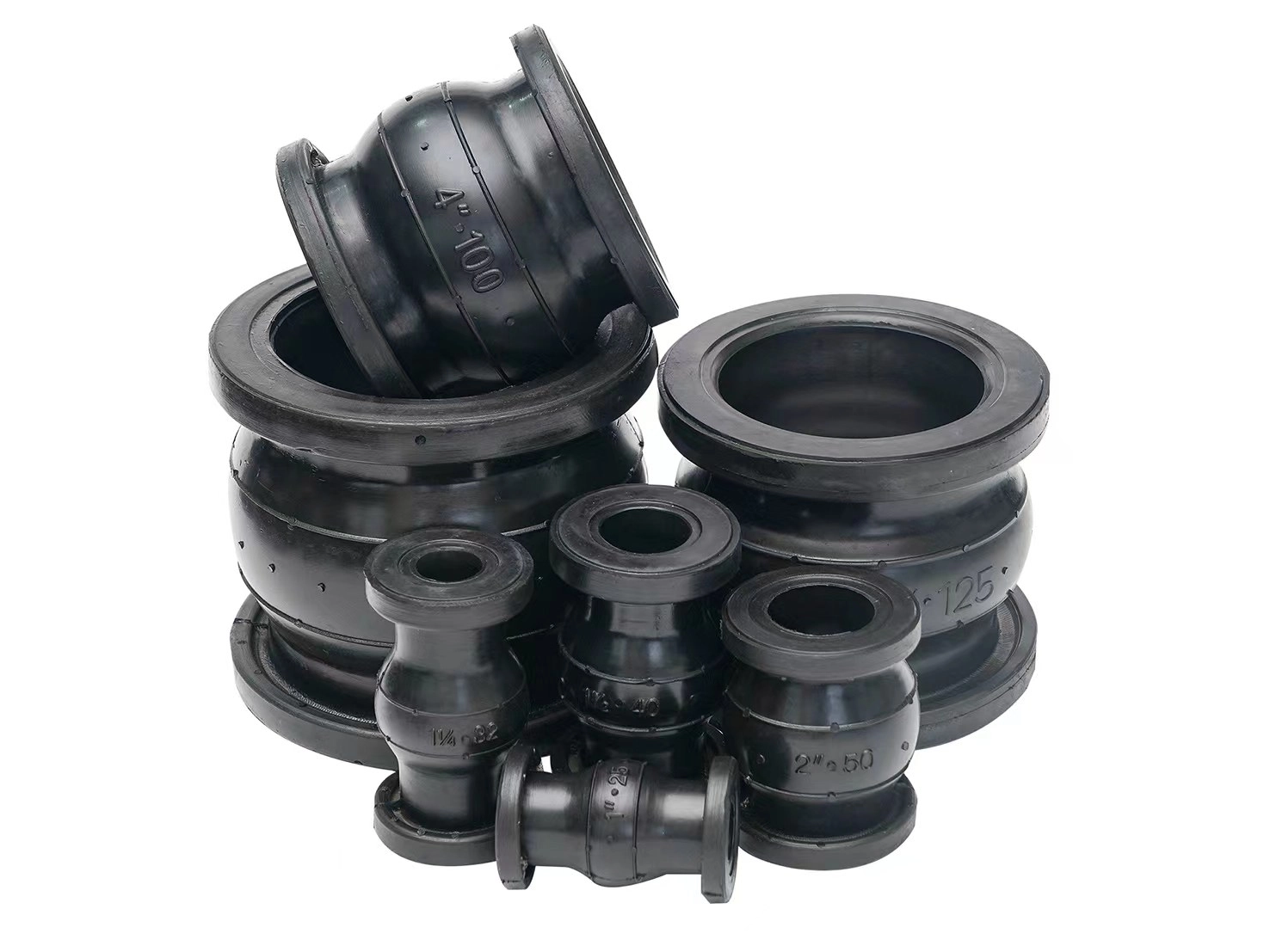
Neoprene (Polychloroprene) was the first commercially successful synthetic rubber, developed specifically to address the limitations of natural rubber. While it may not match the extreme elasticity of NR, it is widely regarded as the "marine standard" for general piping.
The secret to Neoprene's durability lies in the Chlorine atom integrated into its polymer chain. This chlorine bond increases the electron density of the molecule, making it significantly less reactive to oxygen and ozone. Essentially, the chemistry provides a built-in shield against the environment.
Neoprene’s performance profile aligns perfectly with the mixed hazards of marine applications:
Moderate Oil Resistance: Unlike NR, Neoprene offers Class 2-3 oil resistance. It is not immune to oil, but it resists swelling and degradation from incidental contact. This is critical for engine room bilges where floating oil is inevitable. The joint maintains its shape and strength even when the "seawater" is contaminated.
Weathering & UV: Neoprene withstands direct sunlight and atmospheric ozone without cracking. For deck piping and overboard discharge lines, this UV stability ensures the outer cover remains intact, protecting the reinforcement layers from saltwater corrosion.
Self-Extinguishing Properties: Safety at sea is paramount. Neoprene creates its own char layer when burned and does not propagate flame. This property often makes it the preferred material for compliance with commercial marine safety classifications (such as SOLAS requirements) compared to highly flammable natural rubber.
Engineers must acknowledge the trade-offs. Neoprene has slightly lower tensile strength and abrasion resistance than Natural Rubber. In a pure slurry line, Neoprene would wear out faster. However, for standard liquid seawater transport—cooling, ballast, fire mains—its abrasion resistance is more than sufficient.
Procurement decisions often hinge on the Initial Purchase Price (IPP), but in marine maintenance, the Total Cost of Ownership (TCO) is the only metric that matters. Replacing a joint requires system shutdown, labor, and potentially a diver or dry-docking.
Natural Rubber is typically cheaper to produce and purchase. However, the savings evaporate if the environment is mismatched. Consider the following scenarios:
| Factor | Scenario A: Oily Bilge Line (NR) | Scenario B: Oily Bilge Line (Neoprene) |
|---|---|---|
| Initial Cost | $ (Low) | $$ (Moderate) |
| Lifespan | 12–18 Months | 5+ Years |
| Failure Mode | Swelling, softening, leaks. | Gradual hardening (predictable). |
| 5-Year TCO | High (3-4 replacements + labor) | Low (1 installation) |
The way a material dies matters. Natural Rubber failure is often catastrophic. In oil, it turns to jelly; in UV, it cracks open. Both lead to sudden, unpredictable leaks. Neoprene failure is typically gradual. Over many years, heat and oxidation cause it to harden. This slow loss of flexibility allows maintenance teams to identify aging joints during routine inspections before a leak occurs.
Rubber Expansion Joints rely heavily on "compression set"—the material's ability to return to its original shape after being compressed by flange bolts. Natural Rubber has superior memory, meaning it seals very well initially. However, Neoprene’s compression set is adequate for sealing and, crucially, remains stable over time in aggressive environments. NR might seal better on day one, but if it swells from oil on day thirty, that memory is useless. Neoprene’s stability wins the long game.
To simplify the selection process, we recommend engineers use the following framework. This matrix prioritizes environmental survival over raw mechanical data.
Yes (Bilge, Engine Room, Fuel transfer areas): You must use Neoprene (CR). If the oil concentration is high (pure fuel lines), upgrade to Nitrile (NBR). Natural Rubber is prohibited here.
No (Clean Ballast, Potable Water, Grey Water): Natural Rubber is a valid option if other conditions are met.
Yes (Deck lines, Overboard discharge, Scrubber towers): Use Neoprene (CR) or EPDM. Natural Rubber will degrade rapidly without heavy protective shielding.
No (Deep Submerged, Internal dark spaces): Both Natural Rubber and Neoprene are acceptable.
Yes (Dredging, Raw sewage with grit): Natural Rubber is the superior choice for wear life. If this line is outdoors, use a specialized joint with an NR inner tube and a Neoprene or EPDM outer cover.
No (Clean Seawater): Neoprene provides the best balance of longevity and cost.
Advanced manufacturing allows for hybrid construction. For critical dredging lines exposed to sunlight, manufacturers can build Rubber Expansion Joints with a Natural Rubber inner liner to handle the abrasive sand, bonded to a Neoprene outer cover to resist the UV and ozone. This custom approach ensures the joint remains robust from the inside out and the outside in.
The choice between Natural Rubber and Neoprene for seawater applications is a trade-off between physics and chemistry. Natural Rubber wins on physics—it moves better, stretches further, and resists physical wear. Neoprene wins on chemistry—it survives the salt, the sun, and the inevitable oil of the marine environment.
For specialized dredging or deep-internal cooling loops, Natural Rubber remains a strong contender. However, for general seawater piping, hull penetrations, and engine room systems, Neoprene represents the safer, "install-and-forget" standard for Rubber Expansion Joints. By choosing Neoprene, you minimize the risk of premature degradation due to unforeseen hydrocarbon leaks or ozone spikes, ensuring your vessel remains watertight and operational.
Before specifying your next replacement, conduct a full audit of the environmental factors surrounding the pipe. If there is even a hint of oil or sunlight, the decision is already made for you.
A: EPDM is excellent for UV and ozone resistance, often surpassing Neoprene in outdoor weathering. However, EPDM has very poor resistance to oil and hydrocarbons. It is suitable for clean seawater deck lines but is risky for engine rooms or bilges where oil contamination is possible. Neoprene is generally the safer "all-rounder" for marine use due to its moderate oil resistance.
A: Technically, yes. Natural Rubber has lower hysteresis and transmits less vibration. However, the difference is often negligible in standard marine piping. The vibration dampening of a Neoprene joint is sufficient for most engines, and its ability to resist degradation means it maintains those dampening properties longer in an oily environment than Natural Rubber would.
A: Look at the failure mode. If the rubber is sticky, swollen, or soft to the touch, it is likely Natural Rubber that reacted with oil. If the surface looks like "crazy paving" with deep cracks but the rubber feels dry and hard, it is likely Natural Rubber that succumbed to UV/ozone attack. Neoprene typically hardens uniformly over time without becoming sticky.
A: If the seawater is the intake for a Reverse Osmosis (RO) potable water system, FDA-compliant materials are required. Both Natural Rubber and Neoprene can be formulated to be FDA compliant (often white in color), but standard black industrial grades are not. Always specify "Food Grade" specifically for desalination intake lines to avoid taste or chemical leaching issues.