- All
- Product Name
- Product Keyword
- Product Model
- Product Summary
- Product Description
- Multi Field Search

Views: 0 Author: Site Editor Publish Time: 2025-12-10 Origin: Site


Spare parts in your warehouse act as insurance policies for plant uptime. You keep them to ensure that when a critical component fails, operations can resume immediately. However, unlike steel valves or pipes, Rubber Expansion Joints are organic liabilities that degrade over time. Improper storage turns these critical assets into hidden failures waiting to happen. If you install a joint that has suffered from dry rot or permanent deformation during storage, you are not fixing a problem; you are scheduling your next emergency shutdown.
The reality is chemical. Rubber is an organic polymer that continues to "cure" and cross-link from the moment it leaves the mold. Heat, light, and pressure accelerate this process, transforming a flexible connector into a brittle, useless object. This degradation often happens silently on the shelf. This guide covers ISO-aligned storage protocols, essential environmental controls, and the specific "Red Flag" indicators you need to watch for. It defines exactly how to determine if a stored joint is safe to install or must be scrapped to protect your system.
Temperature Thresholds: Ambient temperatures must remain below 80°F (27°C) to prevent accelerated curing and hardening.
Ozone is the Enemy: Store away from electric motors, welders, and high-voltage equipment to prevent rapid ozone cracking.
Positioning Matters: Always store flange-face down; never hang joints vertically or stack heavy items on top of them.
The "Touch" Test: Pre-installation inspections must verify durometer (hardness) and elasticity, not just visual cleanliness.
Avoid "Over-Care": Do not apply paint, grease, or unauthorized preservatives; simple talcum powder is often the only approved additive.
Procurement managers often treat mechanical inventory as static assets. A bolt bought five years ago is generally as good as a bolt bought yesterday. This logic is dangerous when applied to elastomers. There is a critical distinction between shelf life and service life. A rubber expansion joint stored under ideal conditions for five years may still offer a full service life once installed. Conversely, a joint stored poorly for just six months may fail within weeks of operation.
The impact on Total Cost of Ownership (TCO) is severe. When you install a dry-rotted joint, you do not just lose the cost of the replacement part. You incur the massive cost multiplier of unscheduled downtime. If a "new" joint fails immediately because it was stored next to a heater, the labor, lost production, and safety risks far outweigh the initial purchase price. It transforms a maintenance routine into a crisis.
Warranty voidance is another financial risk. Major manufacturers often require evidence of proper storage before honoring a warranty claim. If a forensic analysis reveals ozone cracking or UV damage—signs that the damage occurred before installation—the claim will likely be denied. You are left absorbing the cost of both the failed unit and its replacement.
To mitigate these economic risks, you must enforce a strict First-In, First-Out (FIFO) inventory system. Rubber products typically have a shelf life window of 5 to 10 years, depending on the elastomer type. Without FIFO, newer shipments get stacked in front of older ones. The older units become "orphan" inventory, pushed to the back until they exceed their expiration date. By the time they are finally retrieved, they are often too brittle to use, resulting in 100% capital loss.
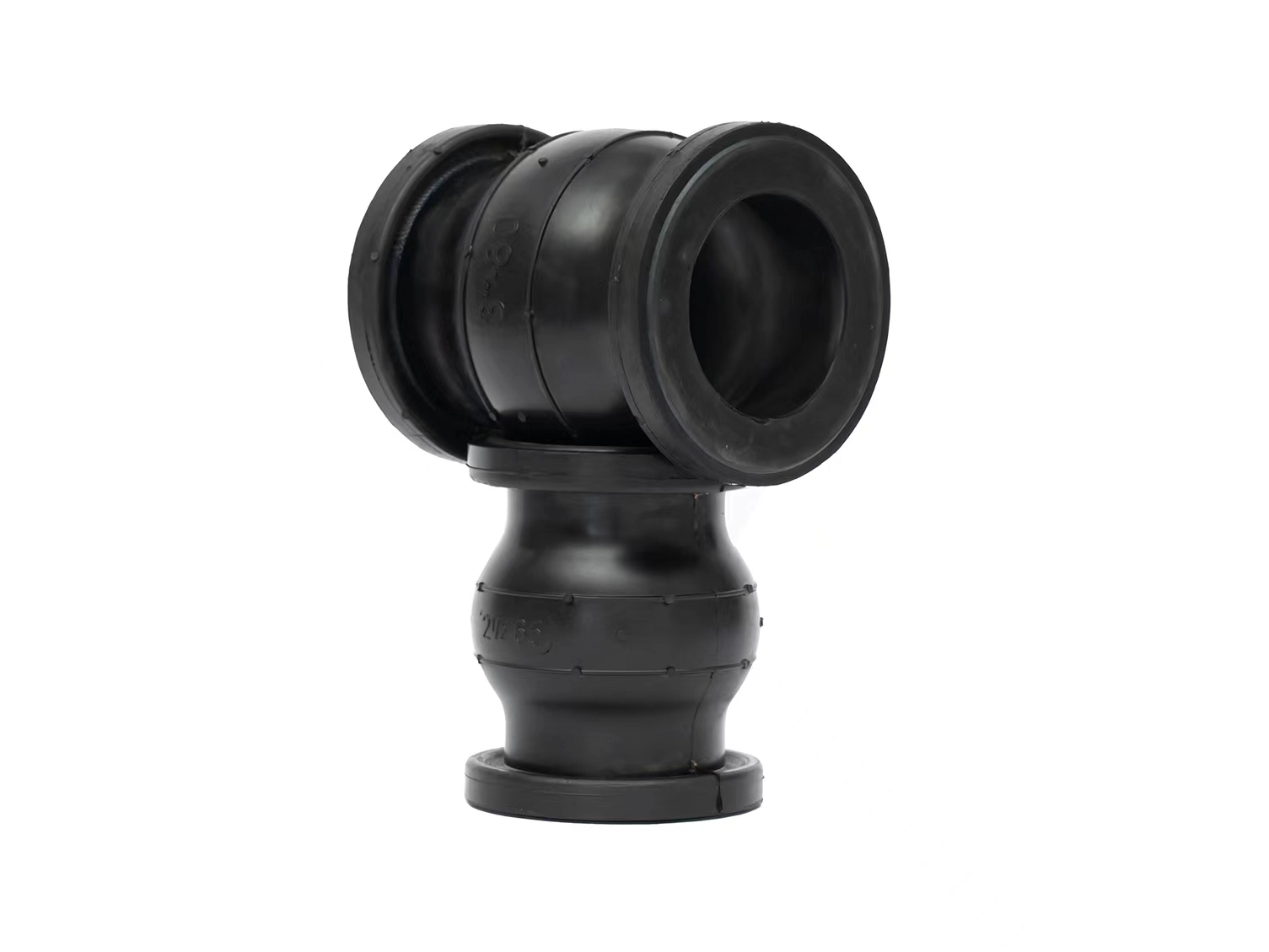
Rubber degradation is primarily driven by three environmental factors: heat, radiation (UV/Ozone), and chemical exposure. Controlling these elements is the only way to pause the aging clock of your Rubber Expansion Joints.
Heat is the catalyst for aging. It accelerates the cross-linking process within the rubber matrix. As cross-linking increases, the material loses its elasticity and becomes hard—a condition often described as "baking" the rubber. Industry standards generally set the safe storage temperature threshold at approximately 80°F (27°C). While brief excursions above this limit may be tolerable, chronic exposure to high heat drastically shortens shelf life.
Warehouse managers must identify and eliminate heat sources. Never store rubber components near radiant heaters, steam pipes, or directly under uninsulated metal roofs that radiate solar heat. Ideally, these parts belong in a climate-controlled zone. If that is impossible, choose the coolest, darkest corner of the facility, close to the floor where temperatures are lower.
Ozone is arguably the most aggressive destroyer of rubber. It attacks the double bonds in the polymer chains, causing scission. This manifests as deep, perpendicular cracks that ruin the pressure integrity of the joint. The threat is often electrical. Electric motors, mercury vapor lamps, and high-voltage switchgear generate ozone during operation. Storing rubber joints in a maintenance room next to an air compressor or a welder is a recipe for disaster.
Photodegradation from ultraviolet (UV) light is equally damaging. UV rays excite the molecules in the rubber, leading to oxidation on the surface. You must block direct sunlight. Even artificial light with high UV content can be harmful over years of exposure. The practical solution is opacity. Keep the joints in their original packaging, which typically includes dark, UV-resistant plastic wraps. If the original packaging is damaged, cover the units with heavy-duty, opaque tarps. Do not rely on transparent shrink wrap if the unit is near windows or skylights.
The ideal environment is "cool and dry." High humidity can lead to condensation, which attacks the metal flanges or retaining rings attached to the rubber body. While the rubber itself is generally water-resistant, mold and mildew can degrade outer fabric reinforcements.
Chemical isolation is critical. A warehouse often stores paints, solvents, oils, and cleaning agents. Many of these release volatile organic compounds (VOCs) or vapors that can permeate the air. If a Rubber Expansion Joint made of EPDM is stored near oil-based solvents, the vapors can slowly attack the rubber, causing it to swell or soften without direct liquid contact. Always segregate elastomers from volatile chemicals.
| Aging Factor | Mechanism of Damage | Visible Consequence |
|---|---|---|
| Heat (>80°F) | Accelerated cross-linking (curing) | Hardening, brittleness, loss of rebound. |
| Ozone | Polymer chain scission | Deep "razor-cut" surface cracks. |
| UV Light | Surface oxidation | Discoloration, "chalking," and surface crazing. |
| Chemical Vapor | Absorption and reaction | Swelling, tackiness, or softening. |
Rubber has a memory. If you store it in a distorted shape for a long period, it will eventually "set" in that shape. This is known as permanent set. Once a joint takes a set, it may no longer fit the gap it was designed for, or worse, it will contain built-in stresses that reduce its pressure handling capabilities. The goal is to maintain the product in a stress-free, "as-manufactured" state.
Gravity is a constant force that you must manage. The golden rule for storage is to place the joint flange face down. By standing the joint vertically on its flange, the weight is evenly distributed around the reinforcement ring. This prevents the sidewalls from collapsing.
You must place the joint on a wooden pallet. Never place it directly on a concrete floor. Concrete can wick moisture and transfer cold, creating localized temperature gradients that stress the material. A wooden pallet provides necessary airflow and insulation.
There are two major prohibitions regarding orientation:
No Stacking: Warehouse space is often tight, leading to the temptation to stack inventory. Do not stack Rubber Expansion Joints on top of one another. The weight of the upper units will crush the sidewalls of the lower units, causing permanent deformation of the arch.
No Hanging: Never hang joints by their bolt holes. While this might seem like a good way to save floor space, gravity will pull the heavy rubber body downward, elongating the bolt holes into ovals. This ruins the sealing surface and makes proper installation impossible.
The best protection a joint has is often the box it came in. Manufacturers design packaging to support the shape of the joint and shield it from light. Advise your logistics team to leave the product boxed until the moment of installation. Removing packaging early to "check" the item exposes it to dust, ozone, and physical damage unnecessarily.
Storage is not entirely passive. There are active steps you can take to extend the life of your inventory, as well as aggressive mistakes you must avoid. A proactive approach involves periodic interaction with the stock.
One industry "trade secret" for long-term preservation is the use of talcum powder. Over time, rubber surfaces can become tacky, especially in warmer climates. If two rubber surfaces touch, they might fuse together. Dusting the stored rubber with plain talcum powder creates a barrier that prevents sticking. It also absorbs minor surface moisture. Crucially, talcum powder is inert; it does not chemically react with the polymer matrix, making it safe for almost all elastomer types.
Well-intentioned maintenance often causes more harm than good. Avoid these common errors:
No Grease or Oil: Do not try to "condition" the rubber with petroleum-based sprays or greases. Unless you are certain the joint is made of an oil-resistant material like Nitrile, oil will destroy it. Even oil-resistant rubbers can degrade if the specific chemical formulation isn't compatible.
No Painting: Plant managers sometimes paint spare parts to color-code them. Painting the exterior of a flexible joint is dangerous. The paint hardens and hides stress cracks, making inspections impossible. Furthermore, solvents in the paint can attack the rubber skin.
No Insulation: Do not pre-insulate joints while they are in storage. Insulation traps moisture against the flange and retains heat, creating a micro-climate that accelerates aging.
For inventory stored longer than a year, implement a 6-month rotation cycle. Physically rotate the stock on the shelf. This allows you to inspect for settling or pest damage (rodents sometimes chew on soft elastomers). If a joint has been sitting in one position, rotating it helps redistribute internal stresses, much like rotating tires on a vehicle.
Before any Rubber Expansion Joints leave the warehouse for the plant floor, they must pass a rigorous validation process. Do not rely on the fact that the part is "new." Use this framework to make a Go/No-Go decision.
Start with a close visual exam. You are looking for "breezes" or micro-cracking. Flex the flange slightly with your hands. If you see a spiderweb pattern of tiny cracks opening up, the joint has suffered ozone attack. It is unsafe.
Look for blistering or deformation on the inner liner. Blisters indicate that the layers of the composite—tube, fabric reinforcement, and cover—have delaminated. This joint will burst under pressure. If the joint is Teflon-lined, look for white chalking or powder, which indicates thermal degradation of the PTFE material.
You cannot test rubber with your eyes alone; you must touch it. Perform a hardness check. Press your fingernail into the rubber arch. It should yield slightly and rebound immediately. If it feels like hard plastic, or if the indentation remains after you remove pressure, the rubber has crystallized. It is "dead." A dead joint cannot absorb vibration or thermal expansion; it will simply crack when the pipes move.
Perform a gentle bend test on the flange edges. The rubber should be supple. If you hear crinkling sounds or feel stiffness, the elastomers have oxidized.
Finally, measure the face-to-face length. Compare this measurement against the manufacturer's drawing. If the joint has "set" in a compressed or elongated state during storage, it may not fit the gap. Do not force it. Forcing a deformed joint into a gap pre-loads it with stress, consuming its movement capability before the pump is even turned on. Also, verify the bolt holes. They must be perfectly round. Ovalized holes are a sign of improper hanging storage and will lead to flange leaks.
Proper storage is not a passive activity; it is an active asset management strategy that directly preserves your capital and protects your uptime. The most robust piping system in the world can be brought down by a single dry-rotted connector. By treating your Rubber Expansion Joints like perishable goods rather than durable hardware, you extend their life and ensure they perform as designed.
Invest in the basics: climate control, proper shelving, and opaque coverings. These small investments prevent the massive costs associated with premature failure and voided warranties. Before your next scheduled shutdown, take a walk through your warehouse. Review the dates on your inventory, check the storage conditions, and scrap any suspect joints immediately. It is far cheaper to discard a questionable joint now than to replace it during an emergency outage at 3:00 AM.
A: Under ideal conditions—cool, dark, and dry—the typical shelf life is 5–10 years. However, this varies by elastomer type. Exposure to UV light, ozone from electric motors, or temperatures above 80°F (27°C) can drastically reduce this to less than a year. Always reference the manufacturer's specific data for your material.
A: Generally, no. Most commercial rubber conditioners are designed for cosmetic use on car tires and contain chemicals that may degrade industrial elastomers. Oils and solvents can destroy materials like EPDM. Stick to plain talcum powder or follow specific OEM advice for preservation.
A: Perform a flex test. Bend the flange or arch slightly and look for surface cracks (spiderwebbing). Also, press a fingernail into the rubber; if it is hard, brittle, or shows "chalking" residue on your finger, the rubber has likely suffered dry rot and should be scrapped.
A: It is not recommended. If outdoor storage is unavoidable, the joints must be elevated on wooden pallets to avoid ground moisture and covered with a heavy-duty, UV-proof tarp. However, temperature fluctuations and humidity outdoors still pose a significant risk to the product's longevity.
A: No. Keep the joint in a stress-free state. Tightening bolts or compressing the joint during storage can cause the rubber to take a "permanent set," deforming it. Only torque the bolts during the actual installation process on the pipeline.