- All
- Product Name
- Product Keyword
- Product Model
- Product Summary
- Product Description
- Multi Field Search


Industrial NBR Rubber Expansion Joint for Thermal Movement - High-Performance Vibration Absorption & Thermal Compensation
Designed for industrial applications, this NBR rubber expansion joint effectively absorbs vibrations and compensates for thermal movement with superior durability. It features high-pressure resistance, vacuum stability, and corrosion-resistant materials for long-term reliability.
| Quantity: | |
|---|---|


NHFLEX-A
Ninghao
As a leading manufacturer and supplier of fluid control solutions, we present the Industrial NBR Rubber Expansion Joint for Thermal Movement. Engineered to absorb pipeline stress and eliminate vibration, this component ensures operational stability in demanding environments.
Premium elastomer construction for superior fluid resistance
Advanced multi-layer reinforcement for structural integrity
Efficient thermal expansion and contraction compensation
Direct supply from an experienced industrial manufacturer
The industrial pipeline environment is unforgiving, demanding components that can withstand relentless pressure, fluctuating temperatures, and constant mechanical stress. This industrial rubber expansion joint serves as the critical shock absorber for your piping infrastructure. Upon inspection, the robust galvanized carbon steel flanges offer a cold, solid metallic heft, contrasting with the dense, resilient texture of the precision-molded elastomer body. The smooth internal finish minimizes friction, ensuring a silent, unobstructed flow of media, while the rugged exterior rubber resists abrasion and environmental degradation.
By integrating this joint into your system, you effectively neutralize the destructive forces of thermal expansion and pump-induced vibrations. It acts as a flexible bridge, protecting rigid pipes and sensitive valves from cracking or misalignment. This means fewer maintenance shutdowns, reduced replacement costs, and a significantly extended lifespan for your entire fluid handling network. The meticulous craftsmanship is evident in the seamless bonding between the nylon reinforcing fabric and the rubber layers, creating a composite structure that flexes smoothly under load without compromising pressure retention.
Our expansion joints are manufactured to strict industrial standards, ensuring precise fit and reliable performance across various piping configurations. Below are the exact material specifications and technical parameters.
Part No. | Part | Standard Specification |
|---|---|---|
1 | Flange | Galvanized Carbon Steel |
2 | Reinforcing Ring | Carbon Steel |
3 | Rubber (Inner) | EPDM |
4 | Rubber (Outer) | EPDM |
5 | Reinforcing Fabric | Nylon Fabric |
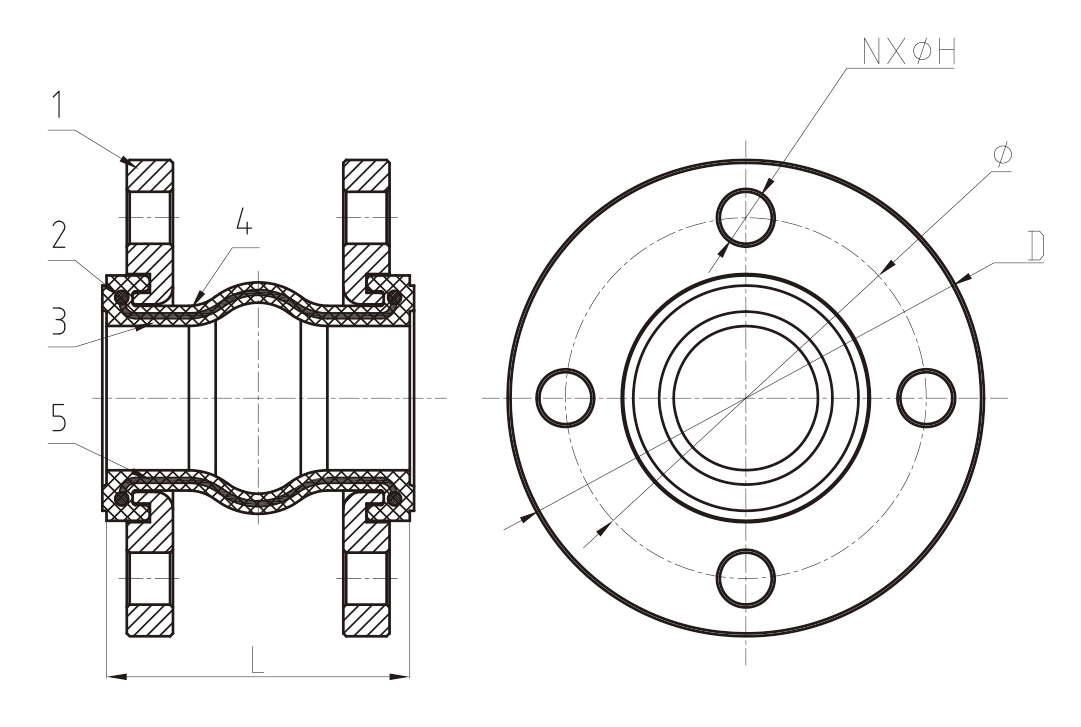
Note: For special material request other than standard specification, please indicate clearly on the inquiry or order list.
Size Range | DN15 - DN3600 |
Working Pressure | PN6 / PN10 / PN16 / PN25 / ANSI 150 lb |
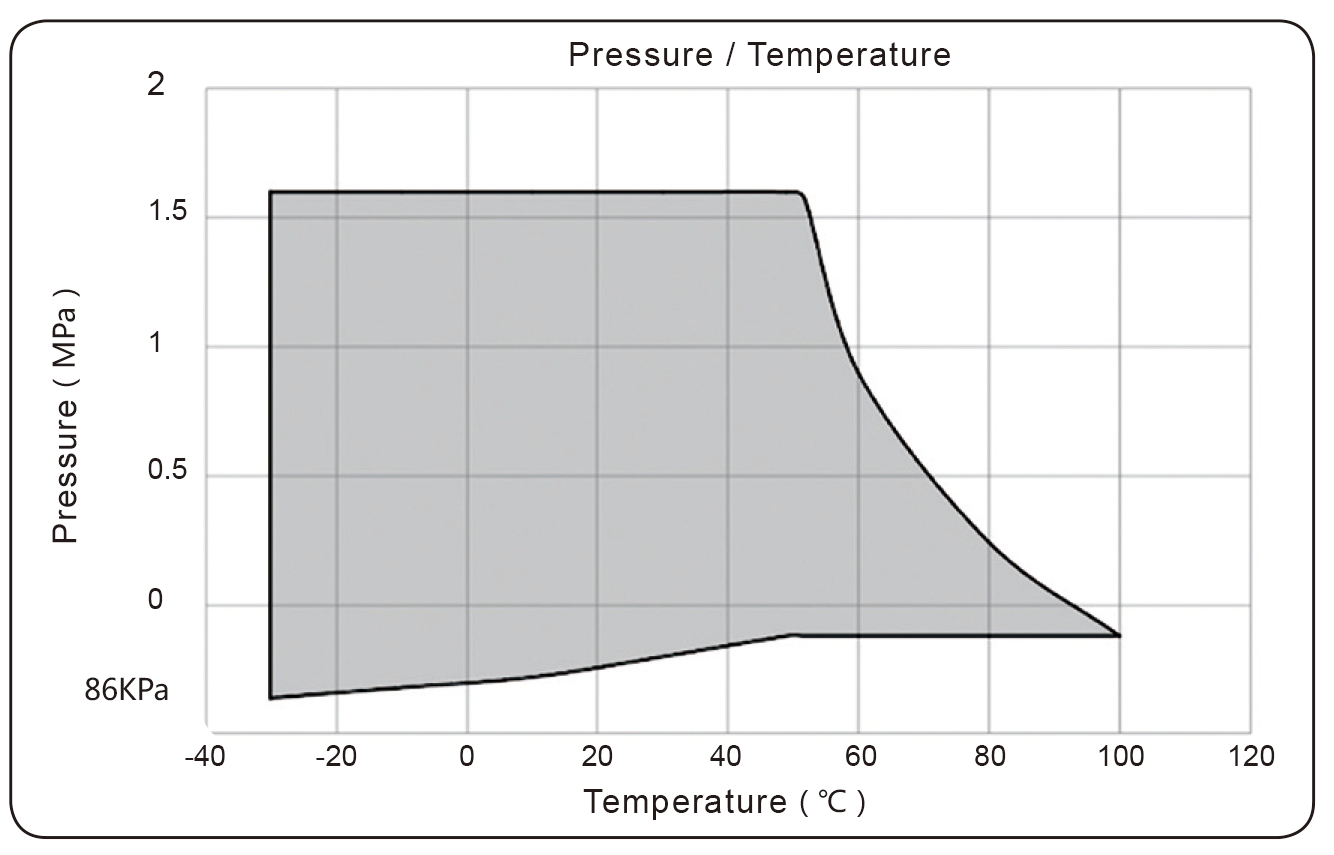
Working Temperature | -40°C to +150°C |
Movement Absorption | Axial, Lateral, Angular |
The foundation of any high-performance fluid control component lies in its material composition. By utilizing a sophisticated multi-layer composite structure, this expansion joint delivers uncompromising durability in harsh environments, resisting fatigue, tearing, and chemical degradation.
Premium Elastomer Selection: Depending on the specific media, the inner and outer layers utilize high-grade NBR for outstanding oil resistance or EPDM for exceptional weathering and water handling capabilities.
Nylon Fabric Reinforcement: Embedded within the rubber matrix, the high-tensile nylon fabric acts as the skeletal system, preventing ballooning and ensuring structural stability under high internal pressure.
Carbon Steel Core: Solid carbon steel reinforcing rings are strategically integrated to maintain the shape of the arch, preventing collapse during vacuum conditions.
Anti-Aging Properties: The outer rubber layer is specifically compounded to resist ozone, UV radiation, and extreme ambient temperature fluctuations, preventing surface cracking over decades of use.
Managing pipeline stress is a critical challenge for facility engineers. Unchecked thermal movement and mechanical vibration can lead to catastrophic flange failures and equipment damage. This expansion joint provides a dynamic, viscoelastic solution to these destructive forces.
Multi-Directional Compensation: Effortlessly accommodates axial compression and elongation, lateral deflection, and angular bending caused by seasonal temperature variations.
Equipment Protection: When installed adjacent to pumps, chillers, or compressors, it isolates high-frequency vibrations, protecting sensitive internal mechanical seals and bearings from premature wear.
Settlement Accommodation: Effectively compensates for minor ground settlement or structural shifts in newly constructed facilities, maintaining a leak-proof seal at all times.
Harmonic Resonance Reduction: Breaks the transmission path of mechanical noise, creating a safer and more comfortable acoustic environment for plant operators.
Compatibility and standardized engineering are paramount for seamless integration into existing infrastructure. This product line is manufactured to meet rigorous global standards, ensuring that procurement teams and engineers can specify these joints with absolute confidence.
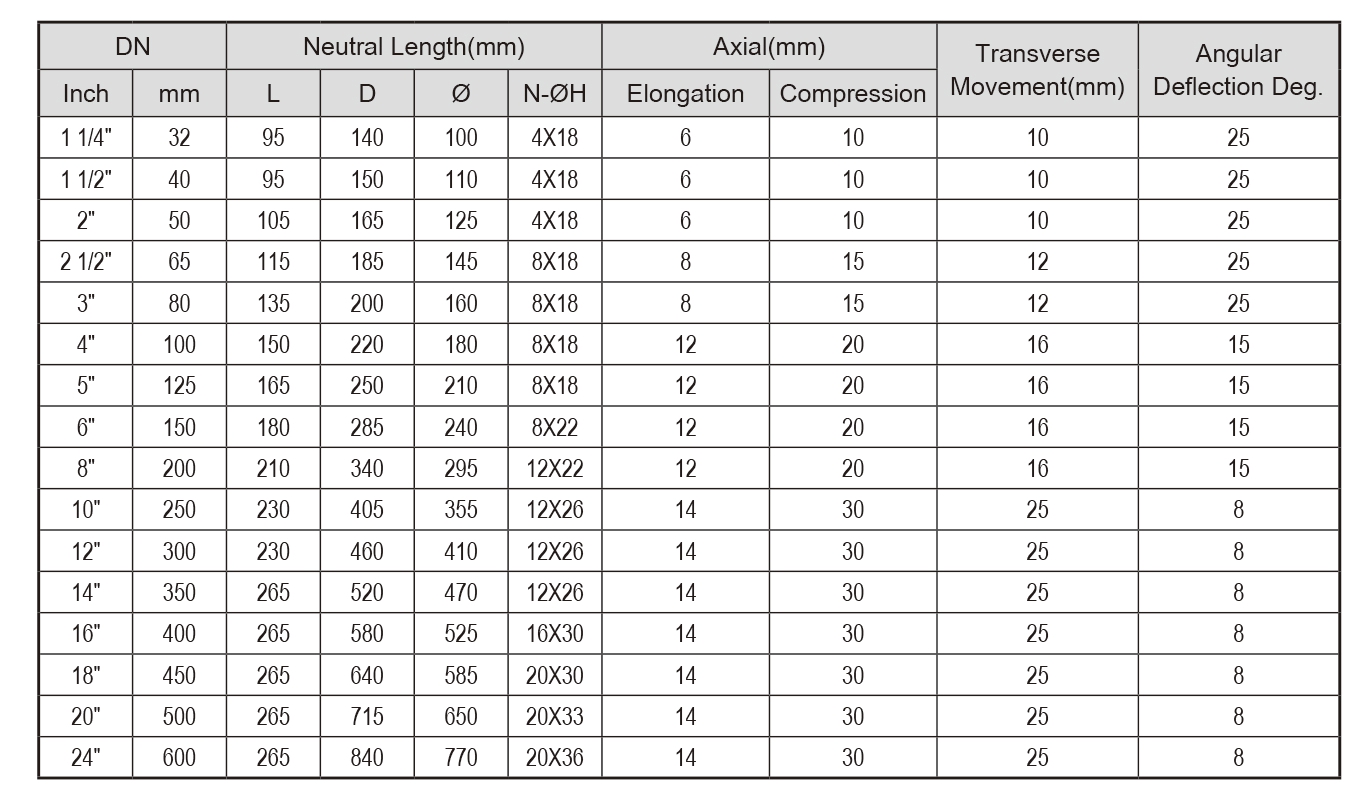
Extensive Size Range: Available from a compact DN15 up to a massive DN3600, catering to everything from small cooling lines to major municipal water mains.
High-Pressure Capabilities: Engineered to handle diverse system pressures with ratings including PN6, PN10, PN16, PN25, and ANSI 150 lb.
Broad Temperature Tolerance: Maintains structural integrity and flexibility across a wide thermal spectrum, operating reliably from -40°C up to +150°C.
Universal Flange Drilling: Compatible with major international standards such as DIN, ANSI, EN, and JIS, eliminating the need for custom adapter pieces.
Versatility is a hallmark of superior industrial design. By carefully selecting the appropriate elastomer compounds, this expansion joint can be tailored to handle a vast array of fluids, making it an indispensable asset across multiple heavy industries.
Petrochemical & Refining: Utilizing NBR variants, it safely transports petroleum-based products, lubricating oils, and hydraulic fluids without swelling or degrading.
HVAC & Climate Control: Perfect for chilled and hot water closed-loop systems, absorbing the continuous thermal cycling of commercial air conditioning networks.
Water & Wastewater Treatment: Handles abrasive slurries, raw sewage, and treated potable water, resisting the corrosive effects of mild treatment chemicals.
Marine & Shipbuilding: Built to withstand the harsh saline environment and constant dynamic motion of maritime vessels, ideal for ballast and cooling water lines.
Power Generation: Effectively manages the high-volume cooling water intake and discharge lines in thermal and nuclear power plants.
In high-pressure industrial environments, component failure is not an option. We implement a draconian quality assurance protocol, ensuring that every single expansion joint that leaves the facility delivers uncompromised safety and reliability.
Extreme Burst Testing: Prototypes are subjected to destructive testing, consistently achieving a burst pressure that is three times the rated working pressure, guaranteeing a massive safety margin.
Hydrostatic Factory Checks: 100% of production units undergo rigorous hydrostatic pressure testing before shipment to verify zero leakage and structural soundness.
Vacuum Integrity Verification: Specialized testing ensures the internal reinforcing rings prevent collapse when subjected to negative pressure conditions in suction lines.
ISO Certified Manufacturing: All production processes are strictly governed by ISO quality management systems, ensuring absolute consistency and traceability from raw material to finished product.
Standard off-the-shelf solutions cannot solve every engineering challenge. Our flexible manufacturing capabilities allow us to modify and enhance these expansion joints with specialized accessories to meet the exact demands of complex piping configurations.
Control Units & Tie Rods: Essential for unanchored piping systems, these limit excessive axial extension, preventing the joint from being pulled apart under high thrust loads.
Alternative Flange Metallurgy: For highly corrosive environments, standard galvanized steel can be upgraded to 304, 316, or 316L stainless steel for maximum chemical resistance.
PTFE Internal Lining: For extreme chemical applications involving strong acids or alkalis, a seamless PTFE inner sleeve can be added to protect the rubber matrix.
Vacuum Support Rings: Heavy-duty internal stainless steel rings can be integrated for applications involving deep, continuous vacuum conditions.
Custom Face-to-Face Dimensions: We can engineer units with non-standard lengths to seamlessly replace obsolete or proprietary components during facility retrofits.
