- All
- Product Name
- Product Keyword
- Product Model
- Product Summary
- Product Description
- Multi Field Search


High-performance Light Flange Connection Rubber Expansion Joint for Ships, designed for superior durability and flexibility in marine applications. Engineered with EPDM rubber and galvanized carbon steel flanges, it ensures excellent resistance to pressure, temperature, and vacuum conditions.
| Quantity: | |
|---|---|


NHFLEX-A
Engineered by a premier manufacturer and supplier of marine fluid control systems
Features premium inner and outer EPDM rubber for extreme weather resistance
Reinforced with high-tensile nylon fabric for superior structural integrity
Equipped with durable galvanized carbon steel flanges to combat salt corrosion
Provides exceptional multi-directional displacement compensation for ship pipelines
Customizable dimensions and material specifications available direct from the source
The light flange connection rubber expansion joint for ships stands as a masterclass in fluid dynamics engineering, meticulously crafted to protect critical maritime infrastructure. Upon physical inspection, the tactile resilience of the vulcanized EPDM rubber conveys immediate durability, presenting a smooth, dense surface that actively repels moisture and resists environmental degradation. The galvanized carbon steel flanges boast a visually striking, precision-machined finish, reflecting a rigorous manufacturing protocol designed to completely eliminate microscopic vulnerabilities where salt-induced corrosion typically begins. When operational within a ship's bustling engine room or intricate ballast network, this joint performs with silent efficiency. It acts as an acoustic and kinetic barrier, actively swallowing the harsh, rhythmic vibrations generated by heavy-duty maritime pumps and compressors. By neutralizing mechanical stress, thermal expansion, and hull-induced shifting, it transforms a rigid, vulnerable pipe network into a highly adaptable and forgiving system. The internal architecture features a robust nylon fabric reinforcement that securely binds the elastomeric layers into a cohesive, pressure-resistant shield, ensuring a seamless, leak-free flow of fluids even under the most punishing dynamic loads.
Precision engineering requires exact parameters. The following tables outline the standard material composition and technical specifications for our light flange connection rubber expansion joint for ships. We strictly adhere to these metrics to guarantee consistent, uncompromising performance across all demanding marine applications.
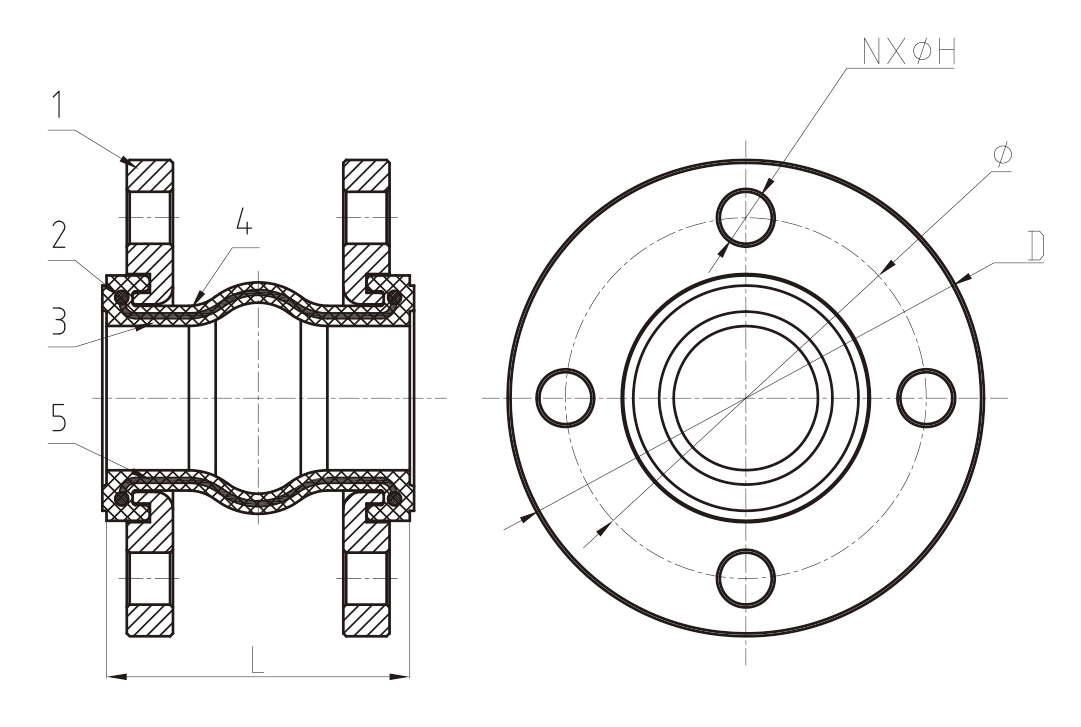
Part No. | Part | Standard Specification |
|---|---|---|
1 | Flange | Galvanized Carbon Steel |
2 | Reinforcing Ring | Carbon Steel |
3 | Rubber (Inner) | EPDM |
4 | Rubber (Outer) | EPDM |
5 | Reinforcing Fabric | Nylon Fabric |
Note: For special material request other than standard specification, please indicate clearly on the inquiry or order list.
Product Name | Light flange connection rubber expansion joint for ships |
|---|---|
Connection Type | Flange |
Displacement Compensation | Axial, Lateral, Angular |
Operating Temperature | -20°C to 100°C |
Working Pressure | ≤1.6MPa / 16kg / 150 PSI |
Applications | Shipbuilding, HVAC Systems, Industrial Pipelines, Water Supply |
Customization | Support special material requests (NBR/FKM, Stainless Steel, etc.) |
Our light flange connection rubber expansion joint for ships is engineered to deliver unparalleled reliability in the most challenging environments. By integrating advanced elastomeric technology with robust metallurgical components, this product offers a comprehensive solution for pipeline integrity. The design philosophy centers on maximizing operational uptime while minimizing the need for reactive maintenance, ensuring your vessels remain at sea rather than in drydock.
Optimized Fluid Dynamics: The exceptionally smooth internal EPDM surface minimizes friction, ensuring an uninterrupted and highly efficient flow of water or other compatible media.
Structural Memory: High-grade rubber compounds are formulated to retain their original shape and elasticity even after enduring thousands of severe compression and extension cycles.
Space-Saving Architecture: The compact, light-weight profile allows for seamless integration into cramped shipboard compartments without sacrificing an ounce of performance.
Corrosion Defiance: Every metallic surface is meticulously treated to withstand the relentless assault of saline moisture, significantly extending the component's overall lifecycle.
The foundation of this expansion joint lies in its golden combination of materials: premium inner and outer EPDM rubber, a high-tensile nylon fabric skeleton, and galvanized carbon steel flanges. This precise configuration is specifically tailored for the unforgiving marine environment, where standard materials quickly fail.
Exceptional EPDM Performance: The EPDM rubber delivers outstanding resistance to natural aging, ozone depletion, and the highly corrosive effects of constant high-salt, high-humidity marine atmospheres.
Robust Structural Integrity: The embedded nylon fabric heavily reinforces the rubber matrix, actively preventing ballooning or catastrophic structural failure during unexpected pressure spikes in the line.
Advanced Rust Prevention: The galvanized carbon steel flanges provide a formidable, long-lasting barrier against oxidation and rust, ensuring structural stability over years of service.
High Cost-Efficiency: By combining these highly durable materials, the joint offers an extended service life, translating to exceptional long-term value for large-scale maritime engineering projects.
Pipeline networks on vessels are constantly subjected to extreme dynamic forces. This rubber expansion joint directly addresses the critical pain points of marine pipe design by offering superior displacement compensation across multiple axes, safeguarding the entire system.
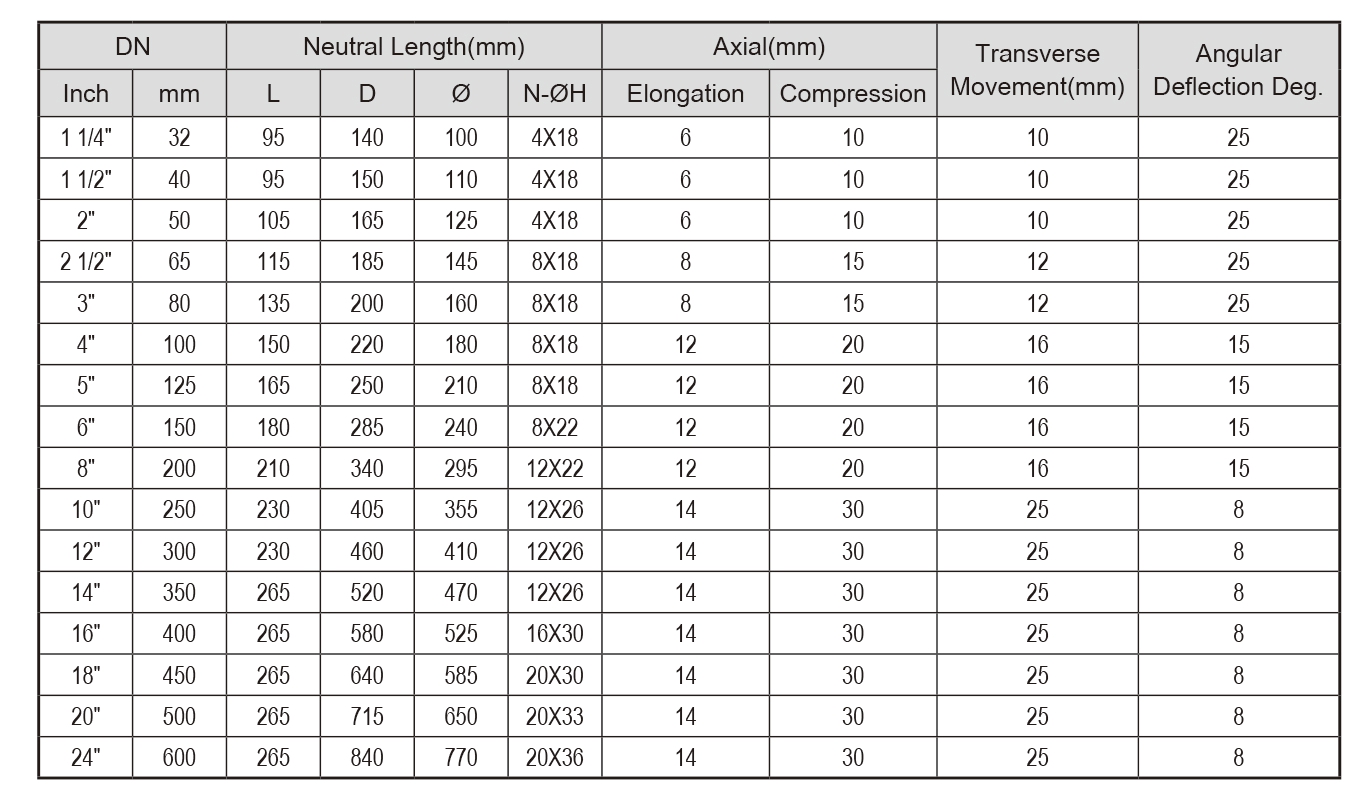
Axial Flexibility: Effortlessly absorbs both severe compression and elongation forces caused by the inevitable thermal expansion and contraction within the pipeline.
Lateral and Angular Adaptation: Seamlessly accommodates lateral shifts and angular deflections resulting from hull flexing, heavy wave impact, or initial installation misalignments.
Stress Relief: By acting as a highly flexible pivot point, it prevents the dangerous accumulation of mechanical stress that could otherwise lead to catastrophic pipe fractures.
System Safeguard: Ensures that rigid valves, expensive pumps, and adjoining pipe sections remain perfectly intact and fully operational, regardless of the vessel's violent movement.
Engine rooms and pump stations are inherently noisy and vibration-heavy environments. The installation of our light flange connection rubber expansion joint for ships acts as a critical dampening mechanism, protecting both the crew's auditory comfort and the machinery's structural health.
High-Elasticity Damping: The inherent viscoelastic properties of the premium EPDM rubber serve as a powerful shock absorber, instantly dissipating kinetic energy upon impact.
High-Frequency Isolation: When strategically installed at the inlet or outlet of water pumps, compressors, and diesel engines, it aggressively isolates destructive high-frequency mechanical vibrations.
Acoustic Interruption: The thick rubber barrier effectively breaks the solid-to-solid transmission path of sound waves, dramatically reducing the noise echoing through the metallic pipe network.
Equipment Protection: By eliminating harmonic resonance, it prevents the dangerous loosening of structural bolts and the premature wear of delicate internal valve components.
Versatility is a hallmark of this expansion joint. It is meticulously calibrated to perform flawlessly across a broad spectrum of demanding operational parameters, making it an indispensable component for diverse fluid transit systems globally.
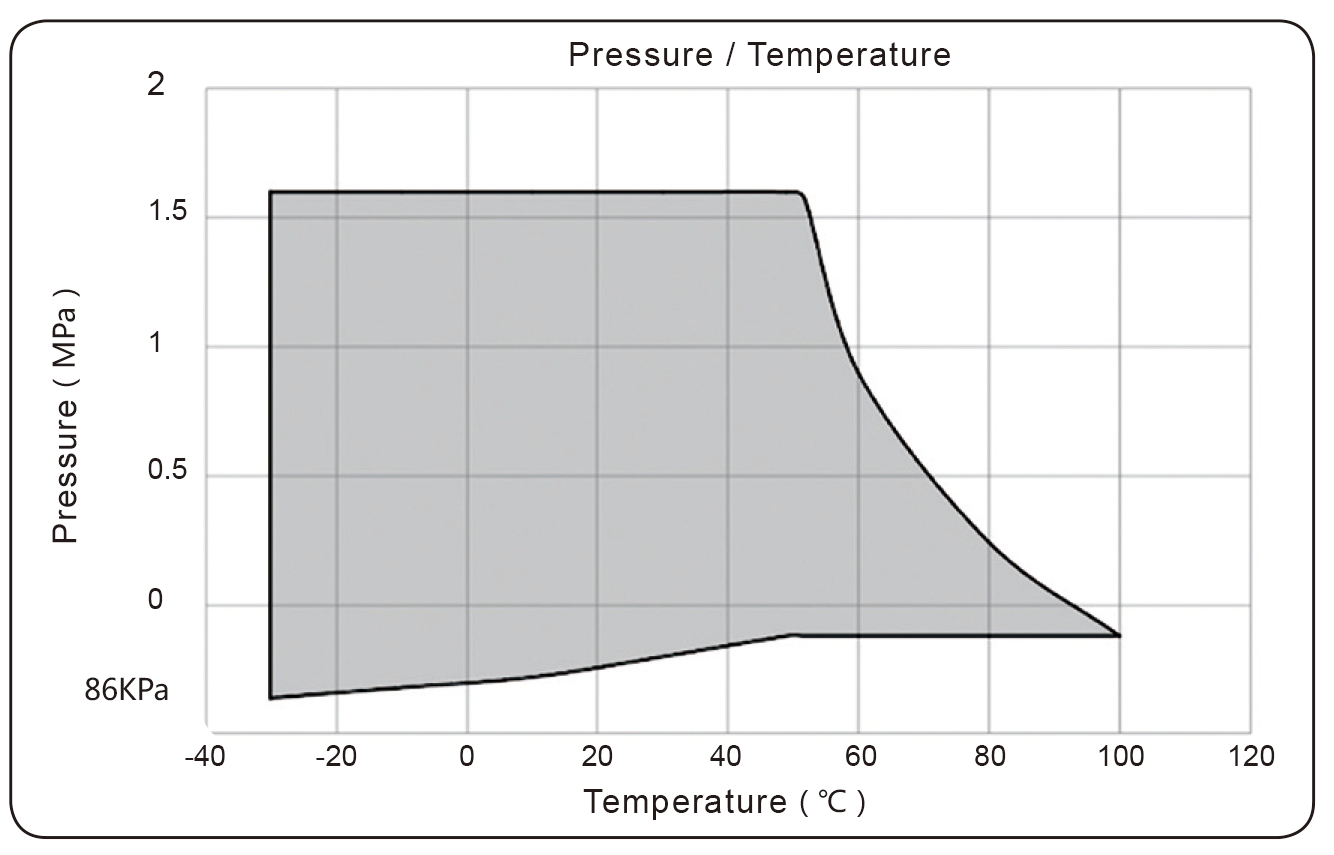
Broad Temperature Range: Engineered to maintain full flexibility and absolute sealing integrity in media temperatures ranging from a freezing -20°C up to a scorching 100°C.
High-Pressure Tolerance: Safely sustains continuous working pressures up to 1.6MPa (150 PSI), easily accommodating the intense demands of commercial marine systems.
Vacuum Resistance: The robust reinforced structure prevents internal collapse even under severe negative pressure scenarios during aggressive pump suction phases.
Application Versatility: Perfectly suited for ship ballast water systems, high-volume seawater cooling circuits, bilge discharge lines, and heavy-duty industrial HVAC configurations.
Time is a critical, expensive resource in marine engineering and shipbuilding. This rubber expansion joint is specifically designed to drastically reduce the labor hours required for initial installation and virtually eliminate the need for ongoing maintenance.
Lightweight Construction: Compared to cumbersome traditional metal corrugated compensators, this rubber joint is significantly lighter and much easier to maneuver in confined shipboard spaces.
Floating Flange Innovation: The "live" or floating flange design allows the bolt holes to be rotated freely, making alignment with the mating pipe flanges effortless and incredibly fast.
Self-Sealing Architecture: The full-face rubber ends act as their own integrated gaskets, creating a perfect watertight seal without the need for additional, costly sealing rings.
Reduced Labor Costs: The combination of easy alignment, lightweight handling, and self-sealing properties translates to a rapid, hassle-free installation process that lowers overall project expenses.
We understand that standard specifications cannot meet the requirements of every complex engineering project. As a dedicated manufacturer, we offer profound supply chain flexibility to tailor our products to your exact operational and environmental needs.
Specialized Elastomers: While EPDM is standard, we can seamlessly substitute the inner and outer layers with NBR for oil-resistant applications or FKM for extreme high-temperature environments.
Upgraded Metallurgy: The standard galvanized carbon steel flanges can be easily upgraded to 304/316 stainless steel or marine-grade bronze for unparalleled corrosion resistance.
Non-Standard Dimensions: Our engineering team is fully equipped to design and mold joints with custom lengths, diameters, and displacement ratings to fit highly unique architectural layouts.
OEM & ODM Capabilities: We provide robust manufacturing support, ensuring rapid lead times and bespoke branding options for large-scale fleet upgrades or original equipment manufacturing.
Trust in marine fluid components is built entirely on uncompromising quality. Every light flange connection rubber expansion joint for ships that leaves our facility is the product of a rigorous, globally recognized quality assurance protocol.
International Flange Compatibility: Our products are precision-drilled to seamlessly mate with major global flange standards, including DIN, ANSI, and JIS configurations.
ISO Certified Manufacturing: Our entire production ecosystem operates strictly under ISO 9001 quality management systems, ensuring absolute consistency from raw material to finished product.
100% Pressure Testing: Before dispatch, every single joint undergoes severe hydrostatic pressure testing to guarantee zero leaks and absolute structural safety under load.
Material Verification: We utilize advanced spectral analysis to verify the chemical composition of our metallic flanges and the purity of our rubber compounds, providing unquestionable reliability.
