- All
- Product Name
- Product Keyword
- Product Model
- Product Summary
- Product Description
- Multi Field Search


The NBR Single Ball Rubber Expansion Joint is engineered for superior chemical resistance and pipeline flexibility in industrial systems. Featuring EPDM rubber construction with reinforced nylon fabric, it ensures durability under high-pressure conditions while accommodating thermal expansion and vibration absorption.
| Quantity: | |
|---|---|


NHFLEX-A
Ninghao
As a premier manufacturer and supplier of advanced fluid control solutions, we present the NBR Single Ball Rubber Expansion Joint, meticulously engineered for demanding chemical and industrial systems. This robust pipeline connector acts as a critical safeguard, absorbing thermal expansion, mitigating mechanical vibration, and ensuring long-term operational stability.
Engineered specifically for chemical, oil, and solvent-rich environments.
Features a highly adaptable floating flange design for seamless integration.
Delivers exceptional vibration isolation and acoustic dampening.
Manufactured to comply with rigorous international engineering standards.
The NBR Single Ball Rubber Expansion Joint stands as a critical line of defense for complex pipeline architectures, specifically formulated to handle the rigorous demands of chemical processing and fluid transportation. Upon physical inspection, the joint presents a smooth, dense elastomeric surface, reflecting a high-grade vulcanization process that ensures absolute impermeability against aggressive solvents, oils, and industrial greases. The tactile resilience of the rubber sphere, combined with the reassuring, substantial weight of the galvanized carbon steel flanges, speaks directly to the precision craftsmanship and uncompromising material quality dedicated to its construction. There are no rough seams or inconsistent molding marks; every contour is engineered for optimal fluid dynamics and structural integrity.
When integrated into an active industrial system, this expansion joint acts as a silent, steadfast sentinel. It fundamentally transforms the operational acoustics of a facility by absorbing the harsh, rhythmic thumping of pump vibrations and mitigating the sudden, violent shocks associated with water hammer effects. By accommodating multi-directional pipeline movements—whether from thermal expansion during extreme temperature fluctuations or gradual structural settling—it drastically reduces mechanical stress on adjacent valves, pumps, and delicate measuring equipment. This proactive stress relief prevents catastrophic leaks, protects expensive machinery, and minimizes unscheduled maintenance downtime, offering procurement managers and facility engineers a highly reliable, install-and-forget solution that significantly enhances the overall safety, efficiency, and longevity of critical infrastructure.
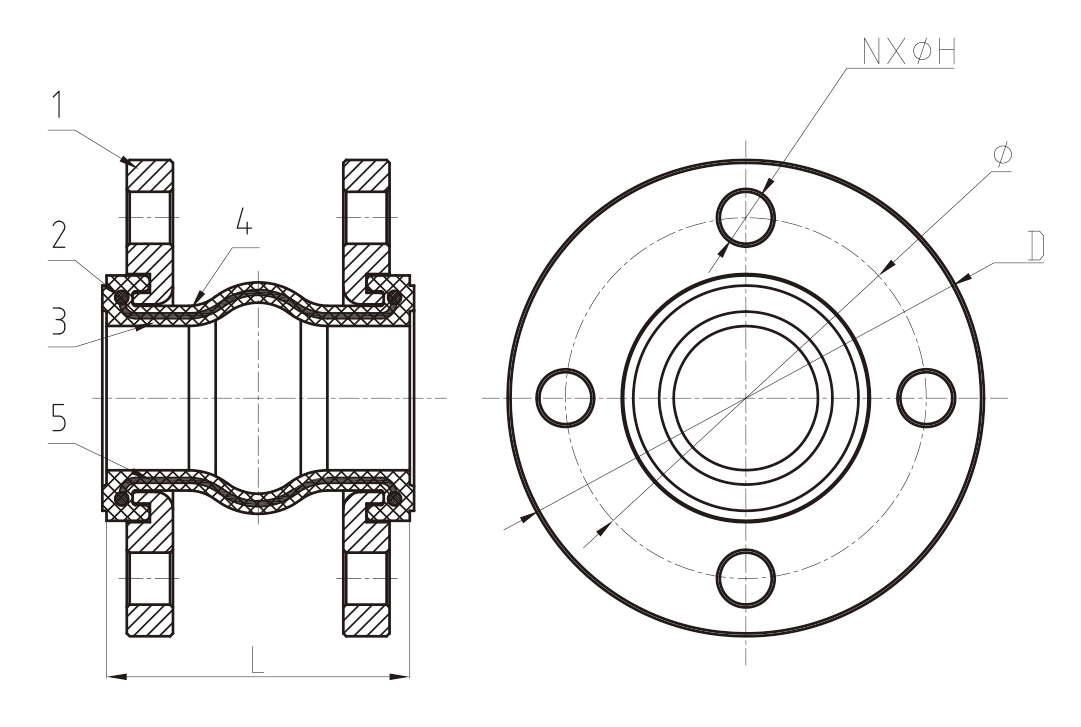
Precision engineering requires exact specifications. Below is the comprehensive breakdown of the materials and operational parameters that define the structural and functional capabilities of our expansion joints. The standard blueprint utilizes EPDM, but we specialize in customizing the inner and outer rubber to premium NBR to precisely match the chemical resistance requirements of your specific project.
Part No. | Part | Standard Specification |
|---|---|---|
1 | Flange | Galvanized Carbon Steel |
2 | Reinforcing Ring | Carbon Steel |
3 | Rubber (Inner) | EPDM |
4 | Rubber (Outer) | EPDM |
5 | Reinforcing Fabric | Nylon Fabric |
Note: For special material request other than standard specification, please indicate clearly on the inquiry or order list.
Parameter Category | Technical Details |
|---|---|
Product Name | NBR Single Ball Rubber Expansion Joint |
Flange Material | Galvanized Carbon Steel (Standard) / Stainless Steel (Optional) |
Reinforcing Ring | Carbon Steel / Steel Wire |
Inner / Outer Rubber | NBR (Customized for chemical/oil systems) / EPDM (Standard) |
Reinforcing Fabric | Nylon Fabric / Polyamide 6 |
Connection Mode | Flanged (Floating flange design) |
Flange Standards | ANSI, DIN, JIS, BS, etc. |
Pressure Rating | PN10 / PN16 / Class 150 / Class 300 |
Operating Temperature | -20°C to 80°C (Short-term peak up to 90°C) |
Applicable Media | Chemicals, oils, solvents, grease, hot/cold water, wastewater |
The longevity and reliability of any pipeline component are fundamentally dictated by the quality of its constituent materials. At the heart of this expansion joint is the premium NBR (Nitrile Butadiene Rubber) elastomer, specifically selected for its exceptional molecular resistance to hydrocarbons, oils, and a broad spectrum of industrial chemicals. Unlike standard rubbers that may swell, crack, or dissolve when exposed to aggressive media, our NBR formulation maintains its structural density and flexibility, ensuring a prolonged operational lifespan even in harsh chemical processing environments.
Robust Reinforcement Core: Embedded within the elastomer is a high-tensile Nylon Fabric (Polyamide 6) skeleton. This crucial layer acts as the muscular system of the joint, preventing over-expansion and ballooning under high internal pressures while maintaining the flexibility required for movement.
Corrosion-Resistant Flanges: The standard flanges are forged from high-strength carbon steel and treated with a premium galvanization process. This protective zinc coating provides a formidable barrier against ambient moisture, corrosive atmospheric gases, and accidental chemical splashes, preventing rust and structural degradation.
Integrated Steel Wire Rings: Solid carbon steel reinforcing rings are strategically positioned at the base of the rubber bead. These rings anchor the elastomer securely to the flange, guaranteeing that the rubber will not pull out or detach during extreme pressure surges or severe pipeline shifts.
Industrial pipelines are inherently dynamic systems, constantly subjected to the mechanical vibrations generated by centrifugal pumps, compressors, and the turbulent flow of fluids. If left unchecked, these high-frequency vibrations travel along rigid metal pipes, causing harmonic resonance that can loosen fittings, fracture welds, and severely damage sensitive instrumentation. Our Single Ball Rubber Expansion Joint acts as a highly efficient acoustic and mechanical isolator, effectively severing the transmission path of these destructive forces.
Elastomeric Dampening: The inherent viscoelastic properties of the NBR rubber absorb and dissipate kinetic energy, converting mechanical vibration into trace amounts of heat rather than allowing it to propagate through the system.
Acoustic Insulation: By breaking the metal-to-metal continuity of the pipeline, the joint dramatically reduces the transmission of structure-borne noise, creating a safer, quieter, and more compliant working environment for facility personnel.
Water Hammer Mitigation: Sudden changes in fluid velocity—such as rapid valve closures—create severe hydraulic shockwaves. The flexible spherical body of the joint expands slightly to absorb this kinetic impact, protecting rigid pipes and expensive pumping equipment from the devastating effects of water hammer.
Piping systems are never truly static; they are constantly shifting due to thermal expansion and contraction, ground settling, and installation misalignments. Rigid connections cannot accommodate these shifts, leading to dangerous stress concentrations that inevitably result in mechanical failure. This expansion joint is engineered to provide multi-dimensional flexibility, acting as a crucial buffer that safely absorbs these inevitable pipeline movements.
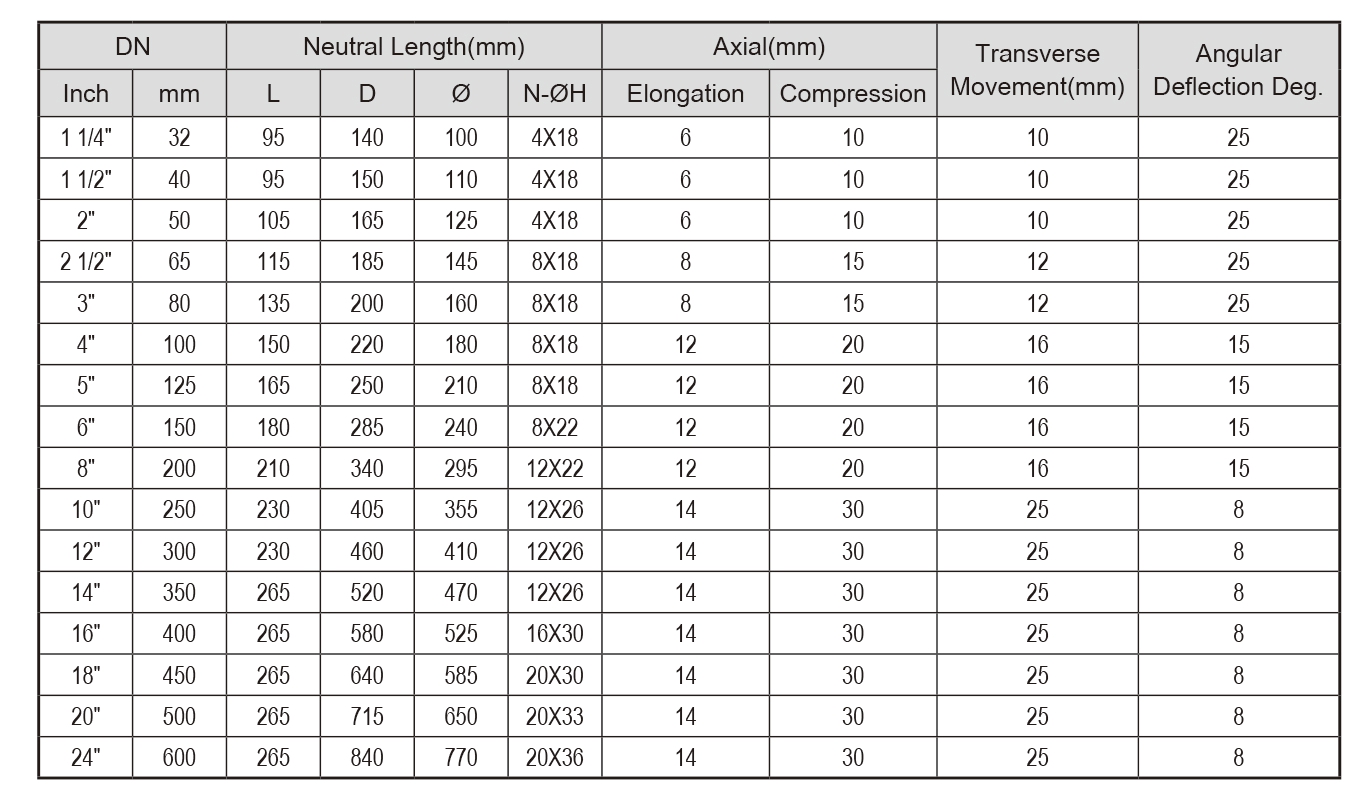
Axial Compression and Elongation: As pipes heat up and expand, or cool down and contract, the rubber sphere safely compresses or stretches along its axis, preventing immense thermal stresses from transferring to fixed anchor points.
Transverse Deflection: In scenarios where connecting pipes are slightly offset due to settling or installation tolerances, the joint can safely shift laterally, bridging the gap without compromising the integrity of the seal.
Angular Bending: The highly flexible nature of the single-ball design allows for significant angular deflection, accommodating slight bends in the pipeline routing and reducing the need for precise, costly pipe fitting alignments during installation.
Safety and operational reliability are paramount in industrial fluid control. This expansion joint is subjected to rigorous testing protocols to ensure it performs flawlessly under specified pressure and temperature parameters. It is fully rated to handle standard industrial pressures, including PN10, PN16, Class 150, and Class 300, providing a robust safety margin that protects against unexpected system pressure spikes.
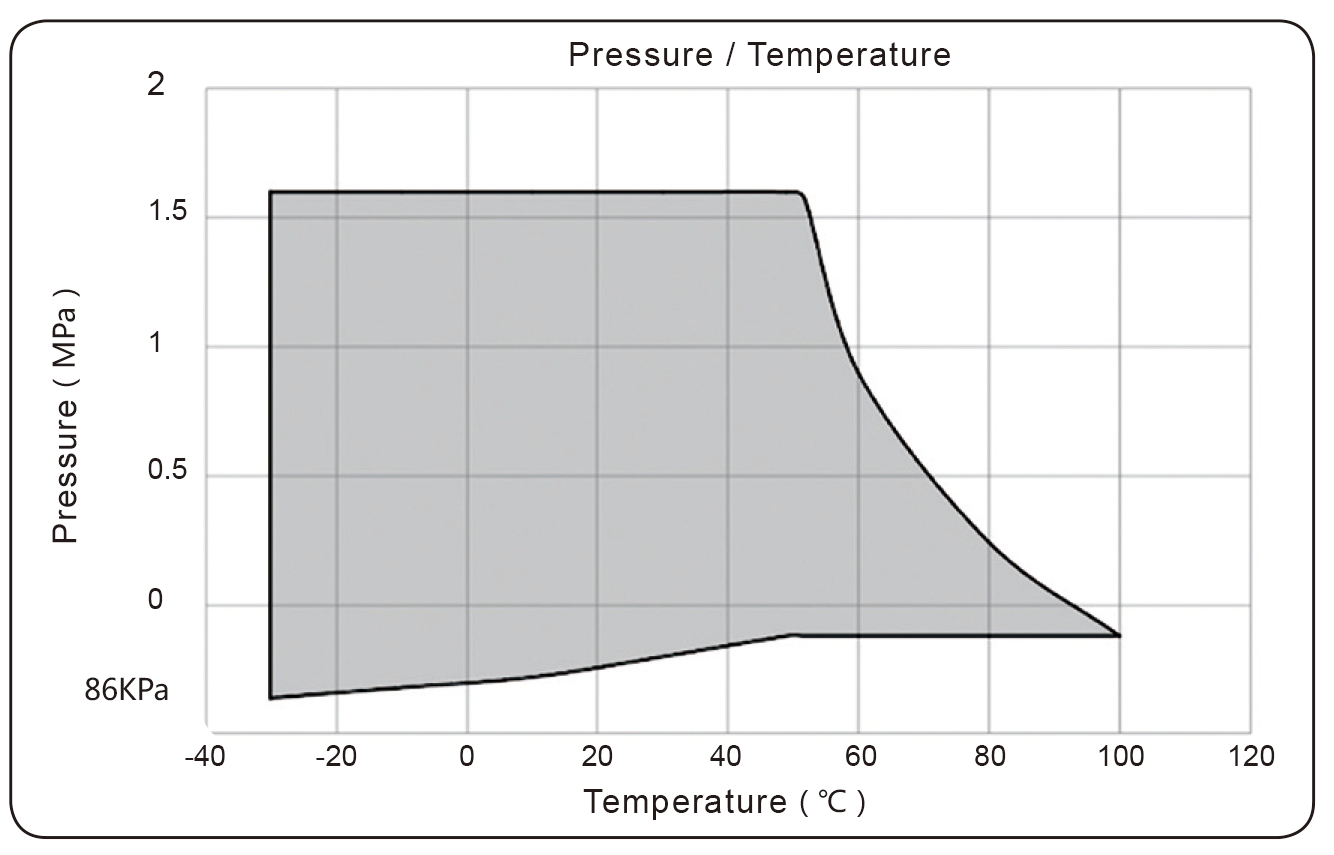
Temperature Resilience: Engineered to operate reliably in environments ranging from -20°C up to 80°C, with the capacity to withstand short-term peak temperatures of up to 90°C without suffering thermal degradation or losing elasticity.
High Burst Pressure Margin: The combination of high-grade elastomers and nylon fabric reinforcement ensures a burst pressure rating that significantly exceeds the standard operating pressure, offering absolute peace of mind in high-stakes chemical applications.
Vacuum Resistance: The robust structural design, supported by the internal reinforcing rings, prevents the rubber sphere from collapsing inward (sucking flat) when subjected to negative pressure or vacuum conditions within the pipeline.
Time is a critical resource during facility construction and maintenance shutdowns. We have designed this expansion joint to minimize installation complexity while ensuring absolute compatibility with global engineering frameworks. The intuitive design reduces the labor hours required for pipefitting, directly lowering overall project costs and accelerating system commissioning.
Floating Flange Architecture: The metal flanges are not rigidly bonded to the rubber body; they can rotate freely. This allows installers to easily align the bolt holes with the mating pipe flanges, even in cramped, hard-to-reach spaces, eliminating the need to twist the heavy pipeline.
Integrated Sealing Face: The full-face rubber flange acts as its own integrated gasket. This eliminates the need for purchasing and installing separate elastomeric or metallic gaskets, simplifying the assembly process and reducing the risk of improper gasket seating.
Universal Compatibility: Our products are precision-drilled to comply with a wide array of international standards, including ANSI, DIN, JIS, and BS. This ensures seamless integration into existing systems or new projects, regardless of the geographical location or specific engineering codes utilized.
