- All
- Product Name
- Product Keyword
- Product Model
- Product Summary
- Product Description
- Multi Field Search

Views: 154 Author: Site Editor Publish Time: 2026-05-20 Origin: Site


In commercial heating and cooling systems, pump vibration introduces tremendous structural stress. Thermal expansion and pipe misalignment further strain rigid piping networks. Together, these mechanical forces routinely lead to premature system failure if left unmitigated. The HVAC rubber expansion joint acts as the critical dampening interface. It absorbs destructive vibrations and accommodates thermal shifts gracefully. Pairing this elastomer body with SS304 flanges elevates overall system longevity. This material configuration proves particularly effective in condensation-prone chilled water environments.
We designed this guide to provide engineers, mechanical contractors, and facility managers with an evidence-based framework. You will learn how to properly specify, evaluate, and install these essential piping components. Our core objective is to help you achieve reliable, long-lasting performance. We want you to navigate these choices confidently without over-engineering or under-specifying your complex mechanical room systems.
Material Synergy: SS304 flanges paired with EPDM rubber bodies offer the optimal balance of corrosion resistance and thermal flexibility for standard HVAC fluids.
Configuration Logic: Choose a single sphere for standard vibration isolation; specify a double sphere joint when superior angular and lateral movement compensation is required.
Risk Mitigation: The majority of rubber joint failures stem from improper installation—specifically, omitting control rods or mating against incompatible raised-face flanges.
Compliance: Verifiable pressure testing and material traceability are non-negotiable for meeting Division 23 institutional design guidelines.
Mechanical rooms house vital infrastructure. These environments expose equipment to constant physical and environmental stressors. When engineers specify an SS304 flange joint, they proactively address one of the most persistent threats to system integrity: moisture-induced corrosion.
Chilled water lines inherently sweat. When fluid temperatures drop below the ambient room dew point, moisture rapidly forms on exposed metallic surfaces. Standard carbon steel flanges struggle immensely in these conditions. Facility teams often paint or epoxy-coat carbon steel components to delay deterioration. However, these protective barriers eventually chip or degrade under mechanical stress. Moisture creeps beneath the paint, feeding aggressive external rust. This external degradation ultimately compromises the physical seal and weakens the flanged connection.
Evaluating long-term system durability reveals the true value of stainless steel components. A robust stainless steel flange dramatically outlasts standard carbon alternatives. By specifying SS304 grade materials, you eliminate recurring maintenance burdens. Facility managers no longer need to schedule routine sanding, repainting, or rust-removal procedures. More importantly, stainless steel prevents the premature replacement cycles commonly seen in older commercial mechanical rooms. You secure uninterrupted system uptime and preserve the integrity of your chilled water distribution networks.
Upgrading to stainless steel requires basic diligence regarding dissimilar metals. You must assess dielectric needs during the design phase. SS304 offers excellent chemical compatibility alongside standard HVAC piping materials. However, galvanic corrosion occurs when you connect dissimilar metals in the presence of an electrolyte. If you integrate stainless steel flanges directly against galvanized steel or copper pipelines, proper electrical isolation remains essential. Facility engineers must verify the presence of dielectric kits or insulating gaskets. This simple step prevents localized anodic corrosion and preserves the flange's structural integrity.
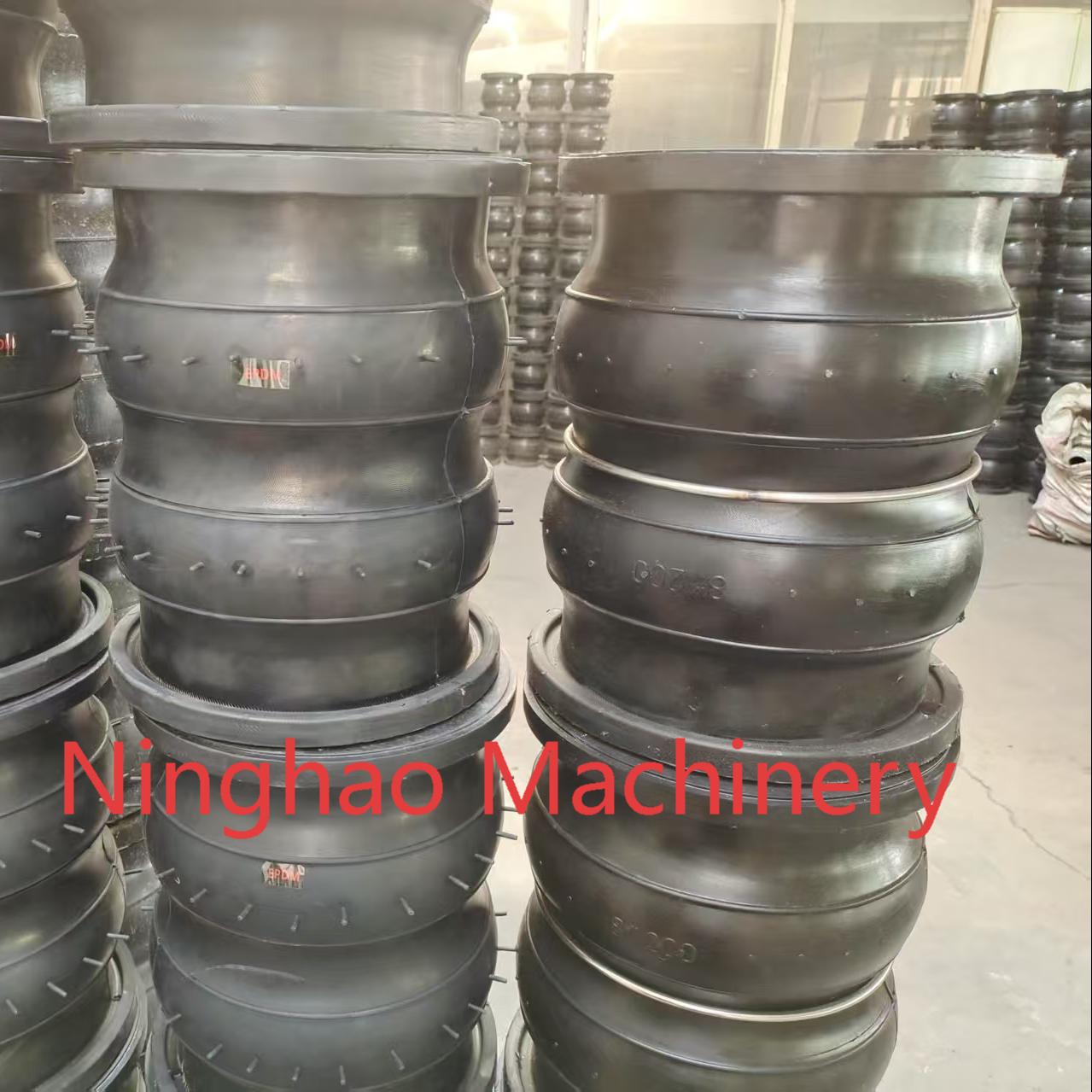
Understanding the geometrical differences between elastomer bodies helps you match the component to the exact mechanical challenge. Each architectural variation serves distinct operational purposes.
Single sphere designs provide excellent baseline vibration and noise transmission isolation. They feature one molded arch connecting the two flanged ends. This design proves ideal for tight spatial configurations. When mechanical rooms feature restricted face-to-face installation dimensions, the single sphere fits perfectly. It easily handles moderate axial compression and extension forces. Single spheres also resist internal pressure thrusts better than their multi-arch counterparts. They remain the industry standard for straightforward pump discharge isolation.
Complex piping networks often experience severe multidirectional stress. In these scenarios, you should specify a double sphere joint. The dual-arch geometry delivers exponentially higher tolerances for transverse (lateral) deflection and angular movement. It easily accommodates piping shifts caused by settling foundations or extreme thermal expansion.
Furthermore, this configuration offers superior acoustic dampening capabilities. The dual-arch design actively disrupts sound wave transmission. As turbulent fluid flows through the first arch, the noise frequency shifts. The second arch dampens this frequency further before it reaches the rigid piping.
However, this enhanced flexibility introduces a notable trade-off. Dual-arch designs require more physical installation space. They also demonstrate higher susceptibility to severe over-extension. If system pressure spikes unexpectedly, the elongated rubber body can balloon or stretch destructively. You must install proper structural restraints to safely utilize these highly flexible connectors.
Design Feature | Single Sphere Joint | Double Sphere Joint |
|---|---|---|
Vibration Isolation | Standard/Excellent | Superior/Maximum |
Lateral Deflection | Moderate | High |
Acoustic Dampening | Good | Exceptional (Wave disruption) |
Space Requirement | Compact (Short face-to-face) | Extended (Long face-to-face) |
Over-extension Risk | Low to Moderate | High (Requires careful restraint) |
Engineers must scrutinize three primary technical criteria when selecting an HVAC pipe connector. A rigorous evaluation guarantees safety, compliance, and sustained operational efficiency.
The rubber compound dictates the chemical compatibility and thermal resilience of the entire assembly. You must match the elastomer carefully to the system media.
EPDM (Ethylene Propylene Diene Monomer): EPDM represents the undisputed industry standard for chilled water, hot water, and HVAC condenser loops. It provides exceptional resistance to ozone exposure, weathering, and high temperatures. EPDM maintains its elasticity reliably across decades of standard HVAC service.
Nitrile (Buna-N): You only need Nitrile if your system fluid risks exposure to petroleum-based additives or lubricating oils. Standard EPDM breaks down rapidly when exposed to hydrocarbons. Nitrile resists these compounds but offers slightly lower thermal ratings compared to EPDM.
System designers must validate normal operating pressure against potential surge pressures. Pump start-ups routinely generate hydraulic shock waves (water hammer). Your specified connector must absorb these transient spikes without structural tearing.
Ensure your selected ratings align strictly with Fluid Sealing Association (FSA) standards. One critical engineering reality often gets overlooked: temperature inversely affects rubber strength. As system fluid temperatures rise, the internal pressure capacity of the elastomer decreases. You must consult the manufacturer's thermal derating charts before finalizing your specification. Never assume a static ambient pressure rating applies identically at 200°F.
Always confirm the flange drilling standards prior to ordering. Standard commercial applications typically require ANSI B16.5 Class 150 dimensional profiles. European or specialized systems might demand DIN or JIS configurations.
Furthermore, ensure the SS304 component features a floating (lap-joint) design. A floating flange rotates freely around the rubber bead before you torque the bolts. This simple mechanical feature drastically simplifies bolt hole alignment during awkward mechanical room installations. It saves significant contractor labor hours and prevents accidental twisting of the rubber body.
Major institutions rarely accept generic or undocumented components. Universities, hospitals, and government facilities enforce stringent engineering guidelines. You must navigate these standards correctly to achieve project approval.
You must align your product specifications with rigorous institutional HVAC requirements. Construction documents typically categorize these components under MasterFormat Division 23 (Heating, Ventilating, and Air Conditioning). Division 23 benchmarks demand explicit performance data regarding vibration isolation, thermal expansion parameters, and material safety. Specifying engineers look for components holding recognized industry certifications. Highlighting these compliance metrics proactively streamlines the submittal approval process.
Accountability defines institutional quality control. Never accept components lacking robust testing documentation.
Hydrostatic Testing: Demand factory hydrostatic testing records for your specific batch. Manufacturers should pressurize the joints safely beyond their stated operating limits to confirm seal integrity before shipping.
Positive Material Identification (PMI): Substandard imports frequently mislabel metal grades. Require PMI reports for the stainless steel components. This x-ray fluorescence testing guarantees true 304-grade compliance. It protects your facility against cheap, high-carbon metal masquerading as premium stainless steel.
Examine manufacturer warranty claims critically. Many suppliers base their guarantees solely on static bench tests. Real-world mechanical rooms introduce dynamic vibrations, fluctuating temperatures, and unpredictable hydraulic shocks. Evaluate warranties based on documented performance under actual operating conditions. Reputable manufacturers stand behind their products when subjected to continuous pump oscillation and standard HVAC thermal cycling.
The highest quality component will fail rapidly if installed poorly. Field installation errors destroy more expansion joints than actual manufacturing defects. Protecting your rubber joint requires strict adherence to mechanical best practices.
An expansion joint absorbs vibration beautifully, but it cannot absorb piping thrust loads independently. Internal system pressure pushes outward against the piping network. In unanchored or poorly guided piping segments, this thrust forces the adjacent pipes apart.
Control units, commonly known as limit rods, remain absolutely mandatory in these scenarios. These heavy-duty steel rods span across the joint assembly. They prevent catastrophic over-extension by physically stopping the joint from stretching past its maximum allowable elongation. Omitting limit rods frequently leads to catastrophic blowouts, flooding mechanical rooms instantly.
Flange surface geometry dictates the success of your fluid seal. Rubber expansion joints must always mate against flat-face flanges. The molded rubber bead acts as its own integrated gasket.
Installing elastomer joints against raised-face flanges triggers immediate disaster. When technicians tighten the bolts, the elevated inner ring of the raised-face flange bites directly into the soft rubber. This intense, localized pressure cuts the internal reinforcing fabric and slices the elastomer bead. Immediate weeping and rapid structural failure invariably follow. If your piping uses raised-face flanges, you must install appropriate rigid transition gaskets or modify the mating surfaces first.
Tightening bolts incorrectly distorts the rubber flange face. Uneven compression causes leaks and permanently damages the internal nylon or Kevlar reinforcing tire cord.
Follow this standardized torque implementation:
Hand-tighten all nuts evenly to ensure the flange faces sit perfectly parallel.
Utilize a calibrated torque wrench for all mechanical tightening phases.
Implement a strict cross-star bolting pattern. Tighten one bolt, then immediately tighten the bolt located 180 degrees directly across from it.
Gradually increase the torque in three distinct stages (e.g., 30%, 60%, and 100% of final target torque).
Stop immediately if the rubber begins to bulge excessively between the metal flanges. Over-torquing crushes the elastomer, rendering it useless.
Choosing the right vendor matters just as much as choosing the right specification. Evaluating your supplier ensures you receive reliable components aligned precisely with your project timeline.
Prioritize vendors controlling their entire supply chain. High-quality production requires mastery over two distinct disciplines: rubber compounding and metal machining. Manufacturers who mold their own elastomers and machine their own flanges maintain superior quality control. They catch dimensional variations early and guarantee perfect fitment between the metal backing rings and the rubber bead. Avoid unverified repackagers who cannot supply underlying material certificates.
Retrofit projects rarely offer perfect conditions. When replacing legacy equipment, you often encounter non-standard face-to-face dimensions or irregular flange drillings. Assess your vendor's engineering versatility. Can they mold a custom-length HVAC connector? Can they provide specialized off-center drillings? Suppliers possessing strong in-house engineering capabilities simplify complex retrofit operations immensely.
Mechanical room upgrades operate on tight schedules. Extended facility downtime disrupts operations and frustrates building occupants. You must weigh off-the-shelf product availability against the need for custom-engineered solutions. Standard single and dual-sphere EPDM units usually ship quickly from deep inventory. However, custom configurations for high-spec environments require deliberate production planning. Communicate your critical path deadlines early to ensure your supplier can meet your physical installation windows.
Specifying an HVAC rubber expansion joint equipped with SS304 flanges represents a strategic investment in facility resilience. This straightforward component eliminates complex vibration challenges, manages thermal expansion, and permanently defeats external condensation rust.
Moving forward, action these critical steps to secure your mechanical systems. First, assess your specific directional movement requirements to choose accurately between single and dual-arch designs. Second, strictly enforce flat-face mating flange requirements and limit-rod installations on every job site. Finally, base your purchasing decisions on verifiable data. Partner with manufacturers adhering to FSA testing standards and offering proven material traceability. Doing so guarantees your mechanical room operates reliably, quietly, and continuously for decades.
A: Yes, almost always. Double spheres provide significantly higher movement allowances but offer lower structural rigidity against internal pressure thrust. Control rods securely limit the joint's maximum elongation, actively preventing catastrophic blowout during pressure spikes or pump surges. They serve as essential insurance for unanchored pipe systems.
A: EPDM connectors generally rate between 212°F (100°C) and 250°F (120°C). Exact thresholds depend on the specific manufacturer and the underlying synthetic reinforcement fabric. However, you must always derate the maximum operating pressure limits as fluid temperatures approach these peak thermal boundaries.
A: Yes, SS304 resists corrosion exceptionally well in clean water. However, the internal EPDM rubber body must carry explicit certifications (such as NSF/ANSI 61) for potable applications. Standard industrial HVAC EPDM compounds often contain curing agents not automatically rated for human drinking water consumption.