- All
- Product Name
- Product Keyword
- Product Model
- Product Summary
- Product Description
- Multi Field Search

Views: 167 Author: Site Editor Publish Time: 2026-05-16 Origin: Site


Industrial water systems demand specialized connections. These connections must handle thermal expansion, mechanical vibration, and alignment offsets. They must achieve this without compromising overall system integrity. Rigid piping creates severe cumulative stress across infrastructure pipelines. Metallic connectors introduce harmful flow disruptions and long-term fatigue. Conversely, a properly specified rubber metal pipe connector isolates acoustic transmission perfectly. It also prevents dangerous galvanic corrosion across mixed-metal networks. This guide breaks down essential technical criteria for system designers. We detail the material limitations and installation prerequisites thoroughly. Engineers and procurement teams must evaluate these factors carefully before specifying a flexible pipe joint for waterworks, HVAC, or wastewater applications. You will discover how different elastomers handle unique thermal loads efficiently. We explain why control rods prevent critical mechanical failures. You cannot afford unexpected pressure blowouts. Implementing the right joint ensures optimal hydraulic efficiency. We provide actionable steps to finalize your procurement safely.
Acoustic & Vibration Isolation: Rubber offers exceptional sound dampening compared to steel, drastically reducing equipment noise and structural fatigue.
Flow Integrity: Smooth bore designs prevent turbulence and material entrapment common in corrugated metallic alternatives.
Material Constraints: Standard EPDM is optimal for water up to 250°F, while premium elastomers like FKM handle higher thermal loads.
Installation Safety: Systems without rigid anchoring must incorporate control rod assemblies to prevent connector over-extension under pressure.
Rigid connections transfer severe stress directly across infrastructure. They cause premature pump wear and fracture adjacent pipes predictably. They also amplify disruptive acoustic transmission throughout modern industrial facilities. Heavy machinery vibrations resonate freely along unyielding metal pipelines. Industrial plant managers require better vibration management strategies. A specialized water system connector provides the definitive engineering solution.
Let us examine the acoustic impedance advantage critically. We must establish the scientific baseline for noise reduction. Rubber possesses a relative acoustic impedance of 1.0. We compare this baseline against copper (approximately 424) and steel (approximately 551). This exponential difference functionally breaks sound wave propagation. Industrial pumps and massive chillers generate intense decibel levels. Rubber stops this mechanical noise from traveling down the pipeline. It acts as an absolute sonic dead-end for equipment vibrations.
We must also consider electrolysis and corrosion prevention. Mixed-metal piping systems frequently suffer from aggressive galvanic corrosion. Fully vulcanized rubber flanges create a reliable thermal and electrical break. They ensure absolutely zero metal-to-metal contact occurs. This structural isolation completely eliminates electrolysis risks. It physically separates dissimilar metals. You protect the structural integrity of your entire pipeline network by breaking the galvanic circuit.
Displacement accommodation represents another critical system capability. Pipelines move constantly during standard daily operation. Ambient environment changes and media temperature shifts cause massive thermal expansion. Elastomeric components absorb this physical movement naturally. They accommodate lateral deflection seamlessly. They easily handle angular offset and complex torsional stress. This inherent flexibility prevents catastrophic pipeline buckling.
Best Practice: Always conduct a vibration spectrum analysis on primary pumps before specifying the isolation joint. This data helps confirm the required elastomer thickness.
Common Mistake: Engineers often ignore torsional stress calculations. Rubber accommodates torsion, but excessive twisting will snap the internal reinforcing fabrics prematurely.
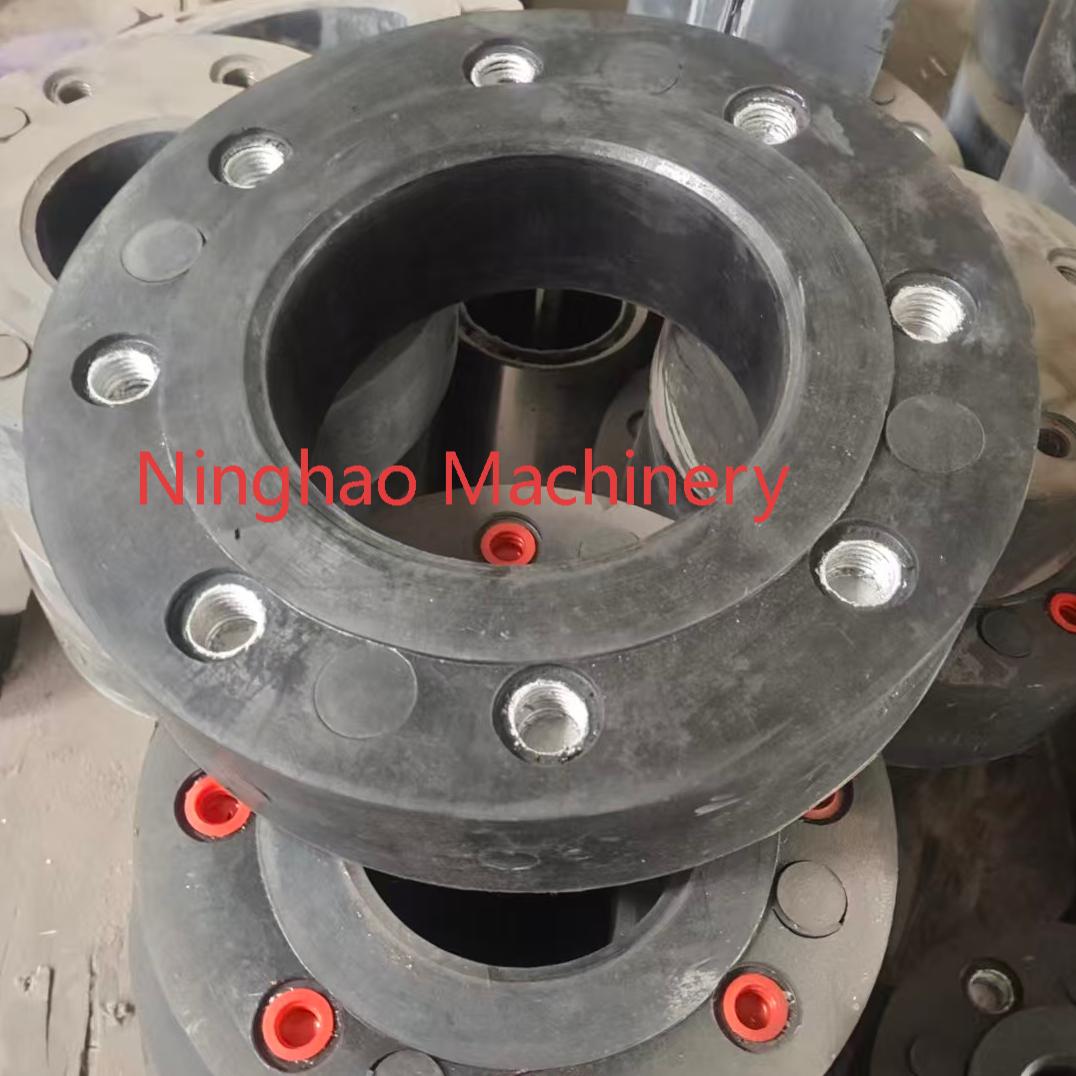
Engineers often compare elastomeric solutions against metallic bellows during system design. We must evaluate these solution categories objectively. Each design serves distinct hydraulic purposes within fluid transport networks.
Consider hydraulic efficiency and the smooth bore advantage carefully. A properly molded rubber metal joint features a completely smooth internal surface. This unbroken surface allows full, unrestricted fluid flow. It virtually eliminates sudden pressure drops across the connection. Contrast this directly against corrugated metallic bellows. Metallic bellows utilize deep internal folds to achieve flexibility. These metal convolutions induce severe fluid turbulence instantly. They disrupt laminar flow patterns completely. Furthermore, they create distinct pockets inside the pipeline. Bacteria grow rapidly inside these stagnant pockets. Solid material entrapment also occurs frequently in wastewater applications.
Next, we analyze sealing mechanics. Rubber connectors utilize fully vulcanized full-face flanges. These rubber faces act as self-gasketing units during field installation. Manufacturers frequently mold integrated O-rings directly into the flange face. You do not need separate sealing gaskets. You avoid using extra packing material entirely. This elegant, single-piece design dramatically reduces long-term maintenance leaks.
Trustworthiness requires acknowledging application boundary limitations openly. Rubber components fail predictably under specific extreme conditions. You must never deploy these elastomeric connectors for extreme high-temperature scenarios. Full-vacuum lines will collapse standard elastomeric units violently. Extreme high-pressure environments also exceed their basic structural limits. Heavy-duty metallic joints remain absolutely mandatory for those intense engineering applications.
Performance Feature | Elastomer Joint (Rubber) | Metallic Bellows (Corrugated) |
|---|---|---|
Hydraulic Efficiency | High (Smooth bore prevents turbulence) | Low (Convolutions cause pressure drops) |
Acoustic Isolation | Excellent (Exponential noise reduction) | Poor (Transmits metallic vibrations easily) |
Sealing Mechanics | Self-gasketing (Integrated sealing face) | Requires separate external gaskets |
Extreme Temp/Pressure | Limited by elastomer compound threshold | Superior capabilities for extreme limits |
Elastomer specification dictates overall long-term reliability. We must break down the reinforced lining options meticulously. Thermal limits and chemical exposure determine the strictly correct choice. You must evaluate these operational parameters carefully for your pipe fitting. Selecting the wrong compound guarantees rapid material degradation.
EPDM represents the absolute industry standard for water transport. Facilities utilize it universally for industrial water and HVAC systems. EPDM remains highly durable under continuous daily operation. Its thermal operational limit reaches up to 250°F (approximately 121°C). It resists ozone weathering and standard water purification chemicals excellently.
FKM, commonly known as fluoroelastomer, handles highly aggressive environments. You require FKM for significantly higher heat applications. It safely withstands continuous fluid temperatures up to 400°F. Facilities deploy FKM when standard EPDM would blister or melt.
Neoprene and Nitrile serve very specialized industrial roles. Engineers specify them when trace oils exist inside the fluid media. They handle weak acids and distinct chemical compositions effectively. Their thermal limits typically range strictly between 212°F and 230°F. Nitrile specifically prevents severe swelling when exposed to petroleum-based lubricants.
We must also review pressure and standard flange alignments. Structural integrity demands rigorous evaluation before installation. Connectors must align perfectly against your facility system pressure ratings. Standard models operate safely from PN10 up to PN40 ratings. They easily handle sustained pressures up to 150psi. Furthermore, their bolt holes must match international drilling standards precisely. Common supported standards include ANSI 125/150#, DIN, JIS, and BS. You cannot mix incompatible flange patterns successfully. Forcing mismatched flanges guarantees catastrophic seal failure.
Elastomer Type | Max Operational Temp | Primary Media Compatibility |
|---|---|---|
EPDM | 250°F (121°C) | Potable Water, HVAC Hot/Chilled Water, Seawater |
FKM (Fluoroelastomer) | 400°F (204°C) | High-Temperature Fluids, Harsh Chemicals |
Neoprene | 230°F (110°C) | Water with mild abrasives or weak acids |
Nitrile (Buna-N) | 212°F (100°C) | Water containing trace oils or petroleum byproducts |
Implementation reality presents highly specific physical challenges. A flexible industrial pipe connector naturally expands under internal fluid pressure. Elongation forces push the pipeline apart continuously. At full system pressure, this structural elongation can approximate 1.5% of the total connector length. This physical stretch alters pipeline geometry significantly.
You must understand the exact role of control units. An unconstrained connector faces severe operational risks. It can suffer catastrophic flange pull-out during peak operation. Sudden water hammer events guarantee mechanical failure if left completely unchecked. Control rod assemblies absorb these massive axial forces effectively. They utilize heavy-duty gusset plates and steel tie rods. These assemblies keep the installation rigidly within safe dimensional limits. They prevent the rubber body from ballooning outward excessively.
We utilize a straightforward decision matrix for control rods. You must follow these guidelines strictly to ensure site safety:
Anchored Systems: Sometimes you install robust piping anchors on both sides of the joint. These main anchors absorb all axial forces successfully. You may safely omit control rods if operations remain strictly within the manufacturer's rated expansion limits.
Unanchored Systems: Many suspended pipelines lack proper structural anchoring. Control rods become strictly mandatory here. They act as the primary defense to prevent dangerous over-extension and sudden blowouts.
Spring-Mounted Equipment: Heavy industrial pumps often sit on vibration-damping springs. These pumps shift dynamically when they cycle on and off. You always require control rods to manage this intense dynamic physical shift safely.
Failing to install control rods on unanchored systems ranks among the most common industrial engineering mistakes. The resulting blowout poses extreme safety hazards to plant personnel. It also causes immediate, severe flooding in mechanical rooms. Always verify your anchoring hardware integrity before charging the system with water.
Procurement teams require clear, logical shortlisting frameworks. A structured framework guarantees accurate purchasing outcomes. We provide this specific checklist to finalize your water pipe fitting order successfully. Skipping these steps leads to severe installation delays and mismatched components.
Verify the exact fluid media composition. Determine if you transport potable water, aggressive seawater, or raw wastewater. Match this exact media directly to the compatible elastomer compound to prevent chemical breakdown.
Calculate the maximum operating pressure accurately. You must also account for sudden surge pressure. Water hammer events spike internal forces dramatically. Choose a pressure rating capable of absorbing these sudden hydraulic shocks.
Confirm precise dimensional alignment. Check the published face-to-face length carefully. Verify complete flange standard compatibility before ordering. Ensure the bolt hole patterns match your existing steel piping flanges perfectly.
Ensure strict manufacturing compliance. Demand products meeting established global industry benchmarks. Products adhering to Fluid Sealing Association (FSA) standards provide excellent baseline safety metrics. Verify all relevant manufacturing certifications.
We strongly recommend engaging directly with the manufacturer during the design phase. Share your operational data openly. Providing accurate temperature logs and pressure charts allows them to recommend the most robust configuration.
Upgrading to a rubber metal pipe connector represents a major systemic enhancement. It is never merely a basic component swap. This upgrade fundamentally protects expensive capital equipment from severe vibration degradation. It actively prevents structural acoustic fatigue from tearing your pipeline apart. Engineers must treat this component as a critical safeguard for facility infrastructure.
Take these concrete steps before finalizing your next system overhaul:
Audit your existing pipeline infrastructure visually to locate rigid joints causing excessive vibration transmission.
Map your peak operational temperatures precisely to select the correct elastomer compound confidently.
Assess your current anchoring hardware thoroughly to determine if control rod assemblies are mandatory for safety.
Request a customized technical submittal or a standardized CAD model from the manufacturer before executing any purchase order.
A: No. While they absorb minor installation offsets and operational vibrations, they are not a substitute for proper pipe routing and alignment. Excessive initial misalignment will pre-stress the rubber and severely reduce its lifespan.
A: This usually indicates either a pressure surge beyond the unit's rating, degradation of the internal reinforcing fabric, or the absence of necessary control rods in an unanchored system.
A: They are largely maintenance-free, but require scheduled visual inspections for surface cracking, blistering, or weeping at the flange interface, which indicates thermal or chemical degradation.