- All
- Product Name
- Product Keyword
- Product Model
- Product Summary
- Product Description
- Multi Field Search

Views: 188 Author: Site Editor Publish Time: 2026-05-05 Origin: Site


Managing structural stress, thermal movement, and equipment vibration is critical to preventing catastrophic failures in industrial piping systems. Unmanaged kinetic energy quickly compromises pipe integrity and tears apart expensive machinery. This is where specialized engineering hardware proves invaluable to system longevity. The EPDM double sphere flanged connector provides superior multi-directional movement capabilities compared to rigid piping or single-sphere alternatives. It acts as a highly reliable, flexible buffer for pumps, chillers, and large cooling towers. You protect critical physical assets while simultaneously dampening severe operational noise.
This guide details essential performance thresholds, implementation risks, and technical evaluation criteria. We aim to help engineers and facility managers specify the exact hardware needed for complex environments. You will learn how to match pressure ratings, evaluate material constraints, and enforce proper installation protocols. By the end, you can confidently integrate the right connector to ensure absolute system stability.
Superior Movement: Double sphere joints accommodate significantly higher axial compression, extension, lateral deflection, and angular movement than single sphere designs.
Material Suitability: EPDM excels in HVAC, water, and mild chemical applications, offering high resistance to ozone and aging, but is strictly contraindicated for petroleum or hydrocarbon lines.
Installation Integrity: Premature failure is most often caused by improper installation (e.g., over-torquing, mating with unsupported raised face flanges) rather than material defects.
Safety Requirements: Systems operating at high pressures or experiencing large pressure surges require control rod assemblies to prevent the pipe connector from over-extending.
Rigid piping systems inevitably transfer intense vibration and thermal stress directly to expensive equipment. This includes critical assets like centrifugal pumps, heat exchangers, and heavy-duty compressors. When vibration propagates unchecked, it accelerates mechanical wear on bearings and mechanical seals. Facilities then face rising maintenance bills and costly unplanned downtime. A flexible double sphere joint solves this precise business problem. It acts as an active, heavy-duty shock absorber within the pipeline.
Let us look closely at multi-directional movement limits. Thermal expansion creates immense linear force along long pipe runs. The dual-arch design greatly increases capacity for both axial compression and elongation. It safely folds inward to absorb pushing forces without rupturing. You also gain generous lateral deflection limits and significant angular rotation allowances. Single-arch models simply cannot match this wide range of motion.
Acoustic and vibration dampening represents another critical engineering advantage. The double sphere geometry creates an advanced sound break. It disrupts structural noise transmission traveling through the fluid and the pipe wall. This feature remains absolutely crucial for noise-sensitive commercial HVAC deployments. Hospitals, laboratories, and high-rise office buildings rely heavily on this vibration isolation.
However, engineers must always balance available space against performance gains. You must account for a longer face-to-face dimension. A double sphere configuration inherently requires more installation room than a compact single arch. Always verify your physical clearance constraints and pipe support spacing before finalizing the piping layout.
Selecting the right elastomer dictates long-term system survivability. Ethylene Propylene Diene Monomer (EPDM) offers exceptional baseline performance for many industrial applications. You can expect standard operating temperature ranges generally from -20°F to +250°F (-29°C to +121°C). An EPDM rubber expansion joint naturally resists harsh environmental weathering. It handles long-term ozone exposure, hot water, and steam cycles with superior physical durability.
We must also clearly highlight transparent limitations. You must understand the strict contraindications for this specific rubber compound. EPDM degrades rapidly when exposed to oils or petroleum-based solvents. You cannot use it in severe hydrocarbon environments. If your system transports oily fluids or lubricants, you must switch to a Nitrile (Buna-N) alternative. Ignoring this rule causes the rubber to swell, lose tensile strength, and eventually blow out.
Consider longevity and fatigue resistance carefully during the design phase. Assess the expected lifecycle under continuous dynamic loading. Pumps cycling on and off create constant, high-frequency flex. Static offset conditions place a different type of permanent stretching stress on the EPDM joint. EPDM handles high-frequency, low-amplitude fatigue exceptionally well. Just ensure the fluid operating temperatures remain strictly within the specified thermal limits to prevent premature hardening.
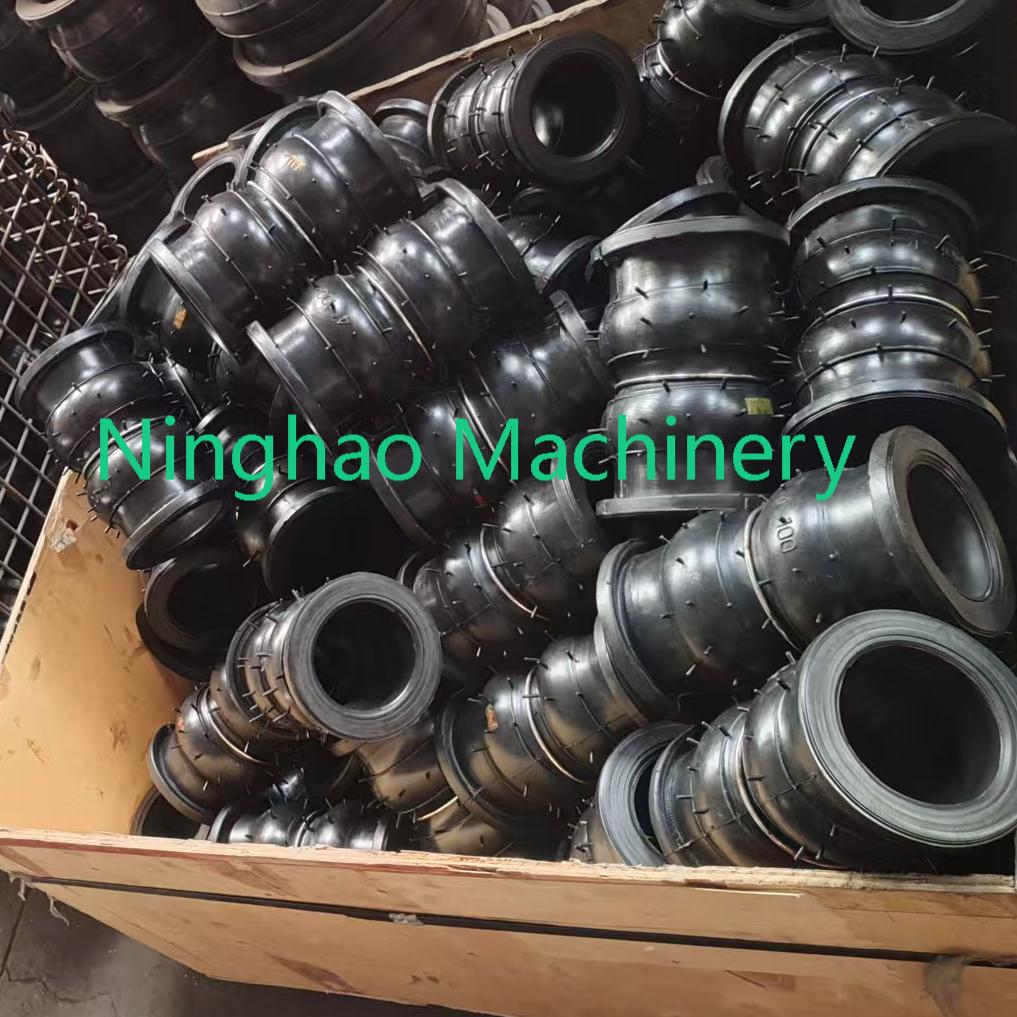
Piping systems rely heavily on strict dimensional standards to function safely. You must perfectly match flange drilling patterns to established industry specifications. Floating flanges simplify installation by rotating freely to align bolt holes without twisting the rubber body. You must also select the right flange material based on environmental corrosiveness. Galvanized carbon steel works perfectly for standard indoor HVAC. You should upgrade to 304 or 316 stainless steel for coastal, underground, or highly corrosive environments.
Below is a basic comparison chart mapping common flange standards for a flanged rubber connector:
Standard Format | Typical Pressure Rating | Common Application Regions |
|---|---|---|
ANSI/ASME B16.5 | Class 150 / 300 | North America, Global Industrial |
DIN (EN 1092-1) | PN10 / PN16 | Europe, Global Industrial |
JIS B2220 | 10K / 16K | Asia Pacific, Marine Systems |
Pressure and vacuum ratings completely dictate your safety margins. Always correlate maximum operating pressure limits with the actual pipe diameter. Larger diameter joints generally hold lower maximum internal pressures. Ensure your burst pressure safety margins meet facility guidelines. If your system pulls a heavy vacuum, standard flexible spheres will collapse inward. You must install internal vacuum support rings for high-suction applications to maintain shape integrity.
Finally, verify all relevant health and safety certifications. If you deploy the unit in municipal potable water systems, NSF/ANSI 61 compliance remains legally mandatory. This stringent certification ensures the rubber compound does not leach harmful chemicals or volatile organics into the drinking water supply.
A rubber expansion joint handles dynamic movement perfectly, but it is not a cure-all. Many inexperienced installers mistakenly use it to compensate for severe pipe misalignment during the initial build. Doing so consumes its available movement allowance before the system even powers on. This forces the rubber into a permanently stressed state and drastically shortens its operational lifespan.
Mating flange hazards represent another major, yet avoidable, failure point. You must follow strict mechanical guidelines when attaching the assembly to adjacent pipework.
Do not mate rubber joints directly to raised-face flanges. The sharp metallic edge acts like a circular knife against the rubber.
Avoid using unlined slip-on flanges. They lack the necessary flat, smooth sealing surface required for a tight seal.
Always use proper transition gaskets or metallic retaining rings when mating surfaces are uneven or non-standard.
Torque and bolting protocols demand close attention from maintenance crews. Installers must use a criss-cross, star-pattern tightening sequence. This practice ensures even compression across the entire sealing face. Avoid over-torquing the bolts at all costs. Excessive pressure crushes the EPDM bead flat. Once crushed, the structural seal breaks, and the joint leaks immediately upon pressurization.
You must also completely understand the role of external control units. Determine exactly when tie rods or control rods are mandatory. They physically prevent joint rupture during sudden pump start-ups or pressure spikes. If the adjacent piping is not adequately anchored to concrete, the internal pressure thrust will stretch the joint apart. Control rods physically limit this dangerous over-extension.
Selecting the perfect component requires a systematic, evidence-based approach. You must implement strict features-to-outcomes mapping. Align joint specifications directly with the system's absolute operational extremes. Do not just look at everyday nominal conditions. A pipe expansion joint must confidently survive peak pressure surges and maximum summer thermal expansion.
Prioritize strong vendor documentation and absolute traceability.
Demand detailed submittal drawings for precise dimensional checks before ordering.
Request Material Test Reports (MTRs) to verify rubber compound purity and metal alloy quality.
Ask for pressure test certifications to guarantee real-world safety margins under load.
Assess your supply chain and hardware customization options. Evaluate standard inventory lead times versus custom manufacturing timelines. Sometimes you need specialized face-to-face dimensions to retrofit an old facility. Other times you need custom flange drillings for imported equipment. Ensure your chosen supplier can meet your strict project timeline without compromising quality.
Focus your next-step actions on concrete engineering tasks. Initiate comprehensive engineering reviews with your piping team. Request precise 3D CAD models for your digital piping integration. Ensure the pipe connector fits perfectly in the digital twin before ordering any physical hardware. Verify all clearance envelopes for the control rods as well.
Proper specification requires carefully balancing extreme movement demands with precise material compatibility. You must enforce strict adherence to field installation protocols to guarantee success. The double sphere design offers unmatched flexibility, but it delivers value only when installed correctly.
Always verify maximum system pressures and absolute thermal extremes.
Ensure your selected flange standards align perfectly with existing mating hardware.
Mandate steel control rods for unanchored systems or high-pressure transmission lines.
Never use EPDM in applications exposed to petroleum, heavy oils, or hydrocarbons.
Ensure an experienced piping engineer verifies these critical parameters before final procurement. Contact our technical team today for dedicated application assistance. We can provide a customized hardware quote tailored exactly to your piping network. You can also download our comprehensive spec sheet library to explore our full range of flanged rubber connectors.
A: Standard EPDM rubber joints typically handle operating temperatures up to 250°F (121°C). High-temperature specialty EPDM blends might push slightly higher, but exceeding 250°F regularly accelerates rubber hardening and fatigue. Always verify specific manufacturer ratings based on your system fluid.
A: No, but they are highly recommended. You must use control rods if the adjacent piping lacks proper anchor points or if the system experiences severe pressure surges. They physically prevent the internal pressure thrust from over-extending and tearing the rubber body.
A: Yes, but it requires specific certification. The EPDM compound must be explicitly NSF/ANSI 61 certified. This ensures the rubber formulation does not leach toxic chemicals, volatile organics, or distinct tastes into drinking water supplies.
A: Standard rubber spheres will collapse inward under heavy suction. You prevent this by ordering the joint with internal vacuum support rings. These solid steel hoops sit inside the rubber arches, providing structural rigidity against external atmospheric pressure.
A: Immediate leaks usually stem from installation errors. The most common cause is over-torquing the bolts, which permanently crushes the rubber sealing bead. Mating the joint to a sharp raised-face flange without a transition ring will also cut the rubber, causing instant failure.