- All
- Product Name
- Product Keyword
- Product Model
- Product Summary
- Product Description
- Multi Field Search

Views: 126 Author: Site Editor Publish Time: 2026-02-02 Origin: Site


When it comes to maintaining the safety and performance of piping systems, control rods are a critical component. But when are they truly necessary? In this article, we’ll explore the essential role of control rods and when they’re mandatory in piping expansion joints. You’ll learn why control rods are vital in unanchored systems, isolated equipment, and high-pressure environments.
Control rods (or tie rods) are mechanical devices used in piping systems to limit the movement of expansion joints. Their main function is to prevent over-expansion or over-compression of the joint, keeping it within design limits. Control rods protect the joint from excessive pressure, thermal forces, and mechanical stress that could cause failure.
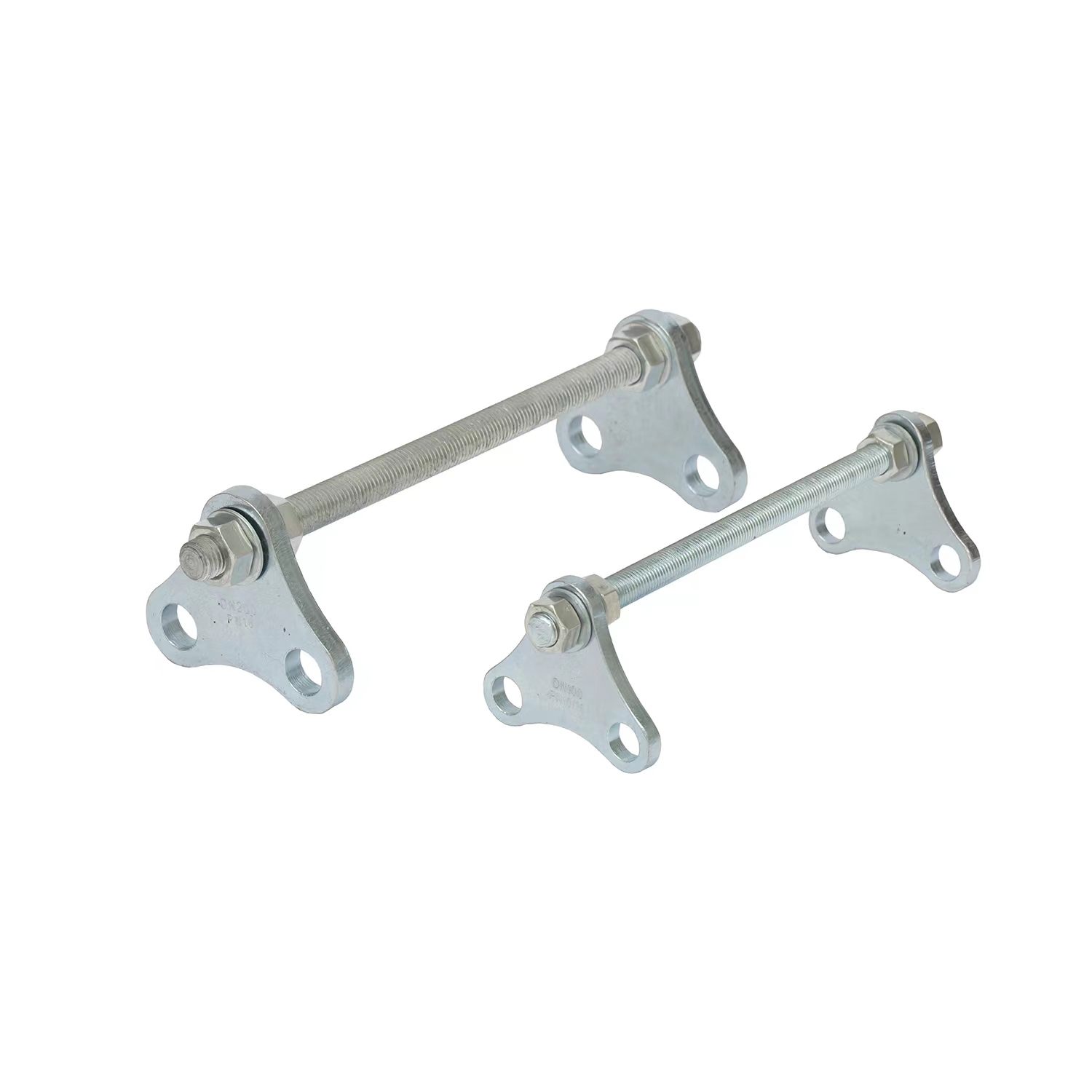
Control rods are made from durable, corrosion-resistant materials like steel alloys and stainless steel, ensuring they can withstand harsh industrial conditions. The rods are designed for high strength, flexibility, and long-term reliability.
Control rods ensure that expansion joints stay within safe operational limits, preventing damage from excessive movement. They absorb pressure thrust and act as mechanical restraints, safeguarding the system from potential failure.
Types of Movements Controlled by Rods
Type of Movement | Control Rod Function |
Axial Expansion/Compression | Prevents excessive expansion or compression. |
Lateral Movement | Restrains side-to-side motion. |
Angular Movement | Ensures the joint remains aligned. |
Control rods are mandatory in unanchored piping systems. In such systems, the lack of proper anchoring can lead to uncontrolled movement, which could exceed the joint's allowable range and result in failure.
● Why Anchors Matter:
Without anchors, the expansion joint cannot absorb thermal expansions or axial forces by itself.
Control rods absorb these forces, preventing the joint from over-expanding or compressing.
Example: In NHFlex systems, control rods provide stability, ensuring the joint remains within its safe operational limits even without anchors.
In systems where expansion joints are connected to isolated equipment, control rods are essential to handle internal forces such as pressure fluctuations or thermal expansion.
● Role of Control Rods in Isolated Systems:
Control rods prevent the expansion joint from overstretching, ensuring system stability.
They absorb the internal forces that could otherwise damage the expansion joint.
In NHFlex installations, control rods maintain the integrity of the system by preventing excessive movement at sensitive connection points.
Systems exposed to pressure fluctuations and thermal variations, like those in the petrochemical or power generation industries, require control rods to maintain the integrity of the expansion joint.
● How Control Rods Help in High-Demand Systems:
Control rods manage significant thermal and pressure forces, preventing the expansion joint from exceeding its limits.
They ensure that the joint can handle high temperatures or pressure surges without failing.
In NHFlex solutions, control rods are designed to protect expansion joints in demanding environments, ensuring reliable and safe operation.
System Type | Pressure Fluctuation | Thermal Expansion | Control Rod Function |
Petrochemical | High pressure surges | Significant heat | Absorb pressure thrusts, prevent over-expansion |
Power Generation | Thermal pressure changes | Large temperature changes | Maintain safe operational range, limit over-compression |
In these environments, NHFlex’s expansion joints with control rods are specifically engineered to handle extreme conditions without compromising system performance.
Control rods act as physical barriers that restrict the movement of expansion joints, preventing them from moving beyond their designed compression or extension limits. Without control rods, an expansion joint could stretch or compress too much, potentially causing damage or failure. In systems where temperature fluctuations or pressure surges are significant, control rods ensure that the joint remains within safe operating boundaries.
● Function in Preventing Over‑Expansion:
As thermal forces or pressure increases, the expansion joint would try to expand. Control rods stop this excess movement, ensuring that the joint stays within its designed compression range.
● Function in Preventing Over‑Compression:
Similarly, control rods stop excessive compression that can occur when the system cools down or under pressure. This ensures the joint maintains flexibility while preventing damage.
In systems where internal pressure is high, control rods play a crucial role in absorbing pressure thrust. Without these rods, the internal pressure could stretch or distort the expansion joint, compromising its ability to function properly.
● Role in Managing Pressure Forces:
High internal pressures can create forces strong enough to pull the expansion joint apart. Control rods absorb these forces, ensuring the joint stays intact and performs as expected under pressure.
In NHFlex systems, control rods are specially designed to withstand pressure fluctuations and provide reliable protection against damage caused by excessive force.
Control rods ensure that the expansion joint remains flexible while operating safely within the specified limits. By setting proper clearances, control rods allow for necessary movement in the joint without the risk of over-expansion or compression.
● Adjustable Clearances:
Proper clearance between the control rods and the expansion joint ensures that it can expand and contract as needed without breaking down.
These clearances are set to keep the joint moving within its specified range, ensuring long-term functionality and preventing joint fatigue.
Table: Functions of Control Rods in Piping Systems
Function | Impact on Expansion Joint |
Prevent Over‑Expansion | Limits the extension of the joint, preventing damage. |
Prevent Over‑Compression | Restrains excessive compression, ensuring flexibility. |
Absorb Pressure Thrust | Reduces stress on the joint caused by internal pressure. |
In fully anchored piping systems, where both sides of the expansion joint are securely fixed, control rods may not be necessary. These systems are designed to handle axial and thermal forces without the need for additional restraints.
● Importance of Anchors:
Proper anchors prevent the system from moving excessively, which means the expansion joint does not need extra support.
However, NHFlex recommends the use of control rods in fully anchored systems for added protection and extended longevity, especially in systems where sudden pressure surges or unforeseen movements could occur.
In systems equipped with adequate thrust restraints, control rods may not be required. Thrust restraints are designed to handle the pressure forces that would otherwise be absorbed by control rods.
● Backup Function of Control Rods:
Even in systems with thrust restraints, control rods can still serve as a useful backup to protect against unexpected pressure surges or system irregularities.
In NHFlex’s designs, control rods provide an extra layer of security in systems with thrust restraints, ensuring consistent and reliable performance under fluctuating conditions.
The number of control rods needed for a system is based on the maximum working pressure of the pipeline. This is calculated using a 3:1 safety factor, a standard industry practice that ensures the control rods are robust enough to handle unexpected forces.
How to Calculate:
Example from NHFlex: For a 24” expansion joint in a pipeline with a pressure of 120 psig, the system would require 3 control rods.
If the pressure increases to 220 psig, the system would need 5 control rods.
By using this formula, you can ensure that your system is equipped with the correct number of control rods to handle the maximum expected pressure.
Table: Number of Control Rods Based on Maximum Pressure
Pipeline Pressure (psig) | Number of Control Rods |
120 | 3 |
220 | 5 |
300 | 7 |
Choosing the right material for control rods is crucial to ensuring their durability and performance over time. NHFlex designs control rods with high-quality materials selected to meet the demands of specific systems. For instance, control rods are built to withstand corrosion, wear, and the stresses of repeated use.
Material Options:
EPDM: Excellent for systems exposed to high temperatures and chemicals.
Fluoroelastomers: Ideal for highly corrosive environments, providing superior chemical resistance.
The right material ensures that the control rods will perform reliably even in harsh industrial environments, such as those seen in NHFlex’s engineered solutions for petrochemical or power generation applications.
Proper installation of control rods is essential for maximizing their effectiveness in controlling expansion joint movement.
● Positioning and Clearance:
Control rods should be positioned flange-to-flange, ensuring they are aligned correctly to support the joint without restricting its designed movement.
Clearance must be carefully maintained to accommodate the joint’s thermal and mechanical movements.
NHFlex recommends using precise installation techniques to prevent stress on the joint or piping system during expansion or contraction.
● Ensuring Alignment:
Misalignment during installation can put unnecessary stress on the expansion joint, leading to failure over time. Ensure that the piping is aligned before installing control rods to prevent any misalignment issues.
Proper alignment is especially critical in systems with high thermal or pressure fluctuations, where even small misalignments can lead to significant damage.
Regular maintenance of control rods is essential to ensure they continue to perform as expected over time. Monitoring and adjusting the rods periodically helps prevent wear and tear.
● Regular Inspections:
Check Tightness: Ensure that the control rods are neither too tight nor too loose. Over-tightening can lead to stress on the system, while loose rods may not provide adequate restraint.
Check for Corrosion or Wear: Periodically inspect for signs of corrosion, wear, or damage, especially in systems exposed to harsh environments.
● Example Maintenance Procedure from NHFlex:
First Year: Tighten the bolts every few months during the first year of operation to maintain balanced restraint.
Ongoing Checks: After the first year, continue with semi-annual inspections to ensure alignment and functionality.
Table: Maintenance Checklist for Control Rods
Maintenance Task | Frequency | Purpose |
Tighten Bolts | Every 3-6 months | Ensure balanced restraint |
Inspect for Wear or Corrosion | Semi-annually | Prevent system failure due to damage |
Check Alignment | Annually | Avoid stress on expansion joint |
Proper installation and ongoing maintenance ensure that control rods continue to protect expansion joints and maintain the integrity of the piping system throughout its lifespan.
In this article, we discussed the role of control rods in protecting expansion joints. These rods are essential in unanchored systems, isolated equipment, and under extreme pressure and thermal forces. NHFlex offers high-quality control rods that help maintain system safety and integrity in industrial environments.
A: Control rods are mechanical devices that restrict the movement of expansion joints, preventing over-expansion or over-compression, and protecting the system from failure.
A: Control rods are mandatory in unanchored piping systems, isolated equipment setups, and high-pressure environments to maintain system integrity and prevent damage.
A: Control rods absorb pressure thrust and restrict movement, ensuring that the expansion joint stays within its safe operational limits and functions properly.
A: Yes, control rods help absorb thermal forces, preventing the expansion joint from stretching or compressing beyond its designed limits due to temperature fluctuations.
A: In fully anchored systems, control rods may not be required, but they still provide added protection against unforeseen pressure surges or system irregularities.