- All
- Product Name
- Product Keyword
- Product Model
- Product Summary
- Product Description
- Multi Field Search

Views: 0 Author: Site Editor Publish Time: 2026-11-20 Origin: Site


In modern fluid handling systems, flexible rubber bellows effectively absorb vibration and compensate for pipeline movement. However, the metal flanges truly dictate the structural integrity. They handle the maximum pressure rating and determine the environmental resilience of the entire assembly. These mechanical anchors keep your operation running smoothly under daily mechanical stress.
Specifying a flanged connection requires careful consideration. You must balance the internal medium's chemical properties against the external environment's corrosive potential. Engineers often overlook this external atmospheric vulnerability. This oversight frequently leads to premature degradation, sudden leaks, and catastrophic system failures. You need a reliable method to match metal components to your actual operational reality.
This guide breaks down the standard and high-performance flange materials available today. We provide a clear framework to evaluate durability and operational safety for your specific piping system. You will learn how to select the precise metals required to ensure secure, long-lasting industrial connections.
Carbon steel (often galvanized or painted) is the industry standard for general water and HVAC applications, offering the most cost-effective baseline.
Stainless steel (304 or 316) is mandatory for aggressive external environments, marine applications, or highly corrosive atmospheric conditions.
Flange material must be evaluated alongside the elastomer body; for example, specifying an NBR single ball rubber joint for oil extraction demands a flange capable of withstanding the accompanying industrial environment.
Mating flange compatibility and drilling standards (ANSI, DIN, JIS) are just as critical as the material itself to prevent galvanic corrosion and ensure a leak-free seal.
Flanges act as the essential mechanical anchor points for any expansion joint. If they fail, the consequences are severe. Common failure modes include aggressive corrosion, improper pressure ratings, or cumulative metal fatigue over time. When a flange cracks or warps, it often results in catastrophic system leaks. This leads directly to unplanned downtime, hazardous working conditions, and extensive cleanup operations. To avoid these scenarios, we must understand exactly how flanges function during active fluid transfer.
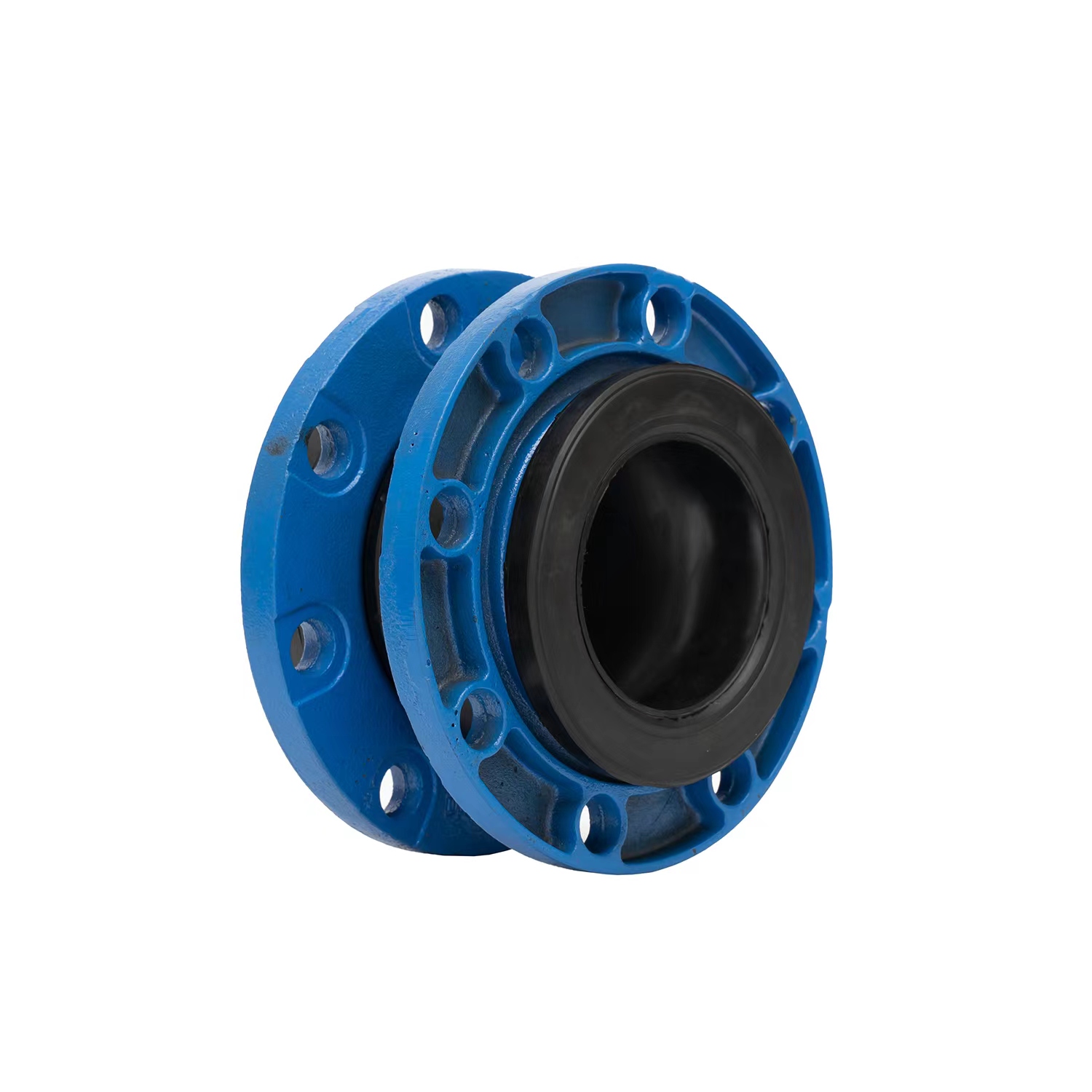
Pressure containment relies heavily on the specific flange design. You will typically encounter either floating (split) flanges or solid retaining flanges. These metal rings distribute compressive forces evenly across the thick rubber bead. This uniform compression maintains a tight, reliable seal under peak working pressures. Floating flanges rotate freely around the rubber body. They make bolt alignment much easier during installation. Solid flanges provide rigid, unyielding support. Both designs must handle intense mechanical stress continuously to protect the single ball rubber compensator.
Environmental vulnerability remains a major concern for pipeline engineers. Many professionals mistakenly assume the internal fluid directly degrades the metal. In reality, the internal fluid rarely touches the flange itself. A full-faced rubber bead usually extends completely over the sealing face. It acts as an integrated gasket. Instead, external atmospheric conditions drive flange material degradation. High humidity, coastal salt spray, and airborne chemical fumes actively attack metal surfaces. We must evaluate these external atmospheric risks carefully when selecting structural materials.
For most general industrial applications, manufacturers rely on standard flange materials. Carbon steel and ductile iron dominate this category. They offer highly reliable performance for everyday plumbing and HVAC tasks. Let us examine their specific material properties and ideal use cases to help you make an informed decision.
Carbon steel variants, such as Q235 or A105, are incredibly common globally. They boast high tensile strength. They are extremely cost-effective for large-scale piping projects. You can readily find them machined to all major international drilling standards. However, carbon steel has a significant functional drawback. It is highly susceptible to rust. Without proper chemical treatment, atmospheric corrosion degrades it rapidly.
To combat this inherent weakness, manufacturers apply robust anti-corrosion coatings. Epoxy powder coating provides a thick, resilient barrier against ambient moisture. Industrial paint offers basic, economical protection for dry indoor settings. Hot-dip galvanizing delivers the best defense among standard treatments. It bonds a protective zinc layer directly to the bare steel. We highly recommend galvanized finishes for moderate outdoor exposure. When you install a single ball rubber expansion joint in a standard commercial cooling system, galvanized carbon steel usually suffices perfectly.
Ductile iron serves as another viable standard option. Industry professionals often use it for lower-pressure water systems. It appears frequently in commercial HVAC networks and municipal water lines. Ductile iron is heavier and highly durable. It absorbs sudden mechanical shocks exceptionally well. Yet, it generally operates within limited temperature and pressure parameters. You should restrict its use strictly to standard commercial plumbing. It performs excellently in chilled water lines. It also suits non-corrosive indoor industrial environments perfectly.
Comparison of Standard Flange Materials
Material Type | Key Advantages | Primary Limitations | Ideal Applications |
|---|---|---|---|
Carbon Steel (Untreated) | High tensile strength, easily machinable, widely available. | Rusts rapidly when exposed to humidity or weather. | Temporary installations, dry indoor environments. |
Galvanized Carbon Steel | Strong corrosion resistance against moisture, cost-effective. | Zinc layer can degrade in highly acidic environments. | HVAC systems, standard outdoor water lines. |
Ductile Iron | Excellent shock absorption, heavy-duty build. | Lower pressure/temperature thresholds compared to steel. | Commercial plumbing, municipal chilled water piping. |
When standard metals fall short, high-performance materials step in to secure your systems. Stainless steel remains the definitive choice for demanding and hazardous environments. We generally divide these industrial options into two primary grades: 304 and 316 stainless steel. Both deliver exceptional durability, but they serve different operational realities.
Stainless Steel 304 (SS304) provides excellent resistance to general atmospheric corrosion. It actively resists oxidation. This makes it a highly reliable choice for many sanitary and industrial settings. Engineers frequently specify SS304 for food and beverage facilities. It meets strict sanitation standards effortlessly. It also appears commonly in municipal wastewater treatment plants. Outdoor installations exposed to standard weather elements benefit greatly from SS304 flanges. They maintain their structural integrity without requiring thick, secondary protective coatings.
Stainless Steel 316 (SS316) takes corrosion resistance a vital step further. It contains added molybdenum. This specific alloy addition significantly enhances pitting and crevice corrosion resistance. You must use SS316 in severe environments. Marine applications demand it due to constant airborne salt exposure. Offshore oil rigs rely on it exclusively to prevent catastrophic blowouts. Pharmaceutical manufacturing facilities use it to ensure absolute system purity. Aggressive chemical processing plants also require SS316 to withstand toxic atmospheric fumes.
Choosing SS316 involves a noticeable premium upfront price. You must view this initial expense as a necessary insurance policy. It protects your facility against premature component failure in high-risk environments. A failed flange in a volatile chemical plant causes devastating damage. The premium paid for high-grade stainless steel guarantees operational safety. It secures your piping connections against the harshest possible atmospheric conditions.
We must evaluate these assemblies using a comprehensive, system-level approach. A single ball expansion joint represents a highly engineered composite solution. It combines flexible elastomers and rigid metals. Pairing a high-end flange with the wrong rubber body wastes your capital investment. Conversely, mounting cheap flanges on premium rubber guarantees early structural failure. You must match the metal meticulously to both the internal media and the external atmosphere.
Consider the specific requirements of specialized applications. Nitrile rubber (NBR) is inherently oil-resistant. Engineers deploy it frequently in petrochemical plants, refineries, and fueling stations. When you specify an NBR single ball rubber joint for oil extraction, the flanges must match the environmental rigor. The industrial atmosphere surrounding oil facilities is often highly corrosive. You will likely need carbon steel treated using specialized industrial coatings. In more severe plant zones, you might require stainless steel to resist ambient chemical vapor effectively.
Other popular elastomers demand similarly logical material pairings to function correctly:
EPDM Pairings: EPDM handles water and steam perfectly. Engineers frequently pair it with galvanized carbon steel. This cost-effective combination dominates the commercial building and HVAC industry globally.
Neoprene Pairings: Neoprene offers excellent weather and ozone resistance. When paired with SS304 flanges, it creates a remarkably robust outdoor solution. It handles intense UV sunlight and freezing rain easily.
PTFE-Lined Joints: Extreme acids and harsh chemicals require PTFE-lined rubber. In these high-purity systems, SS316 flanges are almost universally specified. This ensures the entire assembly meets extreme corrosive standards safely from the inside out.
You must view the rubber and the metal as equal operational partners. Their combined strengths strictly dictate the long-term success of your installation.
Specifying the right components requires a rigidly structured evaluation framework. You cannot guess when industrial safety is on the line. Follow these specific dimensions to narrow down your material choices accurately. Proper evaluation prevents costly rework and dangerous leaks down the line.
First, assess the galvanic corrosion risk within your current piping system. Look closely at your existing piping metallurgy. Connecting a carbon steel flange directly to a copper or stainless steel pipe flange poses major risks. It can accelerate galvanic corrosion rapidly. Condensation acts as an electrolyte between the dissimilar metals. To prevent this chemical reaction, you must use proper dielectric isolation kits. Alternatively, specify perfectly matching materials for your new connections.
Second, confirm your required drilling standards and fitment tolerances. The global industry uses several primary engineering standards. You will frequently encounter ANSI/ASME B16.5 Class 150 or 300 in North America. European systems heavily utilize DIN PN10 or PN16. Asian equipment often requires JIS 10K. The flange material must be machinable to exact dimensional tolerances. Precise machining prevents uneven compression of the rubber sealing bead. When evaluating a flanged single ball rubber joint, consistently verify the drilling standard matches your adjacent pipes perfectly.
Third, choose carefully between a solid retaining ring and a floating flange design. The material choice often limits the available designs. Solid drilled flanges provide immense structural rigidity. Floating flanges make bolt alignment much easier during the actual installation process. They rotate freely to match slightly misaligned bolt holes easily.
Use this specific shortlisting logic to finalize your flange choice safely:
Identify any severe external atmospheric risks, such as salt spray, high humidity, or chemical fumes.
Match the new connection flanges to your existing piping metallurgy to avoid galvanic issues entirely.
Confirm the exact system pressure rating and the required international drilling standard for your pipeline.
Select the most appropriate material that safely clears the first three technical hurdles.
The right flange material directly ensures the overall longevity of your rubber expansion joints. It protects the vital mechanical connection from aggressive external degradation. While the rubber interior handles internal system vibrations, the exterior metal bears the immense structural load. Both must perform flawlessly together.
We highly recommend avoiding both over-specifying and under-specifying your industrial materials. Do not specify expensive SS316 if you operate a dry, indoor municipal HVAC system. Standard galvanized steel works perfectly there. Conversely, never use unprotected carbon steel in a harsh, coastal salt-spray environment. It will corrode rapidly and fail disastrously.
Consult directly with your preferred manufacturer or a certified piping engineer. Provide them with exact media details, daily operating pressures, and ambient environment data. This allows them to generate a verified technical drawing and an accurate material quote. Taking these specific steps guarantees a safe, secure, and leak-free system for years to come.
A: Generally, no. The internal fluid rarely touches the metal components. The rubber body features a full-faced elastomer bead. This integrated bead acts as the primary gasket. It seals tightly against the mating pipe flange. The joint's metal flange sits securely behind this rubber bead, protecting it from direct fluid exposure.
A: Yes, you certainly can. Because the internal oil only touches the NBR elastomer body, the metal remains unaffected by the fluid. A carbon steel flange is perfectly suitable. However, you must ensure the external operating environment is not highly corrosive.
A: Hot-dip galvanizing provides a much thicker, highly durable zinc coating. Manufacturers dip the steel into molten zinc. We recommend it for mild outdoor exposure and damp areas. Electro-galvanizing applies a thinner layer using an electrical current. It offers basic protection. You should reserve electro-galvanized flanges strictly for dry, indoor applications.
A: You can use specialized dielectric isolation kits. These kits include insulating gaskets, non-conductive sleeves, and durable washers. They physically separate the dissimilar metals. Alternatively, simply specify matching stainless steel flanges for your expansion joint. This approach eliminates the galvanic corrosion risk entirely.