- All
- Product Name
- Product Keyword
- Product Model
- Product Summary
- Product Description
- Multi Field Search

Views: 122 Author: Site Editor Publish Time: 2026-07-17 Origin: Site


High-frequency vibration and water hammer do more than generate noise across industrial facilities. They relentlessly accelerate fatigue in rigid piping, severely damage expensive pump casings, and ultimately cause catastrophic flange leaks. For engineers and facility managers in the design stage, mitigating these destructive forces requires moving far beyond generic fixes. You must specify the correct elastomeric solution based on actual pressure levels, unique fluid dynamics, and rigid spatial constraints. Relying on inadequate damping components only shifts the mechanical burden to weaker links in your system. This guide breaks down the precise engineering criteria for selecting a high-performance anti vibration rubber joint. We explore how these specialized components objectively reduce decibel levels, actively absorb structural displacement, and ensure long-term system reliability. You will learn exactly how to match elastomers to fluids, when to specify tie rods, and how to avoid critical installation errors.
Vibration Attenuation: Elastomeric joints inherently outperform metal alternatives in dampening high-frequency noise and kinetic energy due to material hysteresis.
Material Matching is Critical: Selecting between EPDM, Neoprene, or Nitrile dictates the joint's lifespan against specific thermal and chemical exposures.
Structural Safeguards: Unanchored piping systems mandate the use of tie rods (control units) to prevent joint over-extension and blowout under pressure.
Installation Precision: Premature failure is rarely a manufacturing defect; it is most often caused by improper torqueing, misalignment during installation, or unintended torsional stress.
Pumps, chillers, and compressors generate massive amounts of kinetic energy. When engineers bolt rotating equipment directly to rigid steel piping, they create a perfect transmission pathway. This kinetic energy travels freely down the line as severe structural vibration. Continuous oscillation flexes pipe walls, weakens welds, and loosens mechanical fasteners over time. Without proper isolation, the entire piping network essentially becomes a massive tuning fork vibrating at harmful frequencies.
Downstream equipment degrades rapidly under continuous vibration. Pump bearings experience uneven dynamic loads, leading to premature spalling and eventual mechanical failure. Mechanical seals lose their precise tolerances, dripping process fluid onto facility floors. Flange joints suffer from micro-movements, crushing delicate gaskets and initiating hazardous operational leaks. Replacing these massive industrial components requires significant capital engineering investment and halts plant operations entirely. Over time, the accumulated damage drastically shortens the lifecycle of expensive facility assets.
Acoustic compliance presents another major operational hurdle for modern facilities. Heavy machinery generates noise levels well beyond safe occupational safety thresholds. In industrial environments and large HVAC mechanical rooms, excess decibels violate regulatory safety standards and create hostile, fatiguing work environments for staff. Metal piping acts as an efficient acoustic bridge, amplifying sound waves and broadcasting them throughout the facility. Breaking this bridge requires targeted pump vibration isolation installed directly at the equipment source.
Forward-thinking facility managers view vibration control as a proactive CAPEX protection strategy rather than a simple maintenance chore. Preventing shock forces from traveling through pipelines extends the overall lifespan of every connected valve, sensor, and heat exchanger. Effective elastomeric isolation eliminates unplanned downtime caused by sudden stress fractures. You secure system reliability by ensuring kinetic energy dissipates safely into localized heat before it ever reaches critical infrastructure.
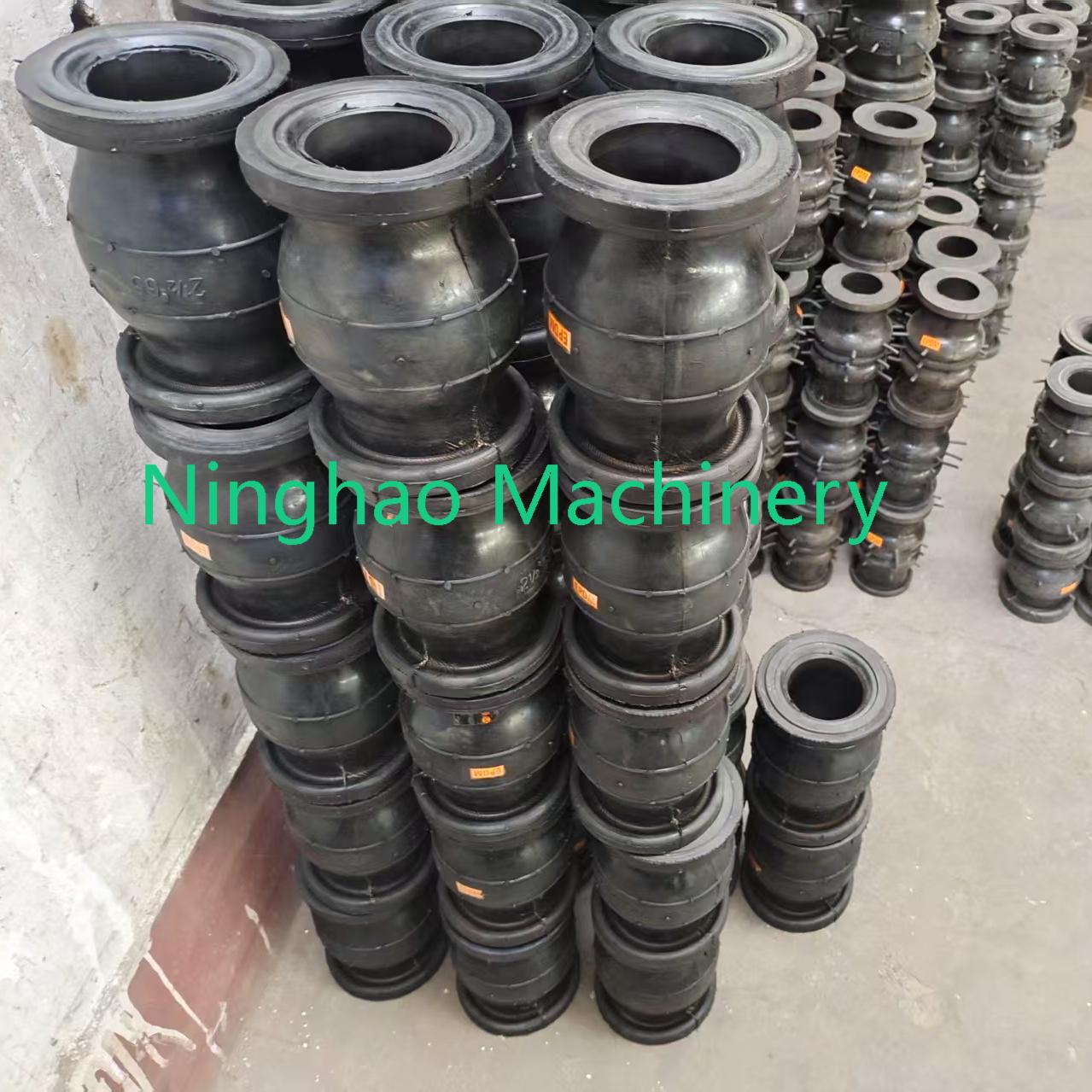
Elastomers possess a unique physical property known to engineers as hysteresis. When dynamic forces compress and stretch rubber, the material does not return the exact same amount of energy upon relaxation. Instead, internal molecular friction converts a significant portion of this mechanical kinetic energy into harmless, low-grade heat. This natural physical phenomenon makes elastomeric compounds remarkably effective at deadening sound wave transmission. While solid metal transmits noise efficiently down a pipeline, rubber completely disrupts the acoustic wave. It drops decibel levels noticeably right at the point of isolation.
Rigid metal pipes generally only move linearly, but industrial mechanical stress operates in multiple directions simultaneously. A properly specified shock absorber rubber connector provides crucial multi-plane flexibility to handle chaotic forces. It manages axial compression when adjacent pipes heat up and expand toward each other. It accommodates axial extension during sudden system pressure drops or rapid cooling cycles. It gracefully handles lateral deflection when heavy equipment settles unevenly on its mounts. Furthermore, the spherical design allows for angular movement, absorbing twisting motions that would otherwise instantly crack a rigid pipe weld.
Engineers must carefully distinguish between high-frequency vibration dampening and thermal expansion capabilities. Elastomers excel at absorbing high-frequency motor vibrations and buffer against sudden hydraulic shocks like severe water hammer. Facility designers also regularly deploy them to manage minor thermal expansions in short, localized pipe runs. While they handle thermal growth adequately, their true engineering value lies in dynamic stress reduction. Every installed anti vibration rubber joint serves as a sacrificial shock absorber, shielding the infinitely more valuable structural components surrounding it.
Specifying elastomer materials requires strict chemical alignment with the specific fluid medium running through the pipes. The wrong chemical match degrades the rubber matrix rapidly, leading to aggressive swelling, internal brittleness, and catastrophic blowout under pressure. You must evaluate the internal fluid composition, the external ambient environment, and the peak operating temperatures before writing a specification.
EPDM strictly dominates water handling and HVAC applications. It handles chilled water, hot water, steam, and mild chemicals effectively while offering exceptional heat resistance and weathering properties. Neoprene, known chemically as Chloroprene, serves demanding environments exposed to minor oil splashes, intense weathering, and atmospheric ozone. Nitrile, commonly referred to as Buna-N, remains the rigorous industry standard for pipelines carrying high concentrations of petroleum, diesel, or abrasive fuels.
Every flexible rubber compensator carries highly specific maximum pressure and temperature limits. Engineers must strictly utilize performance derating curves when evaluating parameters. As fluid temperature increases toward the material limit, the maximum allowable working pressure of the rubber naturally decreases. A component safely rated for 150 PSI at ambient room temperature might only hold 80 PSI securely at its maximum thermal limit. Ignoring this inverse relationship causes sudden, dangerous ruptures during peak operational thermal loads.
System designers also consistently choose between single sphere and twin sphere physical configurations. Single sphere designs maintain a much lower profile overall. They fit perfectly into tightly constrained mechanical rooms and tolerate high internal system pressures securely. Twin sphere designs feature an extra convolution built directly into the rubber body. This double-arch geometry offers significantly greater multi-plane movement capabilities. It provides substantially higher acoustical dampening for extremely noisy, unbalanced pumps. However, the twin sphere geometry requires much stricter pressure monitoring because its larger internal surface area makes it more susceptible to hydraulic over-extension.
Material Base | Primary Industrial Applications | Key Engineering Strengths | Known Weaknesses |
|---|---|---|---|
EPDM | HVAC, Chilled Water, Hot Water, Steam | High thermal limits, excellent UV and weather resistance. | Degrades extremely rapidly if exposed to oils or petroleum. |
Neoprene | Wastewater, Marine, General Industry | Good all-around ozone resistance and moderate oil tolerance. | Lower maximum high-temperature threshold than EPDM. |
Nitrile (Buna-N) | Fuel Lines, Petrochemical Refining | Superior structural resistance to concentrated petroleum products. | Poor long-term resistance to high ozone and direct sunlight. |
Internal pipe pressure generates immense hydraulic thrust forces constantly. These forces act heavily upon the expansive internal surface area of the elastomer arches. The pressurized fluid constantly attempts to push the adjoining pipe flanges violently apart, causing the rubber body to stretch severely in the middle. This dynamic phenomenon introduces a remarkably high risk of dangerous over-extension. Without adequate physical structural restraints, the rubber elongates well past its elastic limit, tears abruptly at the flange base, and causes a massive process fluid spill.
Anchoring design dictates exactly how you must protect against these thrust forces. If engineers properly design the piping layout using rigid main anchors and precise directional guides, the pipes cannot physically move apart. In fully anchored and constrained scenarios, standard elastomeric joints perform perfectly without requiring any additional hardware. However, unanchored piping systems change the physical requirements completely. If you install these flexible components near spring-mounted pumps or on loosely hung pipe racks, external physical restraints become absolutely non-negotiable.
Tie rods, commonly referred to in specifications as control units, act as critical physical safety limiters. These heavy-duty threaded steel rods span completely across the joint assembly, connecting the two opposite mating flanges. As internal hydraulic pressure pushes the pipes apart, the steel tie rods catch the movement at a predetermined maximum safe length. They successfully limit dangerous axial extension. Crucially, engineers purposefully calibrate the rubber grommet hole clearances to still allow essential lateral movement. The tie rods physically prevent catastrophic blowouts while safely preserving the necessary vibration isolation properties required by the pump.
Even perfectly specified components fail rapidly if field technicians install them incorrectly. Elastomers handle direct compression and lateral shifts brilliantly, but they cannot survive severe torsional stress. Rubber completely shears and fails under twisting forces. Installers must align opposing pipe flanges perfectly before physically bringing the rubber component into position. Forcing misaligned flanges together forcibly twists the internal fabric reinforcement, causing immediate structural tearing when the system eventually pressurizes.
Proper mating flange selection guarantees a strong, reliable, leak-free seal. You must exclusively use flat-face flanges directly against the solid rubber bead. Raised-face flanges present a severe physical hazard to the elastomer. The sharp inner edge of a standard raised-face flange digs forcefully into the soft rubber during bolt tightening. This sharp edge cleanly cuts through the protective outer cover and completely exposes the critical internal aramid fibers to corrosive internal fluids.
Adhering to strict, manufacturer-provided torque specifications prevents the complete crushing of your specified mechanical stress rubber joint. Installers must never use aggressive pneumatic impact wrenches, as they apply uncontrollable localized pressure.
Verify the mating pipe flanges are completely parallel and aligned perfectly on the same axis.
Clean all steel flange faces thoroughly to remove sharp burrs, surface rust, and old gasket debris.
Insert the elastomeric unit carefully without applying any twisting motions or extreme stretching forces.
Install hardware so the bolt heads face the rubber arch to prevent friction damage during physical expansion.
Tighten all bolts progressively using a standard star-pattern sequence to ensure perfectly even compression.
Realistic facility maintenance schedules rely entirely on visual inspection protocols. Environmental degradation happens slowly but steadily. Facility maintenance teams require clear, actionable guidelines to identify failing elastomeric components before they rupture completely.
Surface Cracking: Look closely for deep ozone cracks or severe UV degradation on the outer cover. Minor surface crazing remains acceptable; deep fissures require replacement.
Blistering or Deformation: Check manually for large soft spots or irregular localized ballooning on the rubber body. This indicates aggressive internal chemical attack or fabric ply separation.
Exposed Reinforcement: Any visually exposed nylon, Kevlar, or steel wire reinforcement directly signifies immediate end-of-life replacement status.
Flange Leakage: Constant fluid weeping around the retaining rings indicates inadequate initial torque or significant compression set over time. Retorque carefully, but never exceed maximum documented values.
Specifying the optimal elastomeric solution requires actively balancing critical acoustic goals with actual system pressure, verified fluid compatibility, and rigid anchoring realities. High-frequency equipment vibrations and dynamic mechanical stresses systematically destroy rigid metal pipe networks over time. Integrating the proper elastomeric isolation components effectively breaks the acoustic bridge, drops harmful facility decibel levels, and absorbs dangerous structural displacement safely. Conversely, failure to account for temperature derating parameters or incorrect flange alignment practically guarantees premature system failures.
Take immediate engineering action by auditing your current mechanical plant rooms. Inspect the physical condition of existing piping anchors and critically evaluate the chemical suitability of your installed components. Consult directly with specialized technical engineers to ensure your selected elastomer materials and physical control units accurately match your specific piping schematics. Proactive component selection and rigid installation standards secure your entire facility against unplanned structural damage and disastrous leaks.
A: The average lifespan ranges from 5 to 15 years. This duration depends heavily on operating temperatures, specific chemical exposures, and strict adherence to pressure limits. Joints operating continuously at maximum thermal capacity or facing abrasive chemicals degrade noticeably faster. Routine visual inspections help facility managers accurately predict necessary replacement cycles long before unexpected ruptures occur in the field.
A: No, it cannot eliminate noise entirely, but it significantly breaks the acoustic bridge. Rubber's natural hysteresis deadens sound wave transmission highly efficiently. Depending on the overall system mass and operating pressures, you can typically expect transmitted noise reductions of up to 20 to 30 decibels. It successfully limits the broadcast of mechanical humming through the facility structure.
A: It depends entirely on your specific system's anchoring layout. If heavy main anchors sit immediately adjacent to the joint and firmly hold the piping in place, tie rods are entirely unnecessary. If the piping remains unanchored, relies on spring-mounted pumps, or utilizes free-hanging supports, tie rods become strictly required to prevent catastrophic hydraulic over-extension.
A: Use a very simple chemical rule-of-thumb. EPDM excels in strictly water, steam, and glycol mixtures while offering much higher temperature resistance. Neoprene becomes mandatory if your specific environment involves incidental oil exposure, petroleum splashes, or challenging atmospheric ozone conditions. Nitrile remains required for direct, high-concentration fuel or petroleum line applications.