- All
- Product Name
- Product Keyword
- Product Model
- Product Summary
- Product Description
- Multi Field Search

Views: 156 Author: Site Editor Publish Time: 2026-07-06 Origin: Site


Unmanaged thermal expansion, aggressive vibration, and intense mechanical stress push piping networks to their absolute limits. Without proper intervention, these destructive forces inevitably trigger devastating pipe fatigue, severe pump damage, or catastrophic leaks. System engineers must address these variables head-on to maintain safe operations.
While rigid metal or specialized PTFE alternatives certainly exist, the traditional rubber expansion joint remains the global industry standard. It uniquely absorbs complex, multi-directional movement while dampening harsh vibrations simultaneously. However, simply choosing any available option proves incredibly dangerous. Mis-specifying the inner elastomer material or ignoring the required pressure rating drastically accelerates system failure.
This guide delivers a strict, engineering-aligned evaluation framework. We aim to completely eliminate guesswork from your complex design process. You will learn how to accurately match joint configurations to specific fluid media, assess failure modes, and rigorously safeguard your operational continuity against unpredictable pressure surges.
Selecting the right pipe expansion joint requires mapping the STAMPED criteria: Size, Temperature, Application, Media, Pressure, Ends, and Dynamics.
Elastomer chemical compatibility dictates joint lifespan; never assume a standard EPDM joint will survive oil-heavy or highly abrasive media.
Configuration matters: a single sphere flexible joint excels at vibration dampening in tight spaces, while multi-sphere joints accommodate higher movement degrees.
Implementation success depends heavily on structural accessories—specifically the use of control units (tie rods) to prevent over-extension under pressure spikes.
An incorrectly specified joint directly leads to premature blowout, dangerous vacuum collapse, or permanent flange damage. Such sudden failures result in costly unscheduled downtime and create severe physical safety hazards for facility personnel. We must thoroughly evaluate every component against known failure modes before approving any installation.
Understanding exactly how elastomers fail helps you select stronger structural defenses. We typically observe three primary failure categories in the field:
Thermal degradation: Hardening or deep surface cracking occurs when systems exceed continuous operating temperature limits. The rubber literally bakes, loses its elasticity, and shatters under normal flexure.
Chemical attack: Incompatible fluid media causes rapid material swelling, softening, and structural delamination. The inner tube dissolves away, exposing the fragile fabric reinforcement layer directly to the aggressive fluid.
Mechanical over-extension: Axial or lateral movements easily exceed unanchored limits. Without physical restraints, internal pressure pushes the adjacent pipes apart, stretching the rubber body until it violently tears.
A correctly specified unit maintains complete structural integrity through the maximum calculated pressure surges. It operates reliably within rigidly defined temperature thresholds. Furthermore, it completely isolates damaging pump vibration without transferring any residual mechanical stress back to the adjacent rigid piping.
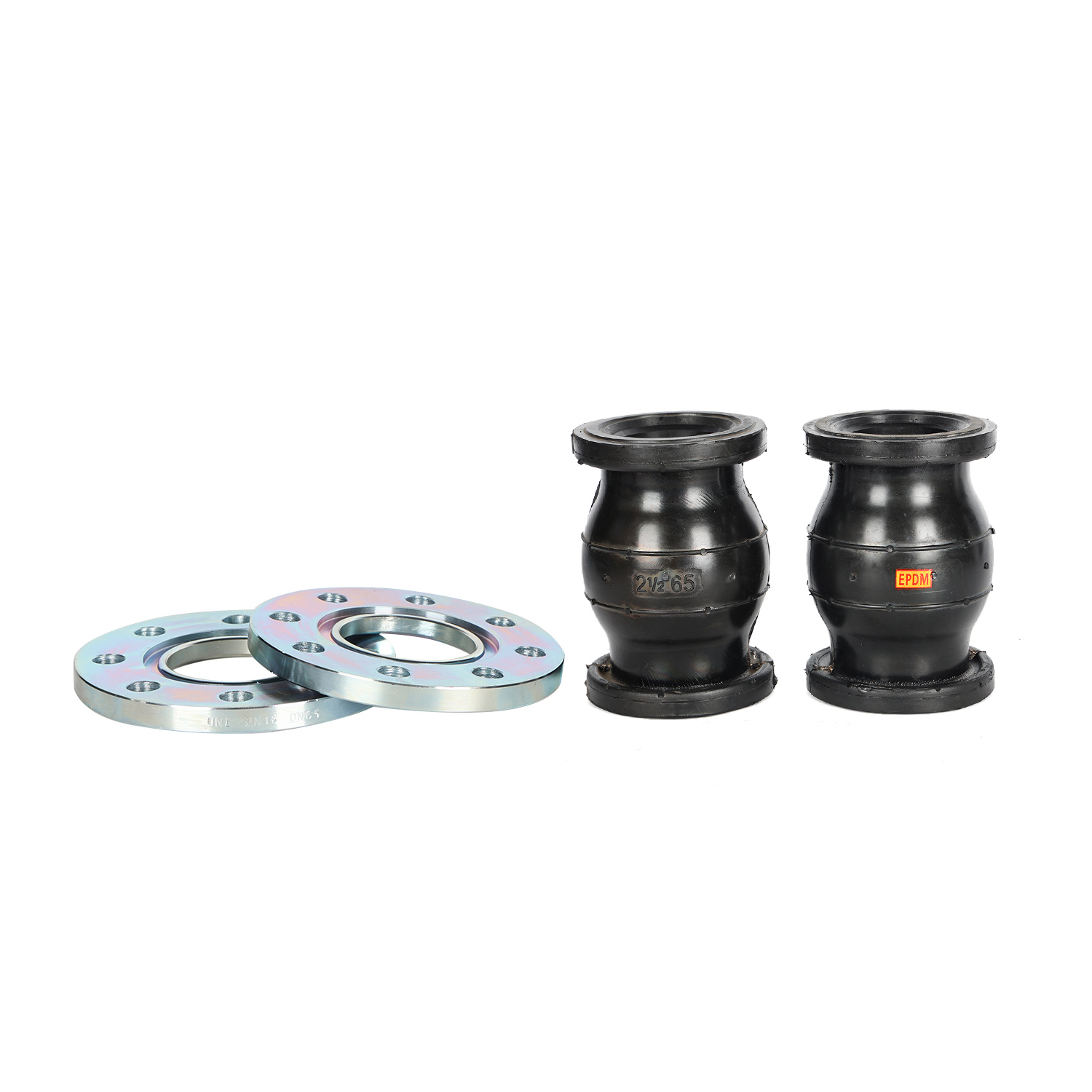
The physical geometry of an industrial rubber joint drastically influences its mechanical performance limits. You must match the outer shape to the specific movement demands of your local piping run.
This streamlined design excels at standard vibration dampening, acoustic noise reduction, and minor movement compensation. A single sphere flexible joint fits perfectly directly adjacent to high-speed centrifugal pumps. However, you must respect its physical limitations. It features significantly lower axial and lateral movement capacity compared to longer multi-sphere alternatives. We rely on them primarily for isolation rather than massive thermal expansion compensation.
Systems requiring higher degrees of axial compression, large extension, or extreme lateral deflection demand twin or multi-sphere designs. The extra corrugations provide the necessary flexible length. However, you must carefully consider their internal structural support. These longer designs often require solid metallic root rings embedded between the spheres. These rigid rings maintain the structural shape and prevent ballooning under intense positive pressure.
Your choice of end connection dictates the maximum pressure containment capability of the entire assembly.
Flanged Ends: A flanged rubber connector represents the absolute standard for heavy industrial applications. They typically feature rotating metallic flanges matching common standards like ANSI, DIN, or JIS. The floating flange design allows for vastly easier bolt-hole alignment during complex field installations.
Threaded Ends: We restrict threaded union ends strictly to smaller diameter pipes. You will usually only see them on lines under two inches in diameter. They belong exclusively on low-pressure utility lines, domestic water feeds, or small HVAC fan coil connections.
Engineers rely on the globally recognized STAMPED acronym to capture every critical operating parameter. Missing even one of these variables compromises the final selection of your pipe expansion joint.
Size & System Dimensions: Note the nominal pipe size carefully. Measure the exact face-to-face installation gap constraints. The replacement unit must slide into the existing gap without requiring forced compression or dangerous stretching during bolt-up.
Temperature: Record minimum and maximum continuous operating temperatures. Keep this critical engineering rule in mind: elevated temperatures automatically derate the maximum allowable working pressure. A unit rated for 150 PSI at ambient temperature might only safely hold 80 PSI at 200°F.
Application: Where will this component live? Note indoor or outdoor exposure. Consider underground burial risks. Evaluate the direct proximity to aggressive ozone, coastal salt spray, or intense direct UV light. Environmental factors degrade external rubber covers rapidly.
Media: Document the exact fluid composition. Is it clean domestic water, harsh abrasive slurry, highly concentrated acids, or heavy petroleum? Highly abrasive media may require internal metallic guide sleeves. These sleeves prevent rapid internal wear by shielding the soft rubber from fast-moving particulates.
Pressure: Chart your maximum operating pressure, anticipated test pressure, and required vacuum ratings. You must specify clearly if the system ever pulls a full or partial vacuum. Vacuum conditions necessitate rigid internal vacuum rings to prevent the soft body from collapsing inward.
Ends: Identify the required mating connections. Check bolt hole patterns carefully against your existing piping. Matching these dimensions accurately ensures tight, reliable, leak-proof seals across the flange faces.
Dynamics: Quantify the required movement calculations exactly. You must account for expected axial compression, axial extension, lateral deflection, angular movement, and torsional twisting. Torsion proves particularly destructive; elastomers handle twisting forces very poorly.
The chemical composition of the internal tube dictates the entire lifespan of the component. Selecting an incompatible polymer guarantees catastrophic failure.
EPDM: We consider EPDM the absolute default for HVAC networks, chilled water lines, and general wastewater processing. It provides excellent weathering and ozone resistance. However, it fails rapidly if exposed to any hydrocarbons, swelling up and losing all mechanical strength.
Nitrile (Buna-N): This represents the mandatory choice for oil, natural gas, and petroleum-based fluid media. It strongly resists aliphatic hydrocarbons. Conversely, it suffers from poor external weather resistance. Manufacturers often pair a Nitrile inner tube with a Neoprene outer cover for outdoor oil applications.
Neoprene: Think of Neoprene as a highly versatile middle-ground material. It offers moderate resistance to incidental oil exposure. It also boasts excellent external weather, ozone, and aging resistance. We use it heavily in marine environments.
PTFE-Lined / FKM (Viton): You must deploy these premium materials for harsh aggressive chemicals, concentrated strong acids, or exceptionally high-temperature environments. PTFE linings protect the rubber skeleton from chemical attack, though they slightly reduce the overall flexibility of the unit.
Elastomer Material | Primary Industrial Use Case | Maximum Temperature Limit | Critical Vulnerability |
|---|---|---|---|
EPDM | HVAC, Chilled Water, Wastewater | Up to 250°F (121°C) | Fails rapidly upon hydrocarbon exposure |
Nitrile (Buna-N) | Oil, Gas, Petroleum processing | Up to 212°F (100°C) | Poor ozone and UV weathering resistance |
Neoprene | Moderate Oil, Marine, Weathering | Up to 212°F (100°C) | Cannot handle strong concentrated acids |
FKM (Viton) | Aggressive Chemicals, High Heat | Up to 400°F (204°C) | Lower physical flexibility, poor steam resistance |
Selection Rule: Always base your final material choice strictly on the absolute worst-case scenario. Plan specifically for the highest chemical concentration at the highest potential operating temperature. Chemicals act much more aggressively as temperatures climb.
Even perfectly specified materials will fail if you ignore critical installation protocols. Field execution determines the actual longevity of your system design.
We must explain a fundamental physical reality: elastomers are not designed to act as rigid pipe anchors. Internal fluid pressure creates a massive "pressure thrust" force. This force constantly tries to push the adjacent pipes apart. Unanchored systems must utilize external control rods.
These metallic tie rod assemblies physically span across the flexible body. They catch the flanges and prevent the joint from extending past its maximum allowable limit during sudden pressure spikes. Without them, the rubber body takes the full stretching force and ultimately tears apart.
The geometry of your existing rigid pipe flanges matters immensely. Avoid using raised-face flanges against flat rubber faces. The sharp raised portion acts exactly like a dull cookie cutter. It bites aggressively into the soft rubber sealing face under bolt load, slicing through the internal reinforcement fabric.
Flat-face mating flanges are strictly required. They distribute compressive clamping loads smoothly and evenly across the entire surface area. If you must connect to a raised-face pipe flange, you must install a custom metallic filler ring to flatten the mating profile.
Over-torquing flange bolts creates an incredibly common, self-inflicted failure. Excessive force physically crushes the internal solid rubber bead. This permanently deforms the flange, breaks the structural wire, and instantly compromises the fluid seal.
We emphasize the absolute need for a crisscross, star-pattern tightening sequence. You must increase the bolt tension gradually across three distinct passes. Use calibrated torque wrenches exclusively. Never rely on an impact gun for final tightening.
Painting the unit: Facility paint contains harsh solvents. These solvents chemically attack the external cover and cause premature surface cracking.
Using improper lubricants: Never use petroleum-based grease to slide flanges into place if you are using an EPDM unit. The grease will silently degrade the material.
Ignoring pipe alignment: Do not use the flexible section to correct severe pipe misalignment. Forcing the unit into place uses up its valuable movement capacity before you even turn the pumps on.
Securing a reliable piping network demands rigorous attention to detailed mechanical realities. Base your final selection logic on a strict, line-by-line cross-reference of your gathered STAMPED data against the manufacturer’s technical submittal sheets. Never compromise on chemical material compatibility merely to save minor upfront costs. A cheaper unit costs infinitely more when it ruptures unexpectedly.
Advise your technical buyers to gather their system’s exact P&ID data immediately. Calculate the maximum expected thermal movement accurately based on pipe length and temperature deltas. Finally, consult directly with your core engineering team to verify the absolute necessity of external control rods and internal flow sleeves before authorizing the final purchase order.
A: Generally, no. The full-face rubber flange inherently acts as the primary gasket against flat-face mating pipe flanges. Adding extra external gaskets can severely compromise the seal by creating uneven compression points and promoting leak paths.
A: Lifespan depends entirely on your specific operating conditions. However, a properly specified and accurately installed unit typically lasts 7 to 10 years. Signs of necessary replacement include deep exterior cracking, continuous weeping at the flanges, or visible ballooning under pressure.
A: Yes, but standard off-the-shelf models often require structural modifications. High or full vacuum applications typically necessitate an internal metallic vacuum ring. This heavy steel wire prevents the soft rubber walls from collapsing inward under negative pressure.
A: Rubber offers vastly superior vibration dampening, acoustic noise isolation, and excellent corrosion resistance to specific chemicals. Metal is generally reserved for extreme high temperatures (above 400°F) and extreme line pressures where softer elastomers would simply melt or mechanically degrade.