- All
- Product Name
- Product Keyword
- Product Model
- Product Summary
- Product Description
- Multi Field Search

Views: 148 Author: Site Editor Publish Time: 2026-07-09 Origin: Site


Rigid piping systems constantly battle thermal expansion, mechanical vibration, and internal system stress. A flanged rubber expansion joint performs a critical function by absorbing these destructive forces. However, the stakes for operators remain exceptionally high. Improper installation, incorrect sizing, or neglecting pressure-temperature de-rating leads directly to premature catastrophic failure. These errors cause costly downtime, dangerous fluid leaks, and severe safety hazards. Securing a successful, leak-free lifespan depends entirely on how you handle this component. You must never view it as a flexible band-aid for poor piping design. Instead, treat it as a highly engineered unit. This requires precise alignment, structured torqueing protocols, and thorough operational evaluation. In this comprehensive guide, you will learn the physical mechanics of movement tolerances. We will show you how to navigate complex sizing standards. You will also discover the exact step-by-step procedures to ensure your next installation performs flawlessly for years.
Sizing is absolute: A precise match between nominal pipe size (DN), flange drilling standards (ANSI/PN), and face-to-face dimensions is non-negotiable.
Alignment dictates lifespan: Rubber expansion joints are designed to absorb dynamic movement, not to bridge static gaps caused by misaligned pipework.
Pressure is relative to temperature: Operating pressure limits decrease exponentially as system fluid temperatures rise; calculating the P-T de-rating is critical.
Torque protocol prevents failure: Utilizing a multi-stage, cross-star bolting pattern on flat-face mating flanges prevents crushing the rubber bead and ensures seal integrity without external gaskets.
Many plant operators hold a dangerous misconception about system flexibility. They often assume a pipeline flexible connector can easily compensate for sloppy pipe installation. This belief is entirely false. Using elastomeric components to force misaligned pipes together introduces permanent static stress. You stretch and contort the material before the pump even turns on. Once dynamic pressure hits, the unit fails rapidly because it has no remaining flexibility to absorb operational shocks.
The financial and operational risks are substantial. Premature blowout failures trigger immediate emergency shutdowns. You face massive fluid loss, localized flooding, and potential environmental compliance fines. Collateral damage often spreads downstream. Vibrations bypass the failed joint and destroy adjacent pumps, valves, or sensitive instrumentation, multiplying your repair expenses.
When investigating these sudden failures, we consistently identify three primary culprits. First, torsional twisting during installation ruins the structural integrity. Technicians mistakenly twist the flange manually to align misdrilled bolt holes. Second, units exceed maximum elongation because installers omit necessary control rods. Finally, localized stress from sharp-edged mating flanges cuts directly into the sealing face. Understanding these specific root causes is your first step toward building a safer piping layout.
Accurate sizing forms your uncompromised dimensional baseline. You must align the DN rubber expansion joint size precisely with the existing piping internal diameter. Even minor interior mismatches create fluid turbulence. This turbulence accelerates internal abrasion, quickly wearing away the protective inner tube lining.
You must also carefully navigate distinct flange drilling standards. North American systems generally follow ANSI B16.5 150# or 300# metrics. European and Asian systems typically rely on DIN/PN10 or PN16 measurements. We strongly warn against the "close enough" mentality. Forcing bolts through misaligned holes severely damages the internal wire reinforcement bead.
Standard Category | Common Designations | Primary Application Region | Compatibility Warning |
|---|---|---|---|
ASME / ANSI | Class 150, Class 300 | North America | Bolt circle diameters differ significantly from PN standards. Do not force bolts. |
DIN / EN / PN | PN10, PN16, PN25 | Europe, Asia | Hole counts and diameters vary. Verify prior to ordering. |
JIS | 10K, 16K | Japan, parts of Asia | Requires specific matching flanges to ensure even compression. |
You must evaluate the face-to-face dimension realities. The resting dimension of the joint must exactly match the neutral installation gap between pipe flanges. Stretching or compressing the elastomer to fit a tighter or wider space is disastrous. Doing so immediately compromises its dynamic movement capabilities. It artificially reduces the available compression or extension travel needed during actual operation.
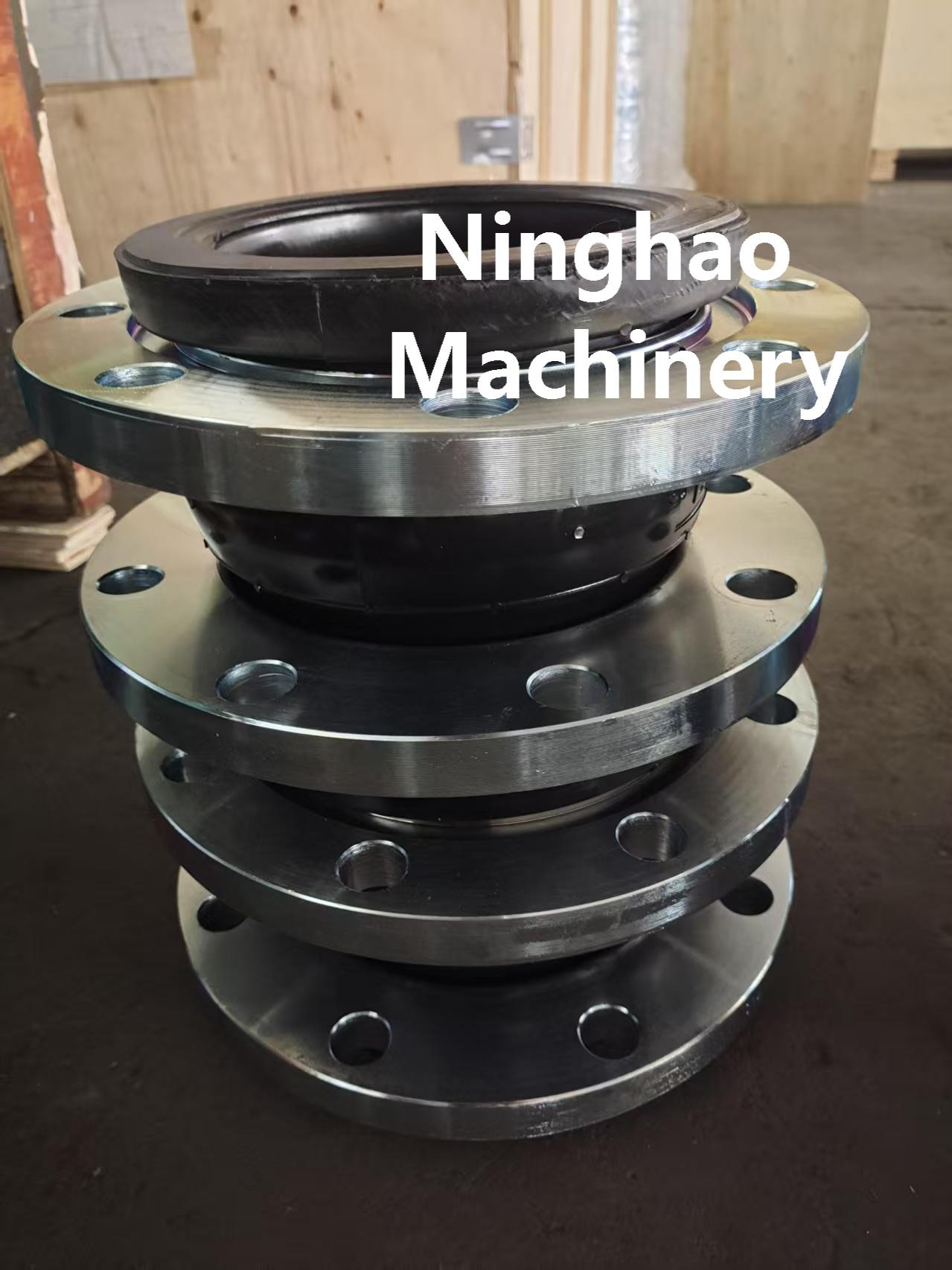
We rely on elastomeric joints to manage complex dynamic forces safely. You need to understand their specific movement capabilities to specify them correctly. A high-quality vibration absorbing rubber joint handles multiple directional shifts, provided you respect its physical limits.
Axial Compression: The pipe pushes inward, compressing the unit along its longitudinal center.
Axial Extension: The pipe pulls outward, stretching the unit away from its neutral center.
Lateral Deflection: The mating flanges undergo shear movement perpendicular to the pipeline center.
Angular Movement: The piping bends across the axis, creating a wedge-like compression on one side.
These units perform beautifully under one strict rule of alignment. The piping must be independently supported, anchored, and guided. The flexible unit must never support the dead weight of the pipe. If it bears the pipe's physical weight, the elastomer sags, distorts, and degrades rapidly. Proper pipe hangers and saddle supports are absolute prerequisites.
Control rods serve as a mandatory safeguard in most high-pressure designs. They function as rigid limit bolts or tie rods. When fluid pressure builds inside unanchored piping systems, it creates immense internal pressure thrust forces. These forces naturally push the pipes apart. Control rods physically prevent the joint from over-extending beyond its maximum design limit. They are essential to prevent catastrophic blowout failures.
Engineers must strictly separate catalog ratings from actual operational limits. The catalog working pressure defines the baseline for a flanged rubber joint under ideal ambient conditions (typically around 70°F or 21°C). Test pressure verifies manufacturing integrity prior to shipping. Burst pressure indicates the ultimate catastrophic failure point in a laboratory setting. None of these guarantee safe operation at extreme temperatures.
Real-world operations rely entirely on the Pressure-Temperature (P-T) Curve. Elastomers like EPDM, Nitrile, and PTFE-lined compounds obey the rigid laws of thermodynamics. As system fluid temperatures increase, the rubber material softens. Consequently, the maximum allowable working pressure (MAWP) decreases exponentially. Calculating this de-rating factor prevents unexpected ruptures in high-heat applications like steam or hot water lines.
Sample Pressure-Temperature De-rating Chart | ||
Operating Temperature (°F) | Operating Temperature (°C) | Pressure De-rating Multiplier |
|---|---|---|
Up to 85°F | Up to 29°C | 1.00 (100% capacity) |
130°F | 54°C | 0.85 (85% capacity) |
170°F | 77°C | 0.70 (70% capacity) |
200°F | 93°C | 0.50 (50% capacity) |
Surge and vacuum conditions require equal attention during the design phase. Transient pressure spikes, often called water hammer, briefly push the system far beyond its standard working limit. These sudden shocks can tear the inner tube. Conversely, pump suction lines frequently generate severe vacuum conditions. Negative pressures will suck the inner tube inward, causing a collapse. To prevent this, specify units featuring internal vacuum rings or heavy-duty wire reinforcement.
Successful installation demands rigorous mechanical discipline from your field team. First, verify your mating flange requirements carefully. You must use flat-face mating flanges. Avoid raised-face flanges entirely. Slip-on flanges possessing sharp inner diameters act like knives. They will cut directly into the rubber sealing face under bolt load. If your system mandates slip-on designs, specialized retaining rings are strictly required to distribute the load evenly.
The sealing logic is entirely gasket-free. The integrated rubber bead of the ANSI PN rubber connector functions perfectly as its own gasket. Adding secondary external gaskets causes uneven compression. The rubber face will deform unrecognizably, which almost guarantees a severe leak. Proper execution relies completely on a structured, multi-stage tightening process.
Follow this exact torque procedure to ensure a lifetime seal:
Hand-tighten hardware: Insert all bolts and hand-tighten the nuts. This ensures initial thread engagement and verifies flange alignment.
Use a cross-star pattern: Always utilize a crisscross bolting pattern. This distributes the pressure evenly across the entire flange face, preventing pinch points.
Apply torque in stages: Never tighten a bolt to 100% immediately. Apply torque incrementally. Start at 30% of the manufacturer specification. Move to 60%, and finish the final round at 100%.
Re-torque after 24 hours: Rubber naturally creeps and relaxes under initial load. You must re-torque all bolts after 24 hours of active operation to account for this relaxation.
Selecting the ideal component requires a deep analysis of your specific media. Fluid chemistry dictates your elastomer selection. You must match the internal tube material to the exact chemical conditions. Abrasive slurries demand high-wear natural rubber. Hydrocarbon fuels require oil-resistant Nitrile (NBR). Potable water systems need NSF-certified EPDM. Choosing the wrong compound triggers rapid chemical degradation, swelling, and premature failure.
You must also evaluate supplier compliance thoroughly before finalizing any purchase order. Advise your procurement and engineering teams to demand comprehensive documentation. Request certified hydro-test reports to verify pressure integrity. Insist on material traceability for all elastomeric batches. Look for strict adherence to Fluid Sealing Association (FSA) guidelines. These authoritative benchmarks separate reliable engineered products from dangerous, unverified commodities.
Your next-step actions should involve consulting directly with specialized applications engineers. Have them review your system isometric drawings thoroughly. They will verify your anchor points, calculate expected thermal expansion, and finalize the required bill of materials. This final technical check ensures you order the exact control rods and retaining rings necessary for a structurally sound build.
The long-term reliability of a flanged rubber expansion joint relies heavily on mechanical discipline. You achieve operational success through rigid adherence to proper sizing, accurate alignment, and strict pressure-temperature calculations. Cutting corners during installation inevitably leads to catastrophic system failures and severe facility damage.
Evaluating component quality is far more important than sourcing based solely on the lowest upfront unit cost. Specifying the correct elastomer, utilizing proper flat-face mating flanges, and following multi-stage torque protocols ensures superior operational safety. A well-engineered installation protects your broader piping infrastructure from severe vibrational and thermal damage for years to come.
Take proactive steps today to secure your fluid handling systems. We strongly encourage you to audit your current piping layouts immediately. Check for proper structural anchoring and inspect units for missing control rods. Contact technical sales teams for a rigorous application review before your next procurement cycle to guarantee peak performance and uncompromised safety.
A: No. The integrated rubber flange acts as the sealing surface. Adding an additional gasket can cause the rubber face to deform and leak.
A: No. While they absorb dynamic movement during operation, forcing a joint to connect misaligned pipes places permanent static stress on the elastomer, drastically reducing its lifespan.
A: Control rods prevent the joint from extending beyond its maximum allowable limits due to the internal pressure thrust forces generated by the fluid, preventing blowout failures.
A: The reduced surface area of a raised face flange concentrates the bolt load, which can crush, cut, or deform the rubber bead, leading to immediate or premature failure. Flat face mating flanges are required.