- All
- Product Name
- Product Keyword
- Product Model
- Product Summary
- Product Description
- Multi Field Search

Views: 174 Author: Site Editor Publish Time: 2026-07-02 Origin: Site


Specifying the wrong elastomer for a piping system inevitably leads to premature degradation, catastrophic leaks, and unplanned downtime. This is a core engineering reality we face across industrial applications. You cannot simply select an off-the-shelf component and hope it survives the operating environment. While both materials absorb vibration and compensate for system misalignment, their chemical resistance profiles are fundamentally opposed.
Making the right decision requires looking closely at what flows through the pipes. You must understand how temperature fluctuations impact polymer chains over time. We establish a strict baseline rule for these applications. EPDM is engineered for water, weather, and heat. Conversely, NBR (Nitrile) is engineered specifically for oils, fuels, and hydrocarbons. We will explore how misapplication destroys these materials, how to evaluate your system using proven frameworks, and how to verify you receive the exact compound your facility requires.
Fluid dictates the baseline: NBR survives petroleum and oils; an EPDM rubber expansion joint will swell and fail rapidly in the same environment.
Temperature defines the ceiling: EPDM withstands higher continuous temperatures (up to ~250°F/120°C) compared to standard NBR (~212°F/100°C).
Environment matters: EPDM offers superior ozone and UV resistance for outdoor installations, whereas NBR requires protection from weathering.
Geometry supports the material: The choice between a single ball rubber connector and a multi-arch design depends on the required thermal movement, independent of the rubber compound.
Selecting the wrong rubber compound causes specific, predictable physical reactions. These failures happen quickly and forcefully. We see systems fail just weeks after installation when operators overlook chemical compatibility or thermal limits.
When you place an incompatible elastomer into a fluid system, the material reacts physically. If you install an epdm rubber expansion joint in a hydrocarbon line, it acts like a sponge. It absorbs the oils, loses all tensile strength, and rapidly balloons outward. Eventually, the internal pressure blows through the softened rubber wall. Conversely, placing an NBR unit outdoors exposes it to ozone. Ozone attacks the double bonds in the nitrile polymer chain. The NBR hardens, turns brittle, and develops deep surface cracks. Under continuous system vibration, these cracks propagate until the joint ruptures.
Every rubber compound has a strict continuous temperature rating. Exceeding this rating accelerates cross-link breakdown within the polymer matrix. When you push an elastomer beyond its thermal ceiling, it undergoes permanent physical changes. It loses its vital flexibility and elasticity. The rubber takes a compression set, meaning it stays compressed rather than springing back to its original shape. A hardened joint cannot absorb mechanical shock or compensate for pipe expansion. It transfers all stress directly to the adjacent flanges and equipment, often causing downstream damage before the joint itself formally blows out.
The true cost of a failed elastomer goes far beyond the replacement part. The actual material costs are entirely negligible. You must consider the cascading consequences of a system rupture. A catastrophic leak triggers immediate plant downtime. You face extensive cleanup labor, especially if hazardous chemicals or oils escape the piping. Additionally, uncontained spills often result in severe environmental compliance fines. Ensuring proper material selection protects your facility from these massive, preventable liabilities.
Ethylene Propylene Diene Monomer (EPDM) serves as the default workhorse for commercial and municipal water applications. It delivers exceptional stability across varying environmental conditions.
EPDM offers outstanding resistance to oxidation, ozone, and ultraviolet light. You can leave it exposed to direct sunlight for years without significant degradation. The material also repels polar substances exceptionally well. It remains highly stable when exposed to alkaline solutions, mild acidic washdowns, and oxygenated solvents. This robust chemical profile makes it the most reliable choice for general-purpose fluid handling where oils are strictly absent.
The polymer matrix of EPDM maintains elasticity at elevated temperatures. It functions exceptionally well as a hot water rubber joint. Standard EPDM compounds handle continuous operations up to 250°F (120°C). Specialized high-temp variations can occasionally push slightly higher. It also handles low-pressure steam applications reliably. Unlike many other synthetic rubbers, it does not rapidly harden when exposed to continuous, non-oily heat.
You will find EPDM dominating several key industries due to its weathering and water-handling strengths. We deploy it heavily in the following areas:
HVAC cooling towers and chilled water systems.
Municipal wastewater treatment plants.
Agricultural irrigation networks.
Outdoor exposed piping on building rooftops.
Chemical dosing lines handling diluted alkalis.
Despite its versatility, EPDM has a massive, non-negotiable blind spot. It must never handle petroleum-based media. You cannot use it with mineral oils, lubricating greases, or hydrocarbon solvents. Even brief exposure to diesel fuel or hydraulic fluid causes irreversible swelling and rapid mechanical failure. We always verify the total absence of hydrocarbons before specifying this material.
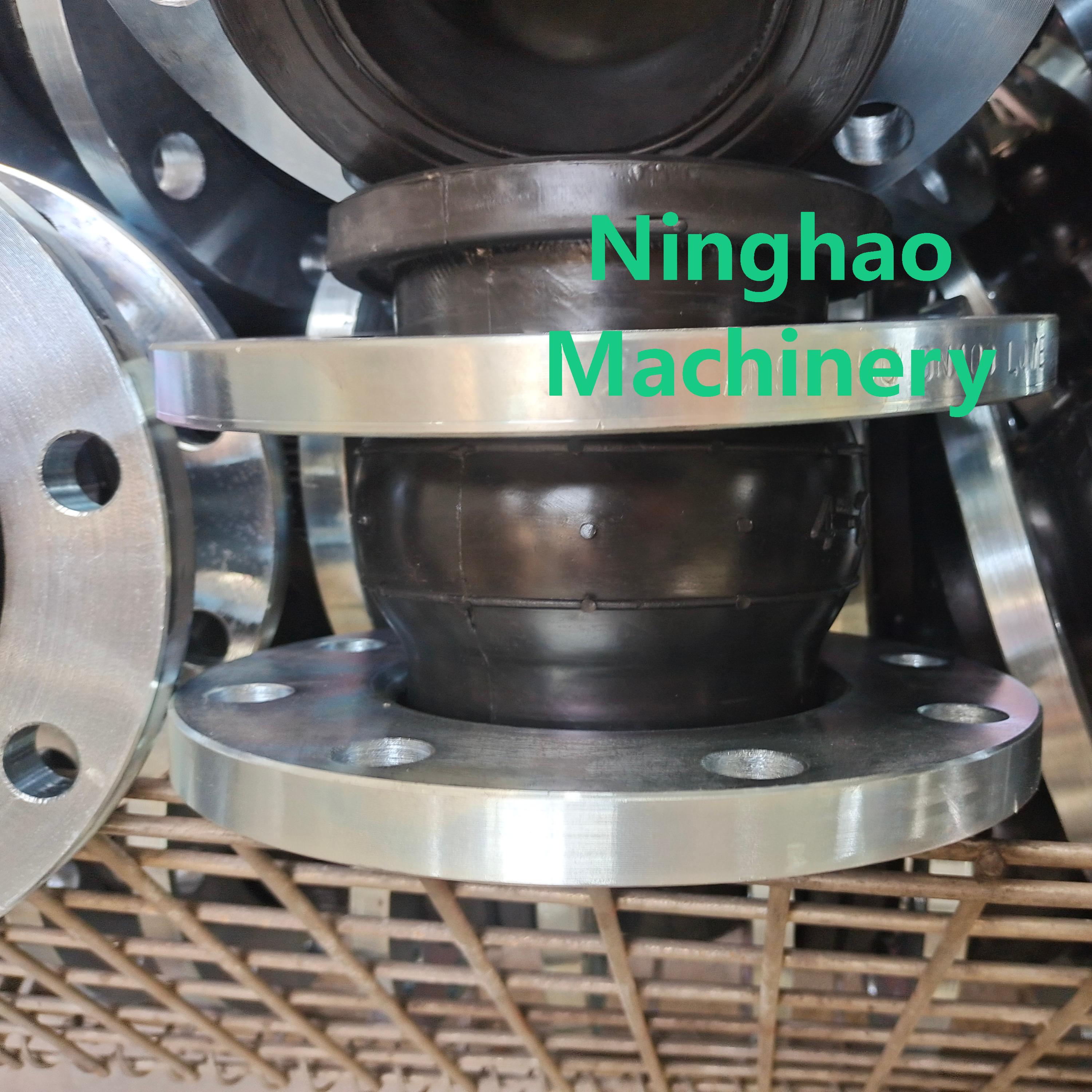
Nitrile Butadiene Rubber (NBR), commonly known as Buna-N, anchors the industrial processing sector. It excels exactly where EPDM fails, providing the critical defense against oil and fuel degradation.
NBR stands as the industry standard for resisting non-polar solvents. Its molecular structure prevents petroleum products from penetrating and swelling the rubber. You rely on an NBR expansion joint to safely convey hydraulic fluids, diesel, and lubricating oils. It also handles various refined petroleum products and aliphatic hydrocarbons without losing its mechanical integrity.
While Nitrile dominates in oil resistance, it operates within a narrower thermal window. It remains highly effective for moderate temperatures, typically maxing out around 212°F (100°C) for continuous use. However, it degrades much faster than EPDM when exposed to high-heat steam. Long-term exposure to elevated temperatures causes NBR to harden, crack, and lose its vibration-dampening capabilities.
NBR shines in aggressive industrial environments. We specify it constantly for heavy machinery and energy sector applications. Typical deployments include:
Petrochemical processing lines.
Marine engine fuel delivery systems.
Refinery pumping stations.
Industrial lubrication lines and return loops.
Airport fueling depots.
NBR is highly susceptible to atmospheric degradation. Ozone cracking and UV degradation destroy unprotected Nitrile quickly. We do not recommend it for prolonged outdoor exposure without protective lagging. Additionally, it reacts poorly to ketones, esters, and strong oxidizing acids. If you install an NBR joint near heavy electrical equipment that generates high ozone levels, the exterior will crack rapidly.
Table 1: Expansion Joint Material Quick Comparison | ||
Feature/Condition | EPDM (Ethylene Propylene Diene Monomer) | NBR (Nitrile Butadiene Rubber) |
|---|---|---|
Primary Media Target | Water, Wastewater, Dilute Acids | Petroleum, Oils, Hydraulic Fluids |
Continuous Temp Rating | Up to ~250°F / 120°C | Up to ~212°F / 100°C |
Ozone & Weather Resistance | Excellent (Ideal for outdoors) | Poor (Prone to cracking) |
Hydrocarbon Resistance | Failed (Swells and ruptures) | Excellent (Industry standard) |
Professionals rely on structured frameworks to prevent catastrophic misapplications. The STAMPED acronym (Size, Temperature, Application, Material, Pressure, Ends, Delivery) guides rigorous engineering choices. Here, we focus deeply on the three most critical components that determine your elastomer success.
You cannot guess the system media. We require a complete chemical analysis of the fluid before making a material recommendation. Trace elements matter immensely. For instance, you might assume a compressed air line only carries harmless air. However, standard lubricated compressors inject fine oil mist into the airstream. This oil carryover will quickly destroy an EPDM rubber joint even though the primary media is completely benign. Always account for cleaning chemicals, system flushes, and trace contaminants when evaluating fluid compatibility.
Temperature evaluation requires differentiating between continuous operating states and temporary system spikes. Rubber compounds degrade based on time-at-temperature. A brief surge to 230°F during a system flush might not immediately destroy a Nitrile joint, but running it continuously at that temperature will bake the elastomer. You must capture both the baseline running temperature and the absolute maximum peak temperature. If your peak temperatures hit frequently or last for extended periods, you must upgrade your material selection to prevent thermal hardening.
Chemical compatibility alone does not guarantee success. You must specify the proper physical structure to handle the mechanical demands. Selecting a single ball rubber connector works perfectly for isolating standard centrifugal pump vibration. However, if your pipe network undergoes massive expansion and contraction, you need multi-arch configurations. These multi-arch structures function as a highly effective thermal movement rubber joint without over-stressing the elastomer walls. Matching the geometry to the movement ensures the rubber compound flexes naturally within its engineered limits.
Even a perfectly specified joint fails if it is poorly handled during delivery, storage, or installation. You must tightly control the implementation phases.
Black elastomers look completely identical on the loading dock. You cannot tell EPDM from NBR simply by looking at the rubber. To prevent devastating installation mix-ups, manufacturers use standardized visual identifiers. Detail how to verify materials upon receipt. Look for the color-coded striping painted directly on the joint body. Under standard Fluid Sealing Association (FSA) guidelines, a red stripe indicates EPDM, while a yellow stripe indicates NBR. Always check the branded tag or the painted stripe before moving the unit to the installation site.
Improper storage ruins rubber joints before they ever see service. You must follow realistic handling guidelines to protect your inventory.
Isolate NBR from Ozone: You must store NBR away from any ozone-generating equipment. Never keep it near electric motors, high-voltage transformers, or active welding stations.
Control Climate: Both materials require cool, dark storage to maximize shelf life. Avoid direct sunlight in the warehouse.
Prevent Distortion: Store joints vertically. Never stack heavy items on top of the rubber arches, which induces permanent compression sets.
Excellent material chemistry cannot overcome brutal mechanical abuse. Note that no material can compensate for severe initial pipe misalignment. A rubber joint is not a gap-filler for poor piping fabrication. Forcing a joint to stretch across misaligned flanges pre-stresses the rubber, reducing its ability to absorb operational movement.
Furthermore, over-torquing the flanges crushes the rubber bead, severing the reinforcing fabric inside the joint. Installing without control units on unanchored piping systems allows the system pressure to over-elongate the joint. These errors will cause premature mechanical failure regardless of perfect chemical compatibility.
Selecting the optimal rubber compound requires a disciplined approach to your operating environment. You must verify the exact chemical makeup of the fluid, paying special attention to trace oils or washdown chemicals. Next, confirm the absolute maximum temperature spikes your system will generate, ensuring they fall safely below the continuous rating of the elastomer. Finally, assess the ambient external environment to determine if ozone or UV exposure dictates your material choice.
Never rely on guesswork when dealing with complex industrial systems. We strongly recommend consulting technical specification sheets and comprehensive chemical compatibility charts for mixed-fluid or edge-case applications. Secure professional verification of your operating parameters before issuing a purchase order to ensure long-term, leak-free performance.
A: Only if the system is completely oil-free. Standard lubricated air compressors introduce fine trace oils into the airstream. These hydrocarbon traces will rapidly degrade and swell EPDM. For standard lubricated compressed air lines, NBR is an absolute requirement.
A: No. While the material is chemically compatible with water, standard industrial EPDM can leach chemicals. Potable water applications require specific FDA or NSF-61 certified EPDM compounds. These specialized grades ensure no toxic leaching or taste contamination occurs in the drinking supply.
A: Look for the manufacturer's painted color stripe or branded tag. The raw black elastomers are visually indistinguishable. Based on standard Fluid Sealing Association (FSA) guidelines, manufacturers paint a continuous Red stripe on EPDM joints and a continuous Yellow stripe on NBR joints for quick verification.