- All
- Product Name
- Product Keyword
- Product Model
- Product Summary
- Product Description
- Multi Field Search

Views: 0 Author: Site Editor Publish Time: 2026-11-18 Origin: Site


Engineers and piping installers frequently confront strict routing constraints. Tight mechanical rooms routinely force vertical piping configurations. Most standard expansion joint guidelines lean heavily toward horizontal setups. Gravity, fluid weight, and axial compression behave entirely differently in vertical orientations. You introduce unique mechanical stresses when you flip a pipe vertically. Unanchored vertical runs can inadvertently turn a flexible connector into a dangerous load-bearing pillar. Can you mount a single sphere rubber expansion joint vertically? Yes, you can. Safe operation requires strict adherence to pipe anchoring, weight distribution, and control unit protocols. Read on to discover how you can prevent premature failure and safely optimize your vertical piping systems.
Vertical viability: Vertical installation is permissible if the system accounts for the dead weight of the fluid and piping.
The danger of compression: Without proper anchoring, gravity causes vertical pipes to compress the joint beyond its axial compression limits.
Control units are mandatory: Tie rods (control units) are non-negotiable in vertical installations to prevent over-elongation and excessive compression.
Debris management: Vertical downward flow presents risks of sediment buildup inside the arch of the sphere, requiring specific elastomer choices or protective sleeves.
Fluid dynamics shift dramatically when pipes run vertically. In horizontal layouts, steel pipe supports carry the heavy fluid weight. Vertical installations remove this natural support system. Gravity forces the fluid column directly downward. This downward force acts heavily on the single sphere rubber expansion joint. The joint itself can inadvertently become a load-bearing component. Expansion joints are flexible connectors, not structural supports. They isolate vibration and absorb thermal expansion safely. They cannot hold tons of moving water.
Vertical mounting shifts the primary stress forces entirely. Horizontal joints typically experience lateral offset or shear forces. Vertical joints face severe axial compression if they lack anchors below. They face severe axial elongation if unanchored above. You must manage these vertical forces carefully. Uncontrolled elongation pulls the flanges apart. Uncontrolled compression crushes the elastomer body.
Which vertical systems work best here? HVAC risers and vertical pump discharges are prime candidates. Cooling tower lines also benefit greatly. These systems experience moderate thermal expansion and vibration. They need reliable noise isolation. Some heavy-duty vertical systems might require rigid steel spools instead. You should evaluate system movement before choosing flexible rubber. High-pressure steam columns rarely suit elastomer joints. Cold water risers suit them perfectly.
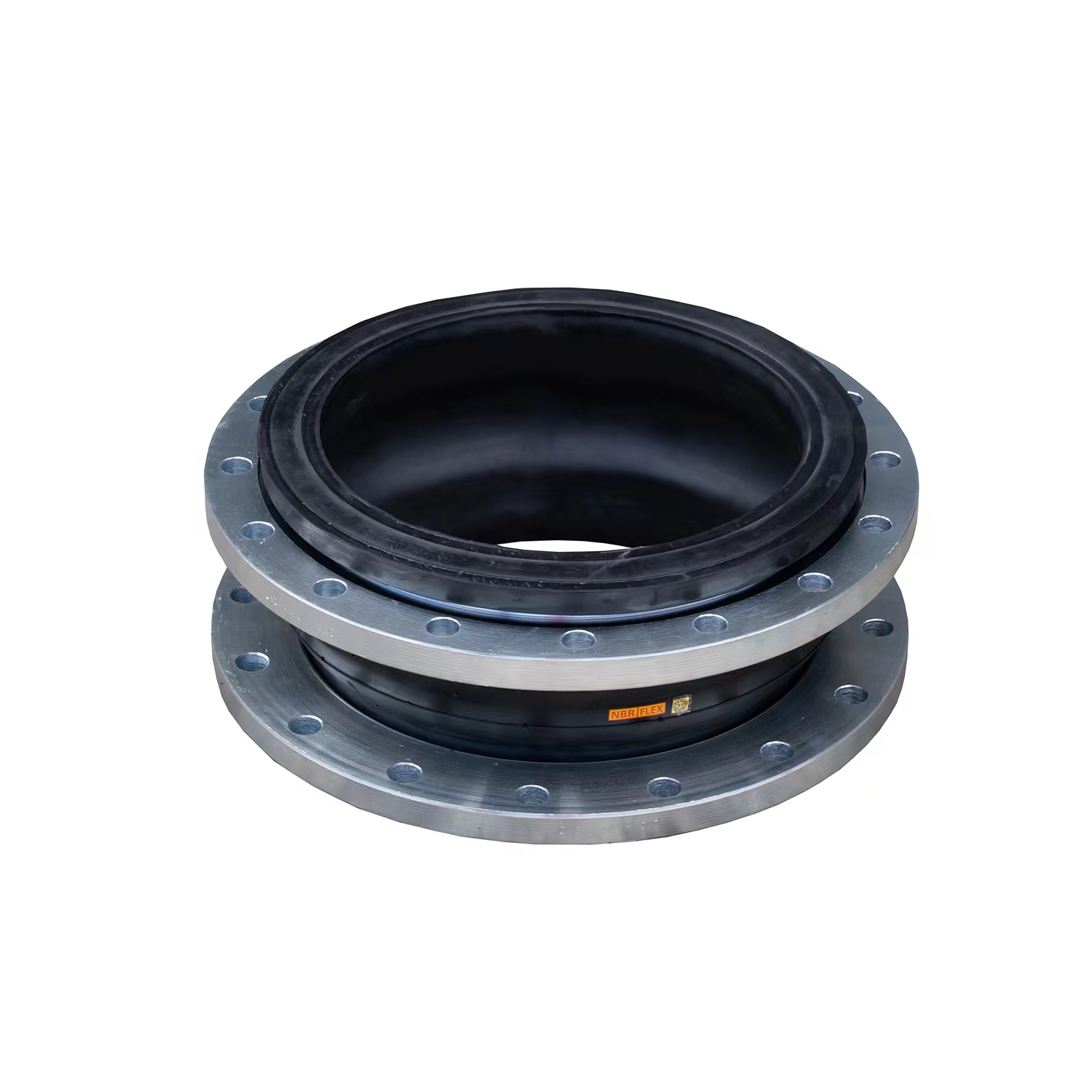
Dead weight compression is the most common failure mode. The massive dead weight of vertical pipes crushes the rubber arch. This crushing force leads to inner tube delamination. It can also cause catastrophic flange failure. Flexible joints absorb movement; they do not support pipe weight. When gravity pulls an unanchored pipe downward, it exceeds the joint's axial compression limit quickly. The rubber bulges outward dangerously.
Sediment and debris accumulation pose another hidden danger. Fluid flow direction changes everything. Upward flow is generally safer for the rubber arch. Heavy particulates wash through easily. Downward flow creates significant hazards. Heavy particulates settle directly into the convolution of the sphere. This settling happens whenever the system goes offline. Abrasive sediment damages the inner elastomer layer. It also prevents the joint from compressing properly during system restarts.
Vertical pump systems multiply startup stresses. Initial start-up surges test the burst pressure limits of a standard rubber expansion joint. Water hammer generates massive shockwaves. Gravity intensifies these pressure spikes in vertical columns. You must account for dynamic surge pressures during the design phase. A sudden valve closure sends a shockwave down the pipe. The vertical orientation amplifies this kinetic energy.
Relying on the flexible joint to carry the dead weight of the riser.
Omitting tie rods entirely to save space or reduce upfront procurement steps.
Ignoring fluid flow direction when pumping abrasive slurries.
Failing to calculate the hydrostatic head pressure at the bottom of a tall vertical pipe.
Proper installation prevents catastrophic failures. Strategic anchoring and guiding form the foundation of vertical stability. You must mandate the use of main anchors immediately adjacent to the joint. Main anchors isolate the joint from the vertical pipe weight. Directional pipe guides prevent bowing under high pressure. They stop lateral deflection from damaging the rubber body. The pipe must move in a controlled, linear direction.
Control units are absolutely mandatory. Limit rods restrict extreme movements. You must install control units to restrict both extension and compression in vertical setups. Gravity constantly threatens to stretch or crush the joint. Tie rods act as the ultimate fail-safe. They use gusset plates and threaded rods. Rubber washers cushion the tie rods during operation.
Flange torquing requires strict standard operating procedures (SOP). Follow a precise star pattern bolting sequence. Uneven seating happens easily in vertical orientations. Flange faces might not naturally align because gravity pulls the pipe off-center. Proper torquing prevents leaks and flange cracking. Overtightening one side pinches the rubber bead.
Protective accessories extend product lifespan. Consider integrating internal flow liners. Liners bridge the arch and prevent debris from settling. You need them in downward-flow applications involving slurries or scale-prone water. Solid PTFE liners provide excellent chemical resistance. Stainless steel liners handle high flow velocities safely.
Align flange faces carefully to offset gravitational pull before inserting bolts.
Insert bolts and hand-tighten them in a crisscross star pattern (e.g., 12 o'clock, 6 o'clock, 9 o'clock, 3 o'clock).
Use a calibrated torque wrench for all tightening steps to guarantee accuracy.
Apply torque in three distinct stages to ensure even rubber compression around the bead.
Re-torque all bolts after 24 hours of active system operation.
Selecting the right materials determines long-term success. Elastomer selection requires careful medium evaluation. Vertical joints often face longer dwell times. Sitting fluids remain inside the joint during power outages. Choose EPDM for standard water and mild chemicals. Select Nitrile for oil-based media. Use Neoprene for aggressive outdoor environments. Chemical degradation accelerates when fluids stagnate in the arch.
Review technical datasheets closely for pressure ratings. You must distinguish between burst pressure and working pressure. Dynamic pressure drops in tall vertical lifts demand a single ball rubber compensator with a higher safety factor. Always calculate the maximum surge pressure. Most reputable manufacturers build joints with a 3:1 safety margin. Vertical applications often demand a 4:1 margin.
Reinforcement layers dictate overall strength. Manufacturers use nylon or aramid tire-cord reinforcement inside the rubber. High-quality reinforcement resists extreme hydrostatic pressures. The base of a vertical run experiences immense pressure pooling. Strong tire-cord layers prevent the rubber from blowing out. Steel wire rings embedded in the flange bead keep the joint seated securely.
Table 1: Elastomer Compatibility for Vertical Dwell Times
Elastomer Type | Primary Media | Vertical Dwell Time Risk | Best Application |
|---|---|---|---|
EPDM | Water, Steam, Mild Chemicals | Low risk for degradation | HVAC Risers, Cooling Towers |
Nitrile (NBR) | Oil, Petroleum, Lubricants | Medium risk if oil separates | Vertical Pump Discharges |
Neoprene | Slurries, Weather-exposed fluids | Low risk (weather resistant) | Outdoor Vertical Stacks |
Engineers must match the joint type to the exact mechanical demands of the vertical pipeline.
When should you stick with a single sphere? They remain ideal for standard vibration isolation. They provide excellent noise reduction. They handle moderate axial movement requirements perfectly. They fit easily into compact vertical spaces. Use a single ball rubber expansion joint when space is tight and movement is predictable. They offer the best balance of flexibility and structural integrity.
When should you upgrade to a double sphere? Sometimes vertical risers experience extreme lateral deflection. A single sphere cannot absorb massive sideways movement. Double sphere designs offer increased flexibility. They feature a longer face-to-face dimension. This extra length accommodates larger pipe offsets. However, they are more susceptible to vertical bowing under high pressure.
When should you pivot to metal bellows? Elastomers have strict temperature and pressure limits. Extremely hot vertical stacks destroy rubber quickly. Highly pressurized steam requires metallic solutions. Choose metal bellows when safety mandates zero-maintenance materials. Metal handles high-velocity gases better than rubber. It resists catastrophic blowouts in volatile environments.
Chart 1: Configuration Comparison Summary
Configuration Type | Vibration Isolation | Axial Compression Limit | Lateral Deflection Limit | Vertical Space Required |
|---|---|---|---|---|
Single Sphere Rubber | Excellent | Moderate | Low to Moderate | Minimal (Compact) |
Double Sphere Rubber | Excellent | High | High | Moderate |
Metal Bellows | Poor | Very High | Moderate | Variable |
Vertical mounting depends entirely on strict system design. Proper anchoring and control rods make it possible. Vertical failures rarely result from a flaw in the joint itself. Gravity merely exposes poor piping layouts. You can achieve decades of reliable service if you support the pipe weight properly.
Summarize your evaluation criteria before procurement. Check your flow direction carefully. Calculate precise fluid weight support. Match your medium to the correct elastomer specification. Assess the maximum hydrostatic pressure pooling at the bottom of the riser.
Consult closely with your engineering teams moving forward. Review specific manufacturer datasheets thoroughly. Verify your chosen unit meets all criteria for vertical deployment. Install main anchors and pipe guides without compromise. Proper planning prevents catastrophic downtime and ensures optimal operational safety.
A: Highly recommended for downward flow to prevent debris accumulation in the arch; less critical for upward flow of clean fluids.
A: Yes, if the lower pipe is unsupported, gravity will cause elongation. Control rods and proper anchors are required to prevent this.
A: Single sphere joints are generally bi-directional, but the system designer must account for how gravity affects the fluid medium and particulate settling during shutdown.
A: Yes. They act as a fail-safe against the unpredictable forces of gravity and pressure surges in vertical alignments.