- All
- Product Name
- Product Keyword
- Product Model
- Product Summary
- Product Description
- Multi Field Search

Views: 122 Author: Site Editor Publish Time: 2026-09-18 Origin: Site


Piping system failures rarely happen without warning. They usually follow a clear trail of overlooked deterioration signs spreading through the network. A rigorous rubber expansion joint quality inspection plays a crucial role in mitigating these operational risks. You can prevent catastrophic downtime by catching these early warnings before they escalate into major ruptures. Routine checks also ensure complete safety compliance across your entire industrial facility.
Our objective for this comprehensive guide is straightforward and highly actionable. We provide procurement and maintenance teams with an evidence-based framework to standardize their evaluation protocols. Procurement teams can use these insights to evaluate new purchases confidently before installation. Maintenance teams can audit existing installations to plan timely, safe replacements. You will learn exactly what structural markers to track and monitor during routine checks. We also cover how specific material selection directly impacts the expected lifecycle of your piping components.
Effective quality inspection begins at procurement, verifying material certifications, dimensional accuracy, and pressure ratings before installation.
In-service evaluations must track specific degradation markers, including elastomer hardening, arch deformation, and cover cracking.
Material selection (e.g., standard elastomers vs. specialized Viton piping joints) dictates the baseline for inspection parameters and expected lifecycle.
Reliable procurement requires demanding transparent hydrostatic testing reports and compliance with industry standards (e.g., FSA guidelines).
Substandard components severely compromise modern piping networks. They fail to absorb vibration fatigue effectively during heavy pump operations. Thermal stress builds up rapidly in rigid pipe lines during temperature fluctuations. Chemical degradation further weakens inferior elastomers over time. These combined failures inevitably lead to costly, unplanned plant shutdowns. When vibration isolation fails, the resulting kinetic energy damages expensive adjacent equipment. You must protect pumps, valves, and anchors from these destructive mechanical forces.
Procurement teams must balance initial component costs against the severe financial risks of premature failure. Buying low-quality components increases your exposure to sudden system ruptures. You also must consider the escalating costs of emergency maintenance labor. Environmental cleanup expenses from toxic fluid spills can easily damage your budget and corporate reputation. Investing in high-quality components upfront mitigates these substantial financial and operational liabilities.
You must establish strict performance baselines for your components. A successful industrial expansion joint installation requires meeting several non-negotiable criteria. We look for these specific indicators of a quality product:
Dimensional Stability: The unit must maintain its structural shape under maximum working pressure.
Predictable Flex Fatigue Resistance: The elastomer must withstand thousands of movement cycles without tearing.
Absolute Fluid Containment: The joint must prevent all leaks under specified pressure and temperature parameters.
Flange Integrity: The integral rubber flanges must resist crushing during proper bolt torquing.
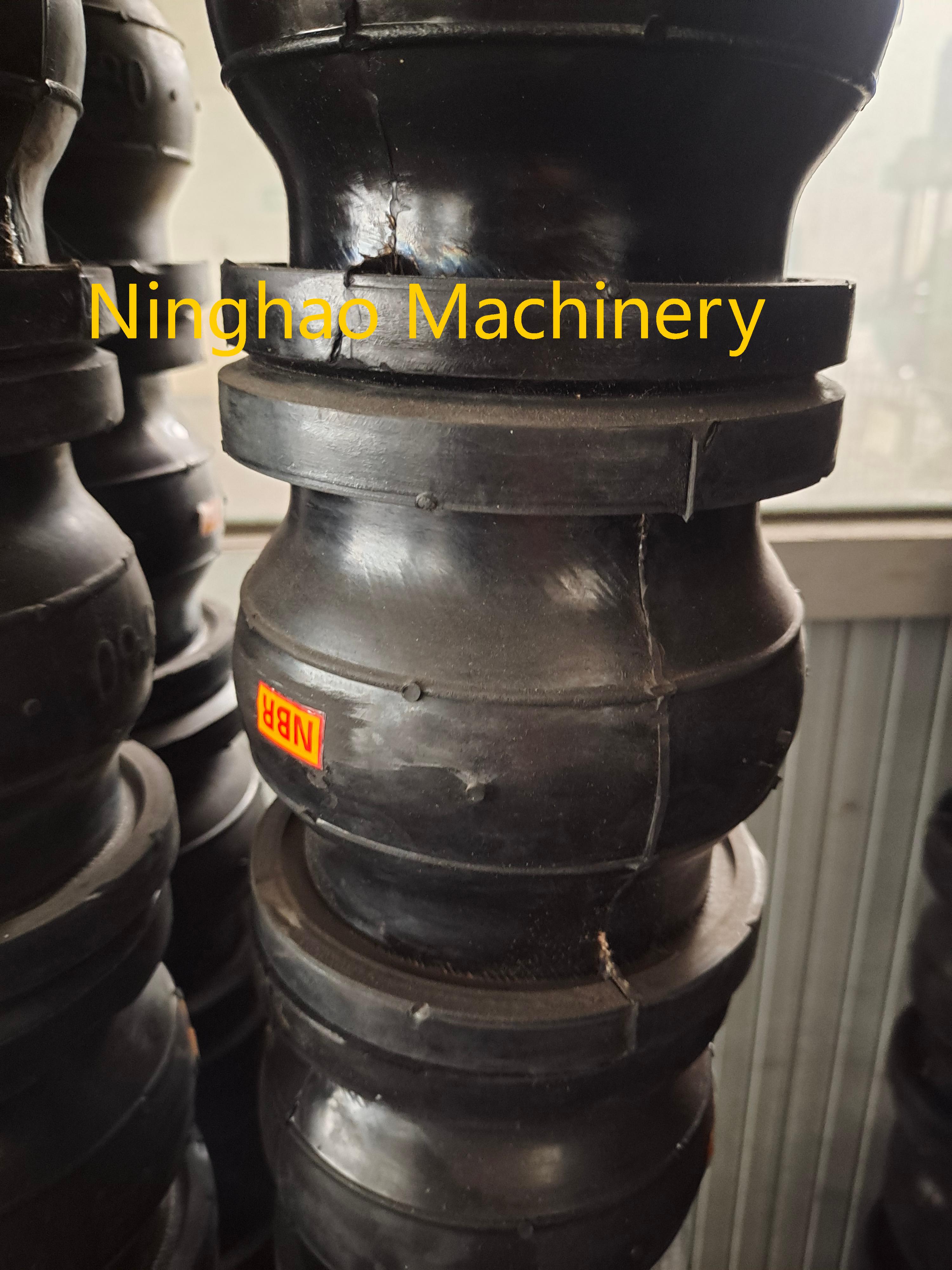
Visual assessments serve as your first critical defense line. You should inspect the inner tube and outer cover under bright lighting. Look carefully for any mold marks, surface voids, or deep scratches. Delamination between the rubber layers indicates poor manufacturing processes. Surface porosity weakens the overall pressure boundary of the joint. You must also verify the structural integrity of the reinforcing fabric. The fabric must remain entirely encapsulated within the elastomer. You should never see exposed synthetic ply, nylon, or steel wire.
You must perform strict dimensional verification before approving any installation. A standard rubber expansion joint must align perfectly with your piping network. Audit the face-to-face dimensions strictly against the manufacturer submittals. Confirm flange drillings align precisely with your system specifications. ANSI, DIN, and JIS standards dictate very specific bolt hole spacing. Installing a joint with incorrect face-to-face dimensions pre-stresses the rubber. This pre-stressing significantly reduces the operational lifespan of the component.
Always conduct a thorough hardware and accessory audit upon delivery. Inspect the split retaining rings carefully. Verify they meet the proper thickness requirements for your system pressure. Check for required galvanization or specific stainless steel alloy requirements. Next, examine the control units and tie rods. You must verify these rods are calibrated correctly. They serve to prevent the joint from exceeding its maximum extension and compression limits. Missing or improperly adjusted tie rods lead directly to catastrophic arch ruptures.
Table 1: Standard Dimensional Tolerances for Pre-Installation Inspection
Inspection Parameter | Acceptable Tolerance | Rejection Criteria |
|---|---|---|
Face-to-Face Length | ± 1/8 inch (3.2 mm) | Deviation forces piping misalignment |
Flange Outer Diameter | ± 1/16 inch (1.6 mm) | Interferes with adjacent bolt installation |
Bolt Hole Alignment | Maximum 1/16 inch offset | Requires forcing bolts through the flange |
Retaining Ring Thickness | Matches manufacturer spec exactly | Bending or warping under initial torque |
Routine in-service audits prevent sudden system ruptures. Maintenance teams must evaluate components while they operate under normal pressure. Here are the five critical signs indicating immediate replacement is necessary.
Ground-level ozone aggressively attacks the chemical double bonds in rubber polymers. You must learn to differentiate between minor wear and structural failure. Superficial surface crazing looks like tiny, shallow spiderwebs. This crazing is generally acceptable and common in older installations. However, deep cracks pose a severe safety hazard. If a crack exposes the internal structural reinforcement fabric, the joint is failing. You cannot repair these deep cracks safely. They demand immediate component replacement.
Watch the central arch profile closely during your routine inspections. The arch should maintain a smooth, uniform curve under pressure. Arch flattening indicates severe over-elongation of the joint. It often points to a failure in your pipe anchors or guides. Conversely, the arch might invert or pull inward. This inversion signals excessive system vacuum conditions. If your system runs under heavy vacuum, ensure the joint contains internal vacuum support rings.
Blistering strongly signals dangerous chemical incompatibility. When incompatible fluids attack the elastomer, they permeate the rubber lining. This permeation causes localized swelling and soft, spongy blisters on the inner tube. Sometimes, these blisters migrate to the outer cover. Softening indicates the chemical media is actively breaking down the polymer chains. Once the inner tube compromises, pressurized fluid reaches the fabric reinforcement. The joint will eventually burst under normal operating pressures.
A leaking flexible rubber compensator often suffers from poor torque retention. Elastomers naturally experience cold flow, requiring periodic bolt retorquing after initial installation. However, severe leakage often stems from improper installation patterns. Installers must use a crisscross, star pattern when tightening bolts. Failure to do so crushes the integral rubber flange unevenly. This uneven pressure causes flange face tearing, making a secure seal impossible.
Evaluate the joint for thermal degradation regularly. Continuous exposure to high temperatures essentially continues the vulcanization process in the field. The once-flexible elastomer becomes stiff, brittle, and unyielding. You can often feel this hardness during a tactile inspection. When the joint loses its elasticity, it stops absorbing vibration. Instead, it transfers dangerous mechanical stress directly to adjacent pipes and pump nozzles. Hardened joints crack easily under sudden pressure surges.
Material selection dictates your entire inspection baseline. You must evaluate chemical compatibility before setting your inspection criteria. Criteria shift dramatically based on the specific media handled by your system. Abrasive slurries require thick, wear-resistant natural rubber linings. Strong acids demand entirely different chemical resistance profiles, like PTFE linings. Standard EPDM works exceptionally well for hot water, steam, and mild chemicals. However, hydrocarbons and petroleum products rapidly degrade standard EPDM, turning it spongy and weak.
You must also assess specialized environmental risks surrounding the installation. Joints operating in marine environments face aggressive, corrosive atmospheres. High salt-spray concentration causes rapid pitting on standard carbon steel hardware. Marine applications require premium 316 stainless steel retaining rings and tie rods. Outdoor installations in high-altitude environments face intense UV radiation. These environmental factors require targeted inspection protocols focusing on external hardware corrosion and UV-induced cover degradation.
Sometimes, standard materials simply fall short of operational demands. You should specify a specialized Viton piping joint for high-temperature applications. Viton (FKM) fluoroelastomers excel in incredibly harsh chemical environments. They handle aliphatic and aromatic hydrocarbons effortlessly. They also withstand temperatures up to 400°F (204°C). Inspecting Viton joints requires checking for specific high-temperature blistering. While Viton carries a higher initial procurement price, its durability is unmatched. This premium cost easily translates to extended operational longevity and reduced maintenance intervals.
Reliable procurement relies heavily on verifiable testing data. Hydrostatic testing is absolutely mandatory for quality assurance. You must request baseline pressure test reports from the manufacturer. Standard hydrostatic tests usually run at 1.5 times the stated design pressure. Burst testing evaluates the ultimate failure point of the design. Good manufacturers ensure burst pressures reach 3 to 4 times the operating pressure. These reports validate the design safety factors for your specific application.
Material traceability ensures long-term quality control across your facility. Ensure production batch numbers and cure dates are clearly marked on the outer cover. You should be able to track these numbers through the manufacturer's quality database. If a premature failure occurs, traceability helps identify if a specific batch was compromised. It also helps maintenance teams track the exact age of installed components during plant audits.
Industry standard alignment protects your facility from substandard imports. Verify the product and manufacturing process aligns with recognized global directives. The Fluid Sealing Association (FSA) provides rigorous guidelines for non-metallic expansion joints. Compliance with FSA standards ensures consistent dimensional tolerances and performance metrics. You should also look for ISO 9001 certifications from the manufacturing facility. Standard alignment guarantees you receive a component engineered for industrial safety.
You can use this inspection and testing data to streamline your procurement process. Apply strict shortlisting logic to evaluate potential vendors. Disqualify low-bid vendors offering low transparency or refusing to provide hydrostatic test reports. Partner only with reliable manufacturers who supply comprehensive testing documentation. A reputable vendor will always provide clear installation manuals, torque requirements, and material safety data sheets upon request.
Implementing a rigorous inspection framework protects your piping network from unexpected failures. You must adopt a proactive philosophy: inspect before installation, monitor during service, and document all degradation. We recommend keeping detailed logs of arch deformation and elastomer hardening to predict end-of-life accurately. Partnering with transparent manufacturers guarantees you receive components backed by verified hydrostatic testing. As a next step, integrate these criteria into your digital maintenance schedules. You should also consult with engineering specialists for custom application sizing to ensure maximum lifecycle value.
A: Baseline checks immediately upon delivery and post-installation; ongoing visual inspections monthly, with comprehensive structural audits during scheduled annual plant turnarounds.
A: Typically 3 to 5 years if stored correctly (cool, dark, dry environment, laid flat, free from ozone-generating equipment), but a pre-installation inspection is mandatory regardless of storage time.
A: Minor superficial surface crazing is often acceptable, but cracks exposing the reinforcing fabric compromise structural integrity. Surface repairs are generally not recommended; replacement is the industry standard to mitigate risk.
A: Most commonly due to improper torque sequencing (failure to use a star pattern) or over-torquing, which crushes the integral rubber flange. It may also indicate mating flanges that are not flat or lack the appropriate finish.