- All
- Product Name
- Product Keyword
- Product Model
- Product Summary
- Product Description
- Multi Field Search

Views: 162 Author: Site Editor Publish Time: 2026-09-01 Origin: Site


Municipal and industrial wastewater systems face continuous threats from chemical corrosion, heavy sludge abrasion, and pump vibration. Rigid piping systems struggle to absorb the kinetic energy and thermal movement inherent in wastewater treatment. This inability leads to premature flange failure, accelerated pump wear, and potential effluent leaks. Facility operators need reliable solutions to isolate mechanical stress while maintaining continuous fluid flow.
Specifying an application-engineered wastewater rubber expansion joint isolates vibration and resists chemical breakdown effectively. However, system designers must utilize the correct elastomer compounds and strict installation protocols. We will explore how flexible connectors manage corrosive fluids and dampen mechanical forces. You will learn about precise material selection, crucial specification criteria, and the exact methods to avoid costly installation mistakes.
Elastomer selection must match the specific effluent chemistry; EPDM excels in biological wastewater, while NBR is required for oil-heavy industrial runoff.
Rubber expansion joints outperform steel in sludge applications by offering superior abrasion resistance and vibration dampening.
Most premature joint failures are caused by improper installation, such as using the joint to correct pipe misalignment or omitting control units.
Proper specification requires balancing chemical resistance, pressure ratings, and lifecycle compliance to prevent costly downtime.
Wastewater treatment plants operate continuously under extreme mechanical and chemical stress. High-capacity influent pumps and aeration blowers generate severe vibration. This mechanical energy transfers directly into the adjacent piping matrix. Rigid steel pipes cannot flex or absorb these forces. They transfer the kinetic energy through welded joints and flanged connections. Constant mechanical stress inevitably fatigues rigid pipelines. Welds develop micro-cracks over time. Flanges separate slightly, causing highly toxic leaks.
Chemical and abrasive degradation adds another layer of complexity. Raw sewage contains grit, sand, and destructive organic waste. Treatment plants also inject aggressive dosing agents to manage biological processes. Sodium hypochlorite disinfects the water but attacks bare metal aggressively. Grit acts like liquid sandpaper inside the pipeline. It constantly scours away protective oxide layers inside steel pipes. This abrasive action exposes fresh metal to chemical attack, accelerating corrosion exponentially.
Engineers often debate using rubber versus steel in heavy sludge lines. Steel expansion joints handle high temperatures exceptionally well. However, they fall victim to rapid corrosion and internal abrasion from thick sludge. A flexible compensator offers a vastly superior alternative. It absorbs particulate impact without suffering permanent deformation. The elastomer yields to the grit and rebounds instantly. This unique physical property delivers a significantly longer lifecycle in abrasive slurries compared to rigid metal alternatives.
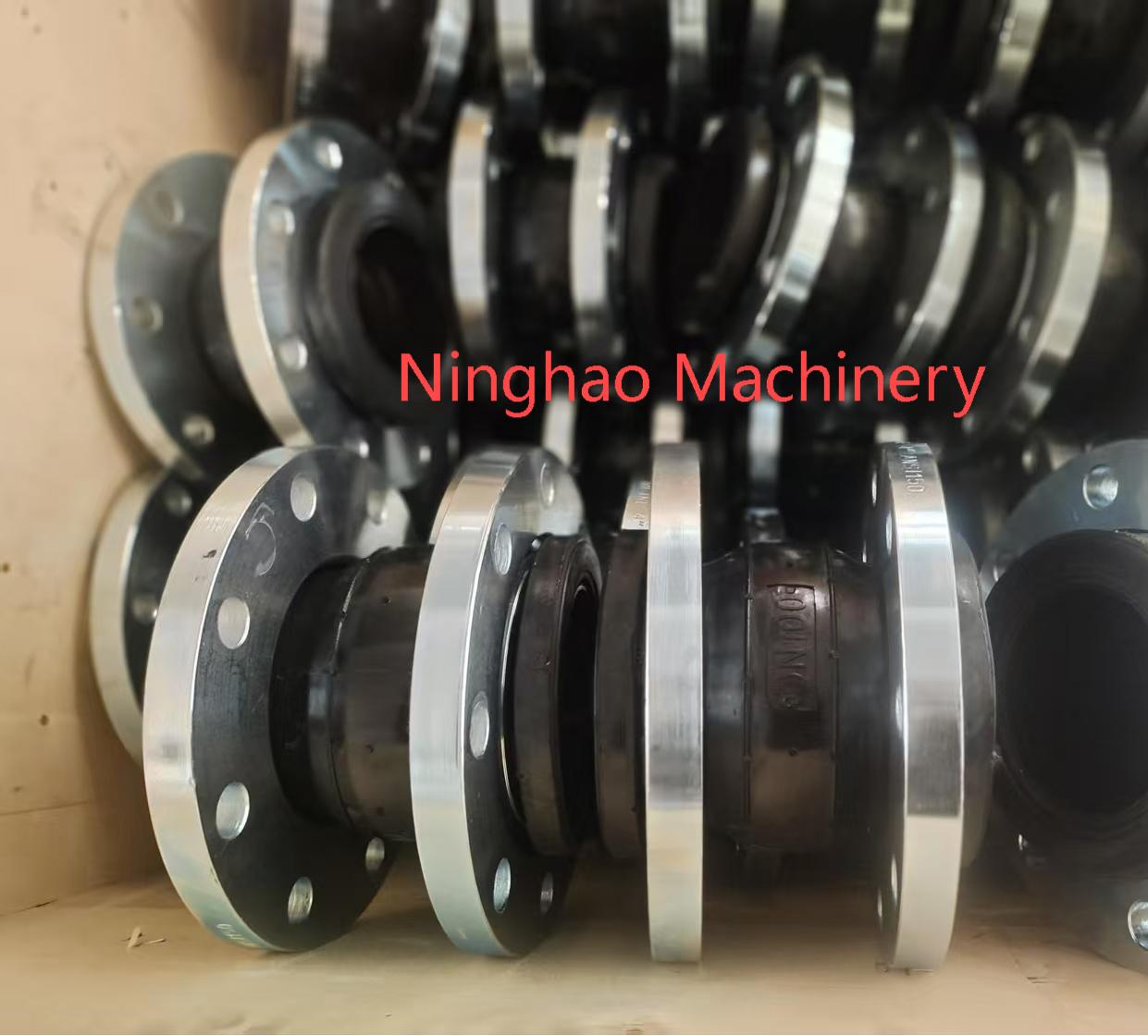
Selecting the right elastomer material determines system survival. Every single wastewater piping application requires specific chemical compatibility analysis. Installing the wrong rubber compound guarantees catastrophic failure within months. Engineers must evaluate the fluid chemistry, operating temperature, and external environmental factors before specifying a product.
EPDM Rubber Expansion Joint (Ethylene Propylene Diene Monomer):
This material serves as the industry standard for biological treatment phases. It works best for municipal wastewater lines, aeration basins, and outdoor installations. An EPDM rubber expansion joint offers exceptional resistance to ozone, harsh weathering, and ultraviolet light. It handles mild acids and alkalis flawlessly. However, you must never use EPDM in environments containing petroleum products. Hydrocarbons cause EPDM molecules to swell, lose tensile strength, and ultimately rupture.
NBR Chemical Expansion Joint (Nitrile Butadiene Rubber):
Industrial facilities process highly complex effluents. Refineries, food processing plants, and machining centers produce runoff heavily laden with hydrocarbons. In these environments, you need an NBR chemical expansion joint. Nitrile rubber provides high resistance to fats, oils, and greases (FOG). It withstands petroleum-based chemicals effortlessly. NBR maintains its structural integrity where standard biological elastomers would disintegrate rapidly.
PTFE-Lined Elastomers (Teflon):
Certain zones within a treatment plant require extreme chemical defenses. Aggressive chemical dosing lines transport strong coagulants, sulfuric acid, or concentrated sodium hypochlorite. Standard rubber compounds degrade quickly under these harsh conditions. Manufacturers solve this by fusing a PTFE (Teflon) liner to the inner tube of the expansion joint. The PTFE liner blocks all chemical attack. Meanwhile, the outer rubber carcass still provides the necessary vibration isolation and movement absorption.
Table 1: Elastomer Chemical Compatibility in Wastewater Systems
Elastomer Material | Primary Application | Key Strengths | Critical Vulnerabilities |
|---|---|---|---|
EPDM | Municipal sewage, aeration lines | Weather, ozone, mild acids | Petroleum oils, heavy greases |
NBR (Nitrile) | Industrial runoff, food processing | Fats, oils, greases, hydrocarbons | High temperatures, ozone exposure |
PTFE-Lined | Aggressive chemical dosing | Universal chemical resistance | Reduced flexibility, higher cost |
Proper product specification prevents unscheduled downtime. Engineers must evaluate several dynamic operational factors before procurement. Overlooking just one variable often leads to premature component failure.
Sizing for Surge Pressures:
You must evaluate the maximum operating pressure carefully. Standard operating pressure only tells half the story. Engineers must calculate potential water hammer events in force mains. When heavy duty pumps activate or valves close rapidly, hydraulic shock waves travel through the fluid. These surge pressures can easily double the normal operating pressure. You must specify an expansion joint rated to handle these severe transient spikes.
Abrasion Allowances:
Raw sewage lines transport heavy grit, rocks, and debris. Standard expansion joints feature an open inner arch to maximize flexibility. However, solids pool inside this open cavity. Accumulated debris creates turbulence and accelerates internal scouring. To combat this, select joint designs featuring filled arches. A filled arch provides a smooth inner bore. It prevents grit accumulation completely. Alternatively, specify specialized heavy-duty inner tubes constructed from highly abrasion-resistant natural rubber blends.
Movement Capabilities:
You must calculate exact movement requirements based on system design. Calculate the anticipated axial compression, axial extension, lateral deflection, and angular movement. Base these calculations on system thermal fluctuations and potential pump settling. Thermal expansion causes steel pipes to grow significantly. The flexible joint must absorb this growth without transferring stress to the pump casing. Ensure the chosen component exceeds the calculated movement parameters to provide a reliable safety margin.
Best Practice Note: Always consult widely accepted fluid handling frameworks, such as the Fluid Sealing Association (FSA) guidelines, when calculating pressure and movement thresholds. Verifying your calculations against established industry standards ensures long-term operational safety.
Even the highest quality rubber expansion joint will fail quickly if installed incorrectly. Most premature ruptures stem directly from human error during installation. Avoid these common critical mistakes to protect your infrastructure.
Piping Misalignment:
Never rely on the expansion joint to bridge wide gaps. Do not use it to correct poor pipe alignment. Contractors sometimes force a flexible joint to stretch or twist to meet misaligned flanges. This induces permanent internal stress immediately. The elastomer remains in a constant state of tension. This practice guarantees premature rupture and voids the manufacturer warranty.
Omission of Control Rods:
Failing to install tie rods or control units in unanchored piping systems creates extreme danger. Fluid pressure generates massive thrust forces. The formula for pressure thrust is straightforward: internal area multiplied by operating pressure. A 10-inch pipe running at 100 PSI generates thousands of pounds of thrust force. Without control rods to restrain this energy, the thrust forces will over-extend the joint past its engineered limits. The joint will physically blow out of the pipeline.
Improper Flange Torquing:
Installers frequently over-tighten bolts or tighten them unevenly. Rubber flanges do not require the massive torque applied to metal gaskets. Excessive torque crushes the rubber flange face. It severs the internal reinforcing fabrics. It compromises the seal entirely, leading to immediate weeping. Always use a calibrated torque wrench. Follow a strict star-pattern tightening sequence to apply even pressure across the entire flange face.
Securing reliable components requires a strategic procurement approach. Facility managers must look beyond basic dimensions and focus on manufacturing quality. You need verifiable data to ensure environmental safety.
Vendor Expertise and Traceability:
You must source components from specialized manufacturers possessing deep fluid handling expertise. Request verifiable material testing data for every batch of elastomer produced. Traceability matters immensely in industrial applications. Reputable vendors provide Material Test Reports (MTRs). These documents confirm the exact chemical composition of the rubber. Proper traceability reduces compliance risks significantly. It prevents catastrophic blowouts caused by substandard, unverified rubber blends imported from questionable sources.
Inspection Protocols:
Proactive maintenance prevents unexpected failures. Establish strict visual inspection routines for all flexible connectors. Plant personnel should conduct monthly exterior reviews. Look for early warning signs of degradation. Identify exterior blistering, which indicates fluid has breached the inner tube. Look for surface cracking caused by ozone exposure or mechanical fatigue. Check the flange edges for weeping fluid. You must replace the unit immediately if any structural degradation appears. Never attempt to patch or repair a compromised flexible connector.
By enforcing strict procurement standards and maintaining rigorous inspection schedules, facilities protect their downstream equipment. You extend the operational lifecycle of the entire piping network.
Managing mechanical stress and chemical corrosion requires a proactive, engineered approach. Flexible compensators absorb destructive vibration, accommodate thermal movement, and resist aggressive effluent chemistry. Facility engineers must match specific elastomer compounds precisely to their fluid profiles. Furthermore, strict adherence to alignment, torque, and control rod protocols remains absolutely mandatory for operational safety.
We urge procurement teams and maintenance supervisors to audit their current piping environments immediately. Identify high-vibration zones and chemical dosing lines lacking proper flexibility. Consult with specialized fluid handling experts to review your system parameters. Request application-specific submittals to ensure your facility deploys the safest, most resilient piping solutions available today.
A: Lifespan depends entirely on operating conditions, fluid chemistry, and proper installation. Standard units typically last between 7 to 10 years in typical municipal applications. Severe abrasive services or high-temperature chemical environments may reduce this to 3 to 5 years. Regular visual inspections determine the exact replacement timeline.
A: You should specify EPDM for biological wastewater, outdoor installations, and environments requiring high ozone or weather resistance. EPDM handles mild acids perfectly. Choose Neoprene only if the fluid contains trace amounts of petroleum oils, as EPDM will swell and fail upon contact with hydrocarbons.
A: Yes, control rods are mandatory unless the piping system features solid structural anchors immediately adjacent to the joint. Without control rods, internal pressure thrust forces will stretch the flexible connector past its design limits, resulting in a dangerous, catastrophic blowout.
A: Yes. High-quality elastomer compounds handle thick sludge much better than rigid steel. For optimal performance, specify a design featuring a filled internal arch. The filled arch prevents heavy solids and abrasive grit from accumulating inside the joint, eliminating internal turbulence and scouring.
A: Look for visible exterior distress. Warning signs include surface cracking, blistering, bulging, or exposed internal reinforcing fabrics. If you notice fluid weeping around the flange connections despite proper torque, the internal seal has failed. Replace the unit immediately upon discovering any of these symptoms.