- All
- Product Name
- Product Keyword
- Product Model
- Product Summary
- Product Description
- Multi Field Search


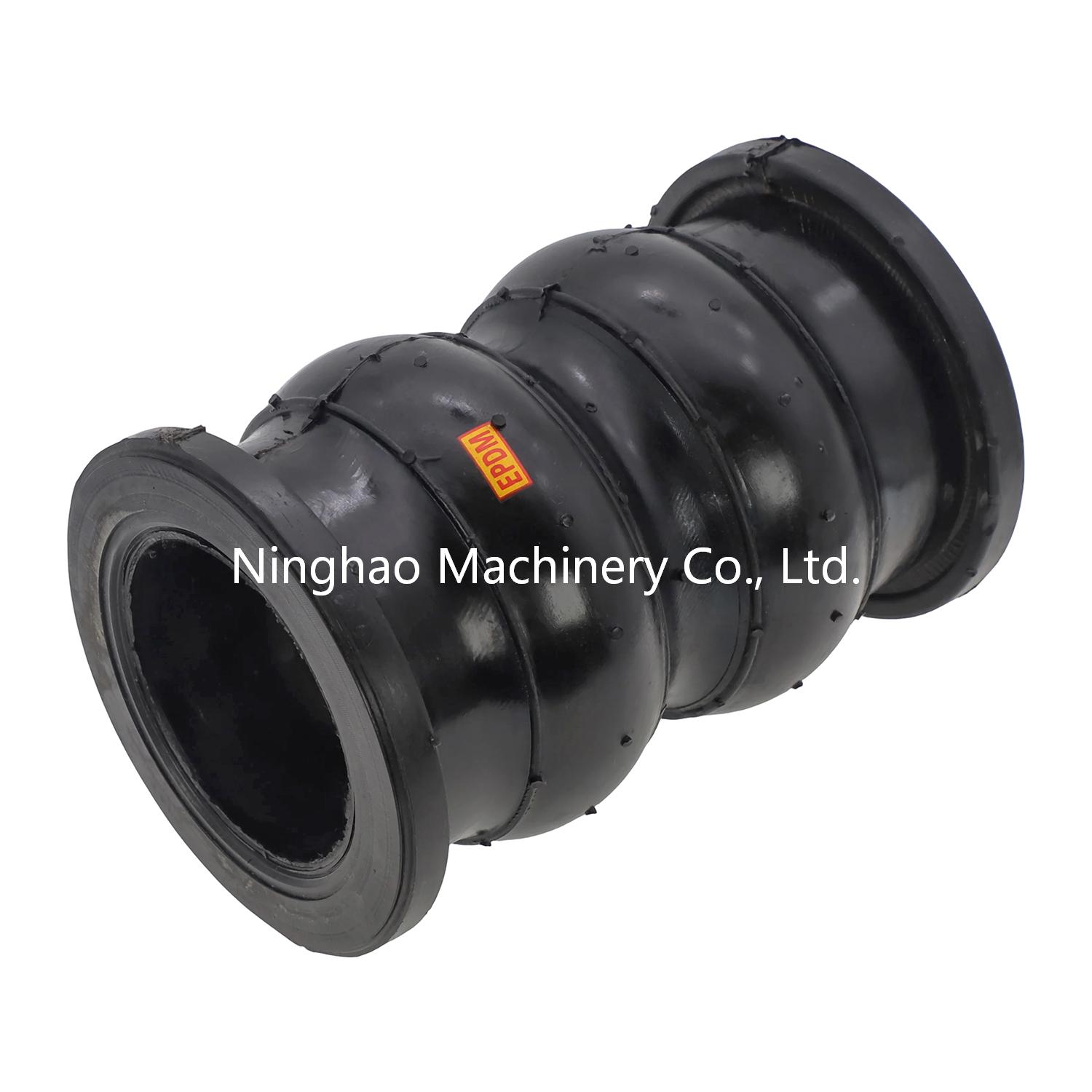


Double Ball Rubber Expansion Joint with DIN Flanges - Superior Flexibility & Vibration Damping
Engineered for high-performance piping systems, the Double Ball Rubber Expansion Joint excels in absorbing movement, reducing vibration, and compensating for misalignment. Built with premium rubber materials (NR/EPDM/NBR/FKM) and reinforced with steel wire, it ensures durability, corrosion resistance, and reliable operation in demanding environments (-20°C to 100°C). Ideal for seawater, drinking water, and industrial fluids.
| Quantity: | |
|---|---|


NHFLEX-B
Ninghao
As a leading manufacturer and supplier of advanced fluid control solutions, we introduce the premium Double Ball Rubber Expansion Joint with DIN Flanges. Engineered specifically for heavy-duty pipeline networks, this robust compensator resolves complex thermal alignment issues and dampens destructive operational acoustics in demanding industrial environments.
Manufactured directly for high-volume industrial procurement, ensuring strict quality consistency.
Engineered with a dual-sphere profile to provide enhanced multidirectional flexibility.
Designed to seamlessly integrate with global piping standards, reducing installation friction.
Built to protect expensive adjacent machinery from mechanical strain and vibration fatigue.
The flanged double sphere flexible rubber expansion joint serves as the critical shock-absorbing nerve center of modern industrial piping systems. When you run your hands over the robust, vulcanized outer elastomeric layer, the dense, resilient texture immediately conveys a sense of uncompromising durability. This is not merely a passive connector; it is a meticulously engineered compensator designed to swallow the aggressive, rhythmic vibrations of heavy-duty pumps and the sharp, jarring shocks of sudden fluid pressure surges. By integrating this component into your pipeline network, the deafening mechanical roar of high-velocity fluid transmission is muffled into a quiet, stable hum, drastically improving the auditory environment and safety of the facility.
Beyond its acoustic dampening capabilities, the dual-sphere architecture provides an extraordinary degree of kinetic flexibility. As extreme thermal fluctuations cause rigid metal pipes to expand and contract, the supple rubber body yields smoothly, absorbing the immense stress that would otherwise fracture rigid metallic joints. The precision-machined DIN flanges lock seamlessly into place, offering a cold, solid metallic grip that ensures absolute, long-lasting leak prevention. Whether your system is handling corrosive acids, abrasive industrial slurries, or high-temperature gases, the internal elastomers stand as an impenetrable barrier, safeguarding the integrity of your entire fluid transport infrastructure and preventing catastrophic, costly system failures.
Standard Specification | |
|---|---|
Product Name | Flanged Double Sphere Flexible Rubber Expansion Joint |
Model Type | NHFLEX-B TYPE |
Max. Working Pressure | 2.5 MPa (Options for 1.0 MPa, 1.6 MPa available) |
Test Pressure | 1.5 times working pressure |
Burst Pressure | 4 times working pressure |
Operating Temperature | -20 ℃ to 100 ℃ |
Vacuum Rating | 44.9 KPa (350 mmHg) |
Applicable Media | Sea Water, Drinking Water, Hot Water, Air, Oil, Acid, Alkali, Gases |
Flange Standards | DIN, JIS, GOST, ANSI, BS, EN |
Item | Part | Material |
|---|---|---|
1 | Body Outer Layer | NR, EPDM, NBR, FKM (Neoprene optional) |
2 | Body Inner Layer | NR, EPDM, NBR, FKM (Neoprene optional) |
3 | Reinforced Fabric | Nylon Cord Fabric |
4 | Wire / Pressurizing Ring | Steel Wire |
5 | Flange | Zinc Plated/Sprayed CS, SS304, SS316, Cast Steel |
NHFLEX-B TYPE Rubber Joint Size Chart | |||||
|---|---|---|---|---|---|
SIZE DN (mm) | LENGTH F/F (mm) | Axial Comp. (mm) | Axial Ext. (mm) | Lateral (mm) | Angular (degree) |
40 | 175 | 10 | 20 | 20 | 30 |
50 | 175 | 10 | 20 | 20 | 30 |
65 | 175 | 10 | 20 | 20 | 30 |
80 | 175 | 10 | 20 | 20 | 30 |
100 | 225 | 15 | 30 | 25 | 30 |
125 | 225 | 15 | 30 | 25 | 30 |
150 | 225 | 15 | 30 | 25 | 30 |
200 | 325 | 20 | 40 | 30 | 30 |
250 | 325 | 20 | 40 | 30 | 30 |
300 | 325 | 20 | 40 | 30 | 30 |
350 | 350 | 20 | 40 | 30 | 30 |
400 | 350 | 20 | 40 | 30 | 30 |
450 | 350 | 25 | 45 | 30 | 30 |
500 | 350 | 25 | 45 | 30 | 30 |
600 | 350 | 25 | 45 | 30 | 30 |
Optimizing pipeline performance requires components that go beyond basic connectivity. Our double ball rubber expansion joints are crafted to deliver tangible operational improvements, ensuring your systems run smoother, quieter, and longer. Here is what sets this product apart in the industrial landscape:
Dynamic Stress Relief: The innovative dual-arch geometry acts as a physical buffer, actively neutralizing the destructive forces of thermal expansion and contraction, thereby shielding expensive adjacent machinery from mechanical strain.
Acoustic and Kinetic Isolation: By intercepting kinetic energy at the source, the dense elastomeric body drastically cuts down the transmission of structural noise and mechanical vibration, creating a safer and more stable operational zone.
Flawless Misalignment Correction: Installation imperfections and ground settling are inevitable. This joint effortlessly forgives axial, lateral, and angular misalignments, streamlining the assembly process and eliminating the need for costly pipeline reconfiguration.
Hermetic Seal Integrity: The integrated full-face rubber flanges press tightly against the mating metal surfaces, forming an impenetrable, leak-proof barrier that protects against hazardous media spills and environmental contamination.

The longevity of any fluid control system heavily relies on the chemical compatibility of its components. We utilize premium-grade elastomers to ensure maximum defense against internal and external degradation, adapting perfectly to severe industrial environments.
Versatile Inner Lining: Choose from high-purity NR, EPDM, NBR, or FKM (with Neoprene as an option) to perfectly match the specific chemical profile of your media, whether it is abrasive seawater, potable water, harsh acids, or industrial oils.
Weather-Resistant Outer Shell: The exterior rubber layer is specially formulated to resist ozone, UV radiation, and atmospheric oxidation, preventing surface cracking and premature aging in exposed outdoor installations.
Robust Flange Metallurgy: Equipped with heavy-duty flanges available in zinc-plated carbon steel, SS304, SS316, or cast steel. These metallic components provide a rigid, rust-resistant anchor point that withstands highly corrosive industrial atmospheres.
Contamination-Free Operation: For applications involving drinking water or sensitive fluids, our selected materials ensure zero leaching, maintaining the absolute purity of the transported media.

Rigid piping networks are highly susceptible to structural fractures when subjected to shifting loads. The double-sphere design is a masterclass in kinetic absorption, offering unparalleled flexibility to safeguard your infrastructure.
Axial Compression and Extension: The bellow effortlessly compresses to absorb thermal expansion and extends to accommodate contraction, preventing pipe buckling or joint separation during extreme temperature shifts.
Lateral Deflection Mastery: When pipes shift off-center due to ground movement or structural settling, the dual arches flex sideways, maintaining an uninterrupted flow path without stressing the pipe walls.
Angular Flexibility: The joint can bend at significant angles, making it an ideal solution for complex routing where perfect straight-line alignment is physically impossible.
Balanced Stress Distribution: Unlike single-sphere models, the double-ball configuration distributes kinetic forces evenly across two arches, drastically reducing localized material fatigue and extending the operational lifespan.

Excessive noise and mechanical shaking are the enemies of industrial efficiency. This expansion joint acts as a superior dampening interface between vibrating equipment and static pipelines, transforming the operational environment.
Pump and Compressor Isolation: Installed directly adjacent to heavy rotating machinery, the rubber body swallows the intense rhythmic vibrations before they can travel down the pipeline.
Acoustic Dampening: The dense molecular structure of the rubber acts as a sound barrier, significantly reducing the decibel levels of rushing fluids and mechanical hums, contributing to a safer workplace.
Prevention of Metal Fatigue: By intercepting high-frequency vibrations, the joint protects rigid metal pipes and sensitive instrumentation from micro-fractures and fatigue-induced failures.
Smooth Flow Dynamics: The internal contour of the double sphere is designed to minimize turbulence, ensuring that the fluid glides through silently without generating secondary cavitation noise.

Industrial applications demand components that can survive extreme physical conditions. Our expansion joints are engineered to thrive under severe pressure and temperature parameters, ensuring continuous operation.
Exceptional Pressure Tolerance: Capable of sustaining a maximum working pressure of up to 2.5 MPa, with a burst pressure rating four times higher, ensuring absolute safety in high-stakes fluid transport.
Broad Thermal Range: The vulcanized rubber compounds maintain their elastic integrity across a wide temperature spectrum, operating flawlessly from a freezing -20 ºC up to a scorching 100 ºC.
Vacuum Resistance: Engineered to resist collapsing under negative pressure, the joint boasts a vacuum rating of 44.9 KPa (350 mmHg), making it suitable for demanding pump suction lines.
Reinforced Structural Backbone: Embedded with high-tensile nylon cord fabric and rigid steel wire pressurizing rings, the rubber body resists ballooning and maintains its shape under extreme internal forces.

Seamless integration into existing infrastructure is a primary concern for international procurement. We ensure our products speak the universal language of industrial engineering, facilitating worldwide application.
Comprehensive Size Range: From compact DN40 units for tight auxiliary lines to massive DN600 joints for primary municipal water mains, our sizing covers the full spectrum of industrial needs.
Universal Flange Drilling: The metallic flanges are precision-drilled to match a multitude of global standards, including DIN, JIS, GOST, ANSI, BS, and EN, guaranteeing a perfect bolt-hole alignment every time.
Cross-Border Adaptability: Whether retrofitting a European chemical plant or constructing a North American water treatment facility, these joints drop seamlessly into place without requiring custom adapters.
Standardized Face-to-Face Dimensions: Adhering strictly to international length standards, our joints allow for easy drop-in replacement of older, worn-out compensators during routine maintenance.

Time is money in industrial operations. We have optimized the design of our expansion joints to minimize labor hours during both initial setup and long-term operation, driving down total ownership costs.
Floating Flange Design: The metallic flanges rotate freely around the rubber body before tightening. This allows installers to easily align the bolt holes with the mating pipe flanges, drastically speeding up assembly.
No Gaskets Required: The full-face rubber design of the joint's end acts as its own integrated sealing gasket. This eliminates the need for additional sealing materials, simplifying the bill of materials.
Self-Cleaning Interior: The smooth inner lining prevents the buildup of scale, sediment, and biological growth, ensuring an unobstructed flow and reducing the need for internal flushing.
Zero Lubrication Needed: Unlike complex metal expansion joints with sliding mechanical parts, our elastomeric compensators require absolutely no lubrication or periodic adjustments, rendering them virtually maintenance-free.

When dealing with pressurized industrial fluids, there is zero room for error. Our rigorous manufacturing and testing protocols guarantee that every joint performs flawlessly under duress, protecting your personnel and assets.
Hydrostatic Testing: Every single unit is subjected to a test pressure of 1.5 times its rated working pressure before leaving the facility, ensuring there are no microscopic leaks or structural weaknesses.
Destructive Burst Testing: Randomly sampled batch units are pushed to 4 times their working pressure to verify the ultimate tensile strength of the nylon reinforcement and steel wire rings.
Control Unit Integration: For piping systems that lack proper anchoring, we provide heavy-duty control units (tie rods). These prevent the joint from over-extending and pulling apart under extreme pressure surges.
Material Traceability: From the raw rubber polymers to the cast steel flanges, every component is tracked and documented, providing industrial buyers with complete confidence in the metallurgical and chemical integrity of the product.


