- All
- Product Name
- Product Keyword
- Product Model
- Product Summary
- Product Description
- Multi Field Search

Views: 134 Author: Site Editor Publish Time: 2026-08-21 Origin: Site


Industrial pipe noise and pump vibration present major operational threats. They act as leading indicators of mechanical fatigue. They also introduce severe compliance risks regarding OSHA and ISO standards. Rigid piping systems often amplify these dangerous problems. Engineers now transition rapidly to elastomeric isolation strategies. This shift solves dangerous resonance loops inside mechanical rooms. A properly specified thread connection rubber joint serves as a critical acoustic break. It significantly reduces resonance transmission across the system. You must align these elastomeric components to correct material and threading standards. Doing so ensures long-term structural integrity. It protects adjacent piping from destructive kinetic energy. Readers will learn how to identify dangerous vibration metrics. We will explore the physics behind noise isolation. You will discover exact specification criteria for elastomeric components. You will also understand critical installation pitfalls to avoid.
Vibration Damping: Elastomeric joints absorb structural-borne noise and mechanical vibration that rigid metal connections amplify.
Specification Precision: Selecting the correct thread standard (BSPT vs. NPT) and elastomer material is non-negotiable for system integrity and leak prevention.
Implementation Reality: Proper alignment and torque limits during installation dictate the lifespan and acoustic efficiency of the joint.
Cyclical pump vibration severely damages fluid distribution networks over time. It creates destructive micro-fractures in rigid piping systems. This constant kinetic stress quickly ruins sensitive adjacent instrumentation. Flow meters and pressure gauges lose their calibration rapidly. Constant shaking also loosens structural anchors across the pipeline. Many mechanical rooms act like giant acoustic amplifiers. Acoustic bridging in metal pipes broadcasts mechanical noise throughout a facility.
This unwanted noise violates occupational noise exposure limits. Safety organizations set strict boundaries for industrial environments. OSHA mandates specific decibel thresholds for worker safety. Ignoring these standards brings heavy penalties and potential operational shutdowns. Chronic noise exposure degrades worker focus significantly. It increases the likelihood of workplace accidents.
You must decouple the vibration source from the main distribution piping. Engineers isolate HVAC chillers and industrial pumps using specialized fittings. This isolation solution physically separates vibrating machinery from rigid frameworks. It prevents structural resonance dead in its tracks. Rigid pipes lack the flexibility to absorb this energy. They merely pass the destructive shockwaves down the line. Installing a flexible dampener solves the core mechanical problem. It saves significant maintenance labor down the road.
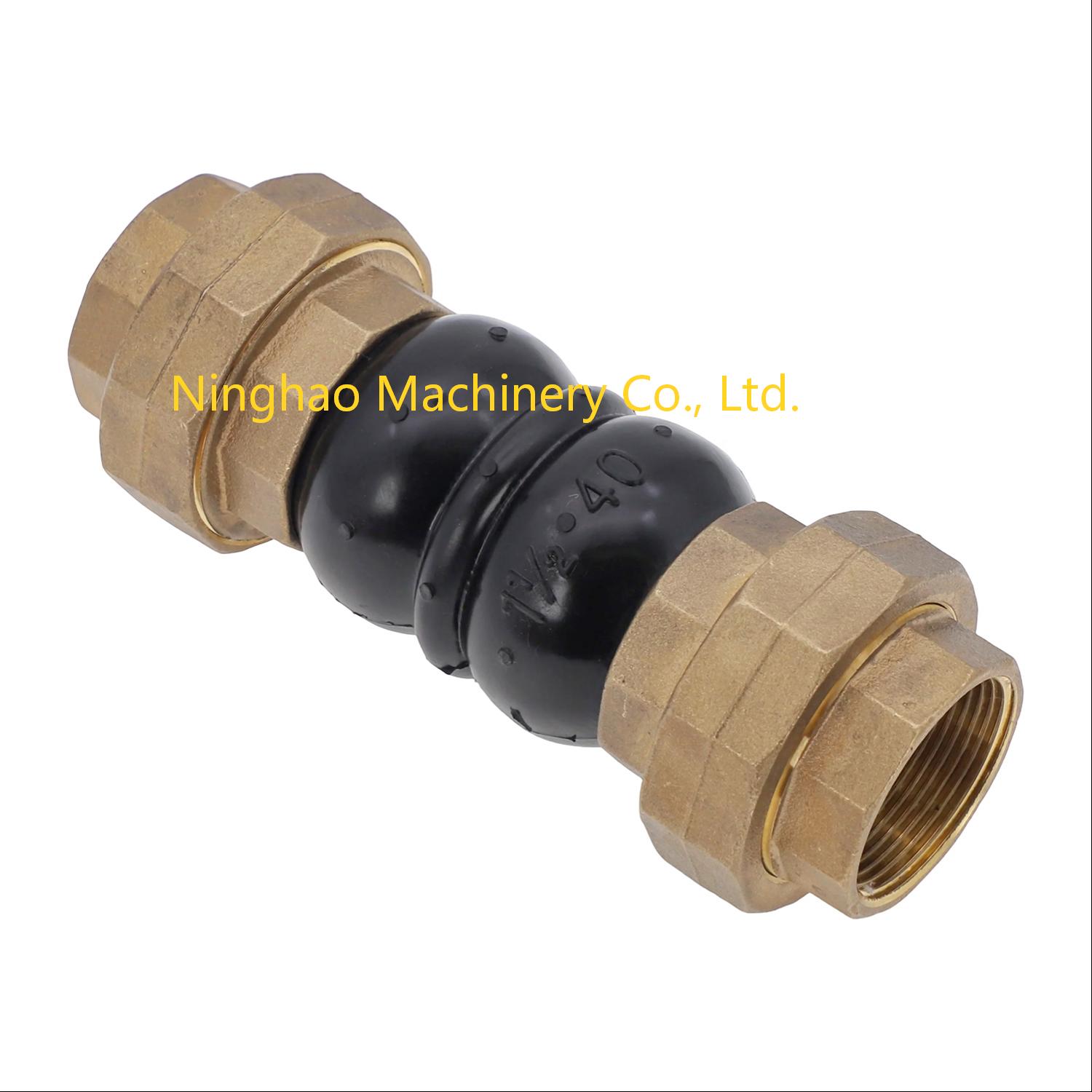
How do elastomeric materials actually stop sound waves? Physics provides a very clear explanation. Elastomers like EPDM or Neoprene actively disrupt acoustic energy. They absorb kinetic energy before it travels down the pipe. The polymer chains stretch and recover rapidly under mechanical stress. This internal molecular friction converts mechanical vibration into negligible trace heat. A properly sized threaded rubber joint dampens harmonics beautifully.
You gain significant structural advantages through this process. The flexible nature accommodates minor physical displacements automatically.
Axial Compression: Absorbs inward thermal expansion safely as adjacent pipes heat up.
Axial Extension: Stretches without tearing when pipes cool down and contract.
Lateral Deflection: Handles minor misalignment shifts during system settling phases.
Angular Movement: Bends safely to accommodate slightly skewed mounting angles.
This multidirectional flexibility absorbs physical displacement highly efficiently. It completely prevents vibration transfer across the system network. We must acknowledge specific physical limitations to set realistic expectations. Elastomeric joints target structure-borne noise excellently. They also block specific low-frequency resonance bands emitted by heavy rotating equipment.
However, they are not a magical cure-all solution. They cannot eliminate fluid-borne cavitation noise traveling inside the liquid medium. Cavitation requires different hydraulic corrections at the pump impeller level. A rubber fitting focuses purely on isolating the structural pipe casing.
Engineers often debate between metallic and elastomeric expansion joints. We acknowledge metal's absolute superiority in specific harsh environments. You must use metal for extreme high-temperature applications above 250 degrees Fahrenheit. Extreme high-pressure systems also mandate corrugated stainless steel construction. Rubber materials degrade rapidly under those extreme physical conditions. The polymer chains break down and cause eventual blowouts.
Let us contrast their acoustic impedance profiles carefully. Steel possesses very low acoustic impedance. It transmits sound waves highly efficiently from end to end. Rubber inherently absorbs and dampens mechanical resonance. A noise reduction rubber connector breaks the acoustic bridge perfectly. Corrugated metal sometimes acts as an unwanted sound resonator. The thin metal convolutions can amplify specific turbulent flow frequencies. Rubber stays acoustically dead and quiet under similar flow conditions.
You gain massive operational advantages by choosing elastomer solutions. Threaded rubber options offer incredible ease of replacement. Standard industrial HVAC and water systems benefit greatly from this flexibility. Installers swap them out quickly during routine facility shutdowns. They require no specialized welding permits or hot work protocols. The union ends simply unthread from the main line. You replace the unit and restore system pressure rapidly. This translates directly to maximized facility uptime.
You must specify the correct thread geometry for your system. Engineers face critical choices between British Standard Pipe Taper (BSPT) and National Pipe Taper (NPT) formats. A BSPT NPT rubber joint mismatch causes catastrophic field failures. BSPT features a 55-degree thread angle with rounded peaks and valleys. NPT uses a 60-degree angle with flattened peaks and valleys.
Cross-threading these incompatible tapers destroys the mechanical seal immediately. This mismatch leads directly to high-pressure fluid leaks. You must match the union ends precisely to your existing pipework. Never force incompatible threads together using a heavy pipe wrench. Verify thread geometry using a professional pitch gauge before installation.
Material science dictates long-term component survival. You must match the rubber compound to the fluid media perfectly. We provide a quick evaluation matrix below to guide your decisions. EPDM stands out as the premium choice for potable water. It resists weather cracking and ozone degradation perfectly outdoors. Nitrile (NBR) serves a different industrial purpose entirely. It remains essential for oil-based media and petroleum transport. Using EPDM in an oil line causes rapid swelling and rupture.
Elastomer Compound | Optimal Industrial Applications | Key Chemical Vulnerabilities |
|---|---|---|
EPDM (Ethylene Propylene Diene Monomer) | HVAC chilled water, ozone environments, outdoor weather exposure | Petroleum products, hydrocarbon-based fluids, industrial oils |
Nitrile (Buna-N / NBR) | Petroleum processing, oil-based slurries, natural gas transport lines | High ozone environments, extreme UV radiation exposure outdoors |
Neoprene (Chloroprene) | General purpose water systems, moderate chemical mixtures, wastewater | Strong oxidizing acids, certain industrial solvents, ketones |
System ratings demand strict attention during the specification phase. You must match the joint's continuous operating rating accurately. Compare this rating against the system's absolute maximum surge pressure. Never specify components based solely on nominal, everyday operating conditions. Water hammer events spike internal pressures drastically in mere milliseconds. These kinetic spikes destroy underrated elastomeric components instantly.
Temperature fluctuations alter the rubber's pressure threshold capacity directly. Heat softens the elastomer material slightly during peak operation. This reduces its burst pressure tolerance over time. You must consult derating charts for high-temperature fluid applications. A joint rated for 150 PSI at ambient temperature behaves differently under thermal stress. It might only handle 100 PSI at elevated temperatures safely.
Standard off-the-shelf parts often fall short in complex retrofits. Complex mechanical rooms require highly specialized elastomeric solutions. An OEM thread rubber joint becomes absolutely necessary here. You might need custom face-to-face lengths to fit tight legacy spaces. Proprietary chemical mixtures demand highly specific elastomer blends. Sometimes non-standard thread pitch requirements arise during equipment upgrades.
OEM manufacturers adapt the vulcanization process precisely to your needs. They can reinforce the carcass with specialized synthetic fabrics. Installation realities require strict adherence to mechanical best practices. Experience shows that improper mounting ruins perfect engineering specifications.
Torque Discipline: Never over-tighten threaded unions during final assembly. Excessive wrench force easily shears the rubber from the metal fitting. The metal union ring will slice right through the retaining collar. Use calibrated tools to meet exact torque specifications provided by the factory.
Pipe Support: Rubber joints cannot support any static pipe weight. They are designed purely as flexible vibration isolators. Adjacent piping must be properly anchored to rigid structural supports. Guide brackets ensure the pipe travels purely along the axial plane. The joint must remain in a neutral, relaxed state upon installation.
Torsion Prevention: Twisting the joint during installation ruins it permanently. Torsional stress severely degrades its internal structural integrity. The hidden reinforcing cords will snap under rotational shear forces. This common mistake slashes the expected operational lifespan dramatically. Always use two wrenches to counter-hold the metal fittings securely.
Deploying threaded elastomeric fittings provides an evidence-based mitigation strategy. It effectively isolates severe industrial noise right at the source. It significantly extends adjacent machinery life by reducing kinetic stress. Engineers must base their final decisions on exact system metrics. You should identify the precise fluid media type first.
Determine the maximum continuous temperature and realistic surge pressure limits. Verify the exact thread taper standards before placing an order. We encourage buyers to consult directly with reputable manufacturers early in the design phase. Always verify pressure ratings against actual facility operating curves. Request detailed technical spec sheets for your specific application. Take action today to protect your mechanical infrastructure from long-term vibration damage.
A: Generally no. Rubber degrades rapidly under high-pressure steam. Metal expansion joints are required for these environments.
A: Typically 5 to 10 years, depending heavily on continuous operating temperature, media chemical compatibility, and adherence to installation alignment tolerances.
A: Yes, PTFE tape or an approved liquid thread sealant is standard practice to ensure a leak-free seal on the metal threaded ends, provided it does not chemically interact with the rubber body.
A: OEM manufacturing is required when standard lengths don't fit retrofit spaces, or when proprietary fluid mixes demand highly specific synthetic rubber compounding for chemical resistance.